Credit has a romance problem. The public picture is all conviction, risk and decisive capital. The private reality, as Mohit Gupta learned from inside a fund, includes a great many spreadsheets wondering whether they are the latest spreadsheet. Highly paid analysts can spend their mornings moving figures between a loan tape, a credit agreement and a compliance certificate. The work is essential. The copying is not.
Gupta spent four years close to that contradiction. At Edge Focus Partners, he built AI and machine-learning models, constructed core trading infrastructure and eventually managed a $200 million book. Y Combinator says the systems he worked on enabled $1 billion in lending. The experience gave him a founder's useful form of impatience: not annoyance with an abstract industry, but a precise memory of the recurring task that had eaten last Tuesday and would cheerfully eat next Tuesday too.
In 2026, he and Saksham Gupta launched Levocred AI, a platform for credit funds, fintechs and banks. It reads the documents and data that describe a lending business, then helps run underwriting, portfolio monitoring, compliance and reporting workflows. The company says roughly $1 billion in receivables now passes through the platform. Its proposition is less cinematic than a robot banker and considerably more useful: let software handle the hunt, the transfer and the recomputation, so people can spend their attention on judgment.
The long route to the obvious problem
Long before credit operations, Gupta was interested in whether complicated systems could be checked. He entered IIT Bombay to study computer science after ranking 53rd among 1.2 million candidates in India's JEE Main exam. The result drew newspaper attention. His own explanation was pleasingly free of mythology: becoming a topper was never the plan; he had worked hard to perform well.
At IIT Bombay, his projects moved easily between rigor and play. He built an Othello program in Racket, a symbolic mathematics library, a secure personal cloud and text-summarization systems. As a research scholar at LaBRI in France, he worked on using generative models to quantify whether image classifiers were correct. He also taught introductory computer programming and interned at Microsoft and AI startup Open Weaver.
An old student website preserves a more cheerful inventory. Gupta wrote that he hiked, climbed and ran, and had backpacked through much of Western Europe. He also declared that he cared about making useful and beautiful products. Student websites are charming because nobody has yet hired a communications team to remove the verbs. The one that matters here is “useful.”
“I care deeply about creating world-class, useful, and beautiful products that help people and make a difference.”Mohit Gupta, on his IIT Bombay personal site
After college came quantitative research and the close-up education of a credit fund. This was where neural-network verification met a less fashionable but equally stubborn question: can every number in a financial workflow be traced, tested and explained? A credit agreement is not impressed by fluency. A borrowing-base calculation either obeys its eligibility rules or it does not. A portfolio manager still owns the decision.
Agreements
Reports
Reconcile
Test
Monitoring
Compliance
Berkeley, by way of the Valley
In 2025, Gupta moved to Berkeley for a master's in financial engineering at the Haas School of Business. He later explained the choice with unusual candor: Berkeley was the closest he could get to the Valley. While many classmates recruited for quantitative and trading jobs, he found himself pulled toward building a company from scratch. The program supplied finance. Geography supplied temptation.
He and Saksham already spoke the same obscure dialect of pain. Saksham had built engineering infrastructure at Edge Focus as the fund grew; Mohit had built the models and lived with the workflows. Together they knew the late-night question about whether the correct file was on SharePoint or in somebody's inbox. Their advantage was not merely that they understood AI. They knew which supposedly small manual step could delay a draw, muddle a report or waste an analyst's day.
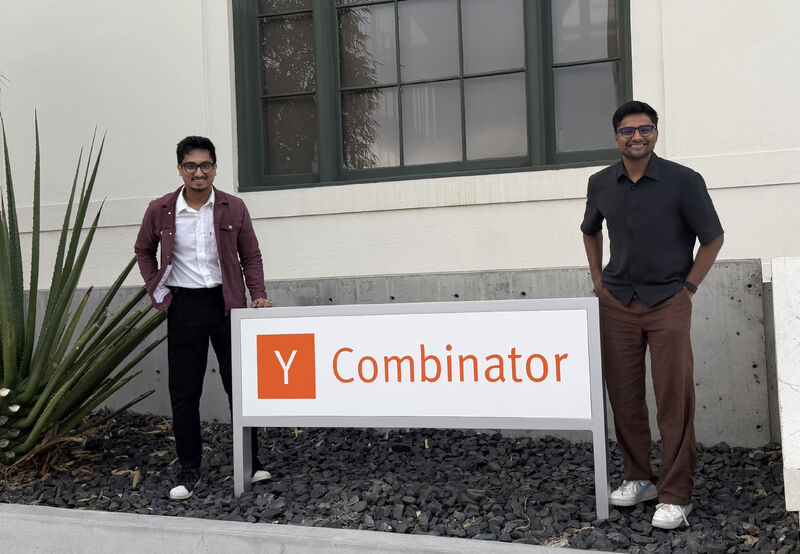
The application history has the neat rhythm founders usually discover only in retrospect. First, an interview and no admission. Second, a rejection. Third, acceptance into YC's Summer 2026 batch. The crucial change was not a better anecdote. By then Levocred had paying customers, genuine usage and live stakes. Gupta was proud that the company had not entered on the strength of a pitch deck. The product had gone ahead and made the argument.
“We kept building anyway.”Mohit Gupta, after Levocred's third YC application succeeded
Computer science begins at IIT Bombay.
Neural-network verification research at LaBRI.
AI, trading infrastructure and portfolio management inside credit.
Financial engineering at Berkeley, with the Valley close by.
Levocred launches, lands in production and joins YC S26.
Automation with an audit trail
Levocred's public demo makes the philosophy visible. A loan tape and credit agreement go in. The system drafts an investment memo with figures cited. It can answer portfolio questions, monitor exposures and prepare compliance certificates. For one borrowing-base example, thousands of rows are tied out, eligibility tests applied, concentration limits checked and availability calculated. The valuable word is not “agent.” It is “checked.”
That distinction matters in finance, where a plausible paragraph can be more dangerous than an obvious error. Gupta's recent writing draws a line between software that organizes and executes work and people who make consequential decisions. He described a solo manager running a $200 million credit fund with deterministic applications handling the money while AI helped write the applications. “Decisions stay human. Everything else is code,” Gupta wrote of the manager's setup.
Levocred is pushing this division of labor further. In August, Gupta introduced Levo, a 24/7 AI analyst that takes requests through Slack, email and Microsoft Teams. For a new workflow, it writes a specification, breaks the task across agents, asks questions when instructions are ambiguous and sends the result through quality assurance. Gupta says critical items also receive human engineering tests. Once approved, the workflow becomes part of the customer's platform.
There is restraint hiding inside that ambitious machinery. “Asks clarifying questions instead of guessing” may be the most important product sentence the company has written. Financial operations contain too many exceptions for confident improvisation. A good system needs the manners to stop.
Watch Levocred's launch demoUnderwriting, monitoring and compliance in the product▶
A company built from the unglamorous hour
Founders are often advised to find a painful problem. The advice can produce theatrical hunting. Gupta did not need a safari. The problem had been sitting on his desk, wearing Excel's familiar grid and asking for another manual reconciliation. He had watched trained analysts become custodians of fragmented data. He had also seen what happened when the underlying infrastructure was built well enough to move real capital.
This makes Levocred a wager on organizational design as much as software. Gupta argues that credit teams should scale through software use rather than by adding people to repeat the same operational steps. The claim will be tested in the least forgiving way: month after month, file after file, figure after figure. Enterprise finance does not award style points for a lovely demo when the covenant calculation is wrong.
Trust, in this market, is not a decorative layer added after the software works. It is part of the software. A lender needs to know where an answer came from, which agreement governed it and whether the underlying tape has changed since yesterday. Levocred's early customer story reflects that requirement. Jonathan DiBenedetto, head of operations and chief compliance officer at Pier Asset Management, said the platform reduced the time his team spent managing its portfolio while helping it reach a deeper understanding of credit facilities. Gupta has thanked Pier for taking the early bet. The relationship gave the young company something more valuable than a friendly logo: a live environment where convenience had to coexist with control.
That is also why the founders' years inside a fund matter when they sell. They do not have to be introduced to the oddities of a loan tape or the anxiety caused by a missing version. They have lived on the receiving end. Domain knowledge cannot guarantee a good product, but it can shorten the conversation between “this is painful” and “here is the exact field that broke.”
Gupta's career has prepared him for that test with suspicious tidiness. Computer science taught him to build. Verification research taught him to check. A credit fund taught him where the manual work collects. Berkeley put him near the founder ecosystem he wanted. Two YC rejections taught the pair to continue without permission. Production customers taught the third application how to speak for itself.
The aspiration remains larger than the first workflows. Gupta calls Levocred an AI company brain for structured credit, a place where a firm's documents and operating memory can become usable rather than buried. Yet the persuasive unit is still small: one memo drafted from the record, one certificate recomputed, one analyst spared the hunt for Final_v7_reallyfinal.xlsx.
“The north star hasn't changed since day one: build something people want.”Mohit Gupta
It is an old startup maxim, almost worn smooth. Gupta's version has a little grit left because Levocred reached YC after customers had already begun answering the question. In credit, desire rarely arrives with confetti. Sometimes it looks like a team getting its afternoon back, with every number still accounted for.