The Prescription for a Broken Market
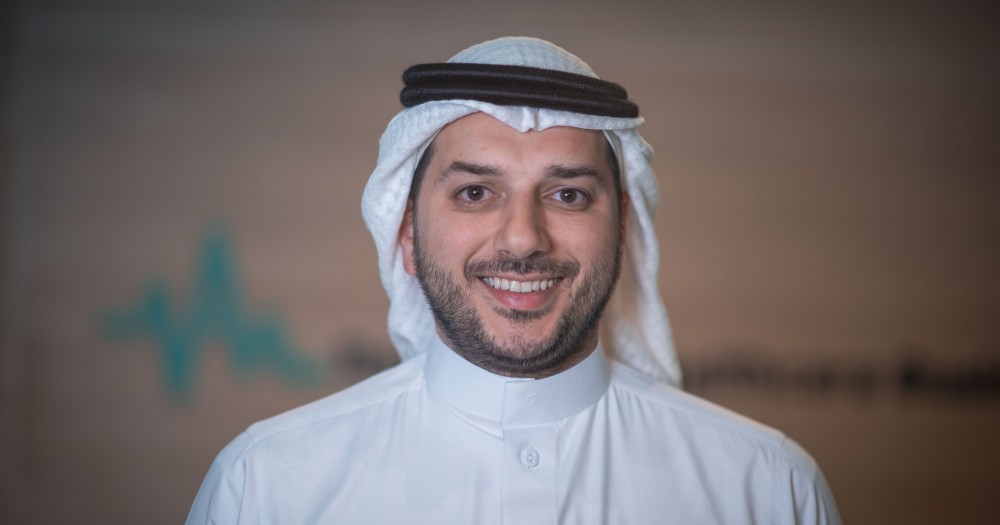
Somewhere in Jeddah, a pharmacist is placing a drug order. Fifteen years ago, that meant phone calls, spreadsheets, and a prayer that the delivery showed up on time. Today, it is a few taps on Aumet's platform - AI-parsed demand signals, supplier inventory checked in real time, order confirmed in minutes. Dr. Mohamed Mazen Batterjee helped build the system that replaced the phone call. He grew up inside the industry it disrupted.
His family's relationship with Saudi pharmaceuticals predates the Kingdom's oil boom. In the late 1940s, Sheikh Ibrahim Hassan Batterjee and his sons began importing international pharmaceutical products and building pharmacy chains across Saudi Arabia. Three generations later, Mohamed is the one holding the software. The transition is not accidental. It is the point.
"We are steadfast in our mission to ensure the availability of pharmaceutical products and supplies, particularly in the face of widespread shortages and surpluses."- Dr. Mohamed Mazen Batterjee, Co-Founder, Aumet
Batterjee is not a software engineer who stumbled into healthcare. He is the opposite: a pharmaceutical insider who realized that technology was the only lever large enough to move the industry. His doctorate - eight years at IE Business School in Madrid, studying entrepreneurship inside family businesses - was less an academic exercise than a field manual for what he already knew was coming.
It was in Madrid that he met Yahya Aqel, the engineer and eventual CEO who would co-found Aumet. Two PhD students with different disciplines and a shared conviction: that the Middle East's pharmaceutical supply chain was fragmented, opaque, and dangerously inefficient. By the time they both graduated in 2020, Aqel had already launched Aumet in 2016. Batterjee had been investing and advising from the sidelines. Then he stepped in fully, as Co-Founder, CCO, and institutional knowledge made flesh.
Aumet - Platform at a Glance (2026)
What Aumet Actually Does
Strip away the pitch deck language and Aumet's value proposition fits on a sticky note: it replaces the phone call. Specifically, the thousands of phone calls, WhatsApp messages, and faxes that pharmacies across Saudi Arabia, Jordan, Egypt, and Oman use to order drugs every day from hundreds of suppliers. Aumet consolidates that chaos into a single AI-powered procurement layer.
The platform runs on three tiers. Pulse is for independent pharmacies - AI-powered inventory management, demand forecasting, and marketplace access. Chain handles larger pharmacy groups, with centralized procurement oversight. Enterprise goes deeper: ministries of health, hospital networks, and national healthcare infrastructure. Thirty-two hospitals are already live. Five hundred medical centers. Eighteen medical warehouses.
Behind the interface, the technical stack is formidable: Kafka for real-time data streaming, Delta Lake for storage, Spark and Presto for analytics, dbt for data transformation. Aumet runs on AWS with Kubernetes orchestration, monitored by Grafana and Prometheus. It is not a directory or a marketplace bolted onto a website. It is an operating system for pharmaceutical procurement.
The Drug Shortage Problem
Medication shortages and surpluses do not happen because drugs do not exist. They happen because the information connecting supply and demand moves too slowly - or not at all. Aumet's real-time demand signals and supplier inventory visibility are designed specifically to prevent the kind of supply collapse that leaves a pharmacist with empty shelves and no warning.
The Business of Building on a Family Name
Inheriting a pharmaceutical empire is not the same as building one. Mohamed Batterjee has done both. When he rejoined Batterjee Pharmaceuticals in 2014, the company was carrying ten consecutive years of losses. He came in as Managing Director, turned it around, and expanded the company to over 15 markets with more than 50 proprietary products. Batterjee Pharma is now the leading contract development and manufacturing organization in Saudi Arabia - approved CDMO for multinational and regional companies alike.
Running a legacy pharmaceutical manufacturer while co-founding a startup designed to disrupt that same industry requires a particular kind of cognitive dissonance. Batterjee holds both positions not because he missed the contradiction, but because he understood it clearly. His DBA research into entrepreneurship inside family businesses gave him a framework for exactly this kind of institutional straddling.
"Think from the beginning of how this business will create revenue and reach profitability, rather than just thinking of growth at all costs."- Mohamed Batterjee on sustainable startup strategy
That philosophy is visible in Aumet's numbers. The company was targeting unit economics profitability by Q3 2024 - a timeline that reflects the operational discipline of someone who has watched a family business bleed for a decade and learned exactly why. Growth without margin is a liability. Batterjee has seen the invoice.
$21.84M and a Road to 20 Markets
Aumet's funding trajectory tells the story of a company that has earned its investors methodically. A $1.25M seed from Right Side Capital (US) alongside the acquisition of Unidor, Jordan's largest B2B pharmaceutical marketplace - a move that instantly gave Aumet regional reach and a ready-made network. Then a $7M Pre-Series A from investors in Saudi Arabia, Cyprus, and Singapore. Then, in May 2026, the $12M Series A that closed with a table of institutional names that spans continents.
Emkan Capital led. Qatar Development Bank joined - a signal that Gulf state institutions are paying attention. SABAH VC and AAIC (Africa Innovation & Healthcare Fund II) came in alongside existing backers Shorooq Partners and Right Side Capital. Strategic investors Cigalah Group and Salehiya Trading Company - both healthcare distribution players - added the kind of industry credibility that tells you this is not just software money.
The Series A funds have a clear mandate: AI expansion, enterprise deployments across the GCC, and entry into emerging markets. Aumet is already live in Saudi Arabia, Jordan, Egypt, and Oman. The 2027 target is 20 markets. At 5 million annual transactions and counting, the platform's flywheel is already spinning. Each new pharmacy adds data. More data improves the demand forecasting. Better forecasting attracts more suppliers. More suppliers bring more pharmacies. Batterjee has been in this industry long enough to know that network effects in healthcare are slow - and nearly unbreakable once established.
Forbes Middle East named Mohamed Batterjee one of the Top 100 Healthcare Leaders in 2023 - recognition that landed before the Series A closed.
From Scotland to Madrid to Riyadh
The biography has an unusual arc. Elementary and secondary school in Jeddah. An Aramco scholarship to Strathclyde University in Scotland, where he completed a bachelor's and then an MBA in 2007. A brief stint at Aramco after graduation - the scholarship's implicit price - before returning to the family business. Then, years later, a doctoral program at IE Business School in Madrid, combining a second master's with an eight-year DBA journey completed in 2020.
The Scotland years planted something. The Strathclyde MBA gave him a framework for thinking about businesses that did not run on oil. IE Madrid gave him a co-founder and a research methodology for the exact problem he would spend the next decade solving. The family business gave him the industry map. The decade of losses gave him urgency.
The Philosophy Behind the Platform
Batterjee's professional philosophy is deceptively simple: patience, humility, and hard work. He has said it in interviews, and the company's trajectory suggests he means it. Aumet did not sprint to raise at a headline valuation. It built revenue, proved unit economics, and then brought in institutional capital at a moment of demonstrated traction.
His view on growth is pointed: "Think from the beginning of how this business will create revenue and reach profitability, rather than just thinking of growth at all costs." In an ecosystem that spent a decade celebrating growth at any price, that is a contrarian position. It is also the position of someone who has watched what happens when a pharmaceutical company prioritizes scale over fundamentals.
The angel investing activity runs parallel. Batterjee is active across the global tech ecosystem, applying the same lens to other companies that he applies to Aumet. He is not a passive capital allocator. He is a pattern-matcher who moves between the 1940s supply chain logic of his family business and the 2026 AI-powered version he is helping to build.
"Having patience and being humble helps people learn and grow, and hard work is necessary to seize good opportunities."- Mohamed Batterjee
Relevant Links
For more on Mohamed Batterjee and Aumet: