In 2021, Mo Al Adham left Twitter with something rarer than a startup idea: a refusal to rush one. He had spent five years in product leadership at the company, long enough to see how enormous systems turn small interface choices into daily habits. His next company, he decided, would probably consume more than a decade. Six months of research did not seem extravagant. It seemed cheap.
He assembled lists of companies and industries, studied hiring patterns on LinkedIn, and called people who knew the machinery from inside. The method was engineerly, but the question was personal. Al Adham had grown frustrated with traditional wealth managers: the fees, the packaging, and the assumption that access to better financial tools required a well-upholstered human intermediary. He saw a category where the software could do more work while asking the customer to endure less ceremony.
The result was Frec, a San Francisco investment platform whose central product is direct indexing. Instead of buying one fund that tracks an index, a customer owns many of the underlying stocks. Software can then look for losses to harvest, customize holdings, and rebalance the portfolio while trying to keep it close to its benchmark. The tax lots do the bustling. The interface tries to keep its voice down.
First, a video button
The path to finance began in social video. Al Adham studied software engineering at the University of Waterloo, a school whose co-op culture sends students back and forth between classrooms and working systems. In 2007 he moved from Canada to Silicon Valley with co-founder Adil Lalani. Their company became TwitVid, an early service for posting video to Twitter and other social networks, before video felt native to every feed.
A 2011 interview caught a 26-year-old Jordanian Canadian founder learning business in public. “When I started out I had no idea what entrepreneurship was,” he said. TwitVid reportedly drew millions of monthly visitors, rebranded as Telly, and gave its founders the bracing education of building beside a platform that could change beneath them. Technical fluency had to acquire salesmanship, fundraising, and the humble art of changing a plan while everyone watched.
That period also produced the network that would shape his next chapters. Al Adham’s Waterloo roommate was Avlok Kohli, now the CEO of AngelList. Through Kohli and a circle of Canadian friends in the Bay Area, he knew Apoorva Mehta as Mehta was forming Instacart. Al Adham became the grocery startup’s first advisor in early 2013. He describes the connection less as chess than as friendship: people offered introductions, small checks, and help when a friend needed momentum.
He later joined Twitter in 2016 and worked there until 2021, ultimately as a senior staff product manager. By then the scrappy service beside which TwitVid had grown was a sprawling public conversation machine. The scale changed. A durable product lesson did not: copy is a poor substitute for understanding the problem from first principles.
The six-month calendar
There is a pleasing lack of romance in Al Adham’s Frec origin story. No napkin. No lightning bolt. He researched. He treated founder-market fit as an investigation rather than a personality quiz. LinkedIn’s headcount charts became evidence of where customers, competitors, and talent were moving. Conversations supplied the texture that charts could not.
The opportunity he chose had an awkward name and an elegant tension. Index funds had trained a generation to value low cost and broad exposure. Wealth managers could offer individualized tax work and portfolio customization, but usually with higher fees and larger minimums. Direct indexing could combine index-like exposure with individual ownership, yet managing hundreds of stocks and their tax lots manually would be a small administrative opera.
Fractional shares, low-cost trading, risk models, and automation changed the economics. What once required staff and substantial assets could become software for self-directed investors. Al Adham’s thesis assumed customers would rather avoid becoming portfolio mechanics. They wanted the engine maintained without having to sleep in the garage.
Frec emerged from stealth in October 2023 after raising $26.4 million across seed and Series A financing, led by Greylock with participation from Social Leverage and others. Its backers also included figures from Al Adham’s technology network, among them Instacart co-founder Max Mullen and former Twitter colleagues. The cap table looked like a compressed map of the previous fifteen years.
Trust lives in the plain English
Finance punishes ambiguity more sternly than a social feed. An unseen recommendation system can choose an unfunny post. An unseen tax engine can move actual money. Al Adham’s product philosophy therefore has two jobs that pull against each other: hide the burden, reveal the reason.
He argues that a good financial product should leave people more confident and in control, not abandoned in front of a cockpit of charts. The complicated work can happen below the surface, but the customer should understand what is happening in plain language and see the result. In this view, transparency is not a disclosure parked at the bottom. It is part of the interaction design.
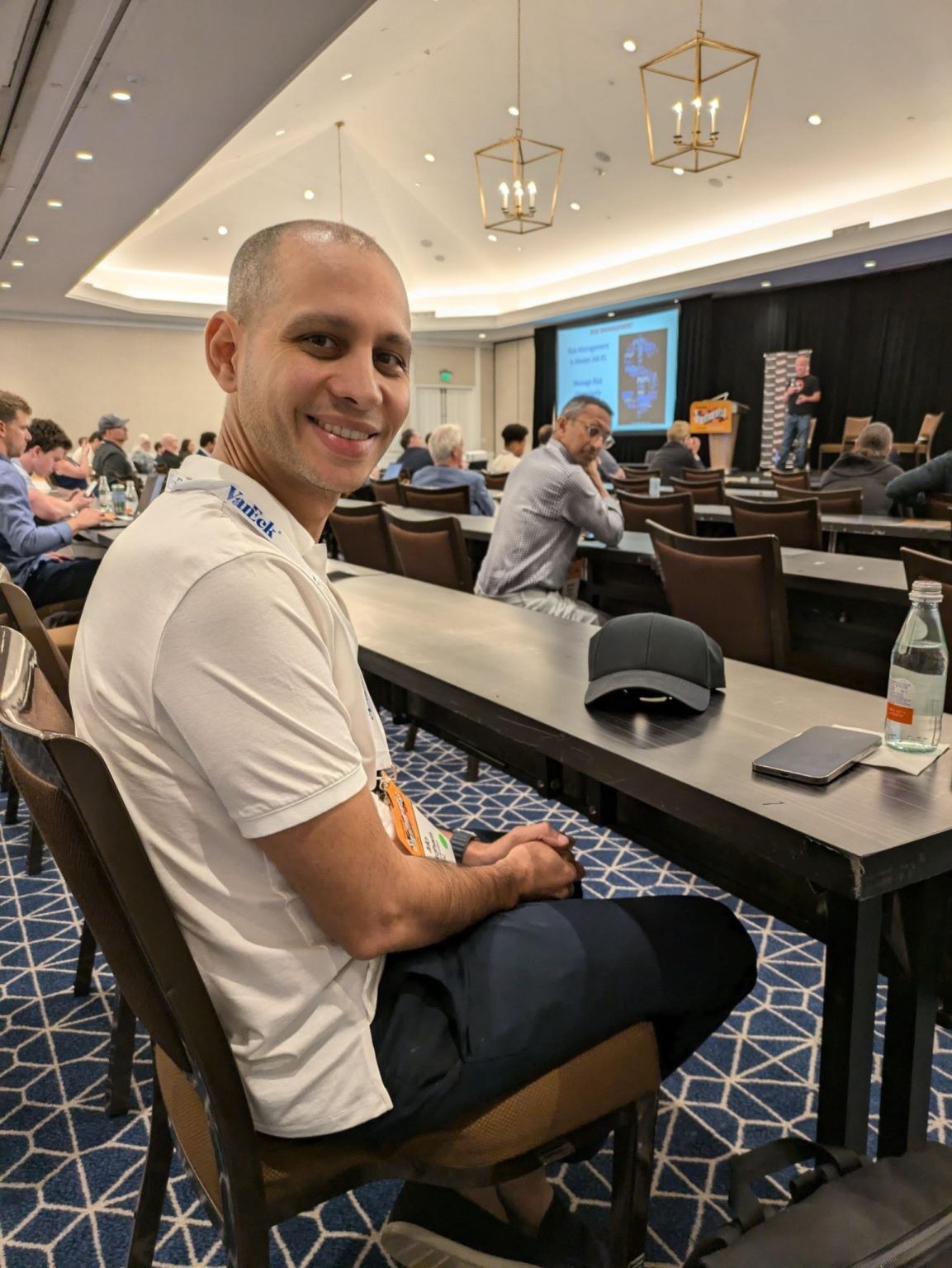
That is why he keeps explaining. In 2024, before addressing about 150 people at a conference in San Diego, Al Adham took a smiling photograph from the audience. He later admitted he was anxious. By his count, he had already told Frec’s story more than 100 times, often for an hour. The anxiety disappeared when he began walking through the mechanics. Zoom webinars with several hundred people did not provoke the same nerves. A founder can debug software; a ballroom remains gloriously analog.
His distinction between pitching and explaining is more than verbal polish. A pitch wants desire to arrive before comprehension. An explanation accepts that trust may take the scenic route. For a product that buys, sells, borrows, rebalances, and watches for wash sales, the scenic route is probably the responsible one.
Compounding beyond the portfolio
Frec said it reached $100 million in customer assets within nine months of launch, $280 million by May 2025, more than $400 million that September, and $1 billion by April 2026. Along the way it added long/short direct indexing, diversification tools for concentrated positions, portfolio credit, and more ways to fund an index. These are company-reported asset figures, not a claim about returns. Still, the progression offers a clean signal: a meaningful group of investors wants sophisticated machinery without the customary furniture.
Al Adham has also experimented with turning customers into owners. In late 2025, he said Frec raised $5.6 million from selected customers through a fast financing structure. The round was oversubscribed in under 48 hours. His pitch to the board was practical: engaged users from companies such as Nvidia, Meta, Apple, Stripe, and Two Sigma could become a formidable customer advisory group. It was community as product feedback, with a cap table attached.
The longer view reaches inside the company too. Al Adham says he would love Frec’s average employee tenure to exceed ten years. He rejects weekend work as a default and talks instead about sustainable intensity during the week. His model is Interactive Brokers, where long-serving people accumulate knowledge that cannot be downloaded into a new hire on Friday afternoon.
For a founder selling the virtues of compounding, the consistency is almost suspiciously neat. Relationships compound: a Waterloo roommate becomes a bridge to Instacart. Product judgment compounds: TwitVid, Twitter, then financial infrastructure. Explanations compound: the hundredth telling still produces nerves, but it also produces fluency. Teams, if allowed, compound context.
The billion is the visible milestone. The six months reveal the operating system. Al Adham did not know Frec would work when he studied those LinkedIn charts in 2021. He only knew he wanted the problem to remain interesting after the novelty had packed its bags.
Finance is full of magnificent abstractions: basis points, factors, indices, alpha. Their beauty is inversely related to how eagerly anyone discusses them at dinner. Al Adham’s work is to preserve the math and remove the social penalty. If Frec succeeds, tax-aware investing will become less of an occasion. The software will notice, adjust, and explain. The customer may even get to talk about something else.