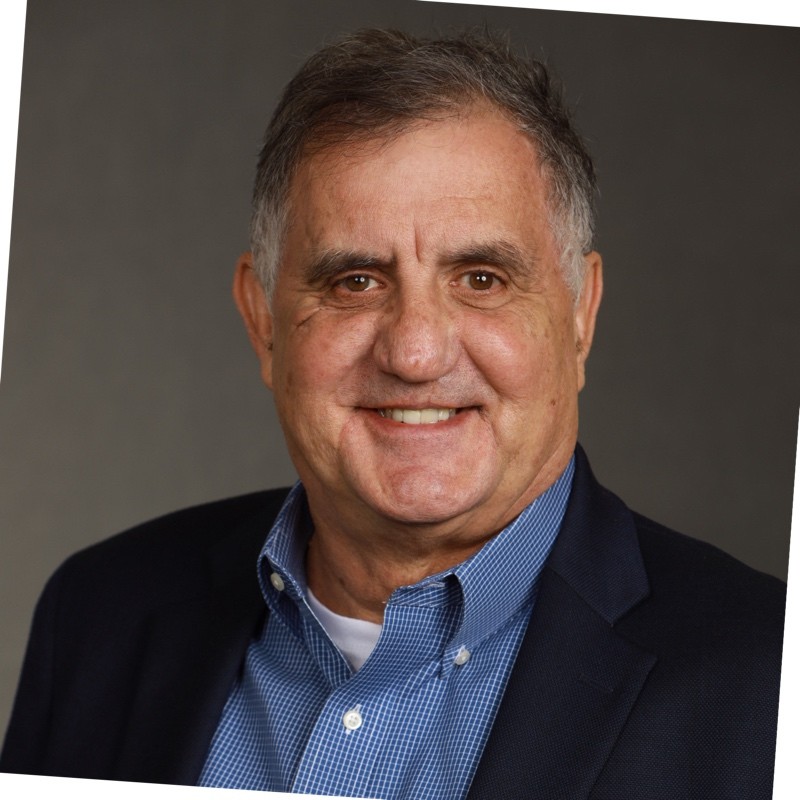
A consultant walks into a farm store. He never really walks out.
There is an old and unfair rule about consultants: they arrive, they diagnose, they present a deck with a great many arrows, and then they leave before anyone can ask whether the arrows point anywhere. Mike Meyer appears to have broken the rule by simply refusing to leave. He came to Fleet Farm as an outside advisor, embedded with the leadership team to help build the organization, and stayed long enough that the company handed him the keys to its brand and made him Chief Marketing Officer.
It is a promotion arc with a certain quiet cheek to it. Most executives are hired for a title and then spend their first year earning the room. Meyer did it the other way around. He earned the room first, and the title arrived as a formality, like a handshake that finally gets written down. In an industry that adores the dramatic outside hire, the slow embed is the rarer and more interesting move.
The company he now markets is not a boutique or an app. Fleet Farm is a roughly 70-year-old institution of the Upper Midwest, a chain of large farm-and-home stores that grew out of a family retail history and became a fixture of rural life across Wisconsin, Minnesota, Iowa and the Dakotas. Its shelves hold a catalogue that would make a copywriter weep: livestock feed and fencing, work boots and camouflage, snowblowers and grills, automotive parts and tires, pet supplies, hunting and fishing gear, hardware, clothing, and the occasional bag of candy by the register. If a rural household needs it, Fleet Farm has probably stacked it on a pallet somewhere.
Marketing a farm store is not about selling stuff. It is about selling the confidence that you already know how the stuff works. The Fleet Farm marketing premise, in spirit
The geography of a slight paradox
Here is the delicious wrinkle. Meyer markets one of the most quintessentially Midwestern retailers in America from Texas. He is based in the Flower Mound and Fort Worth orbit, a thousand-odd miles south of the Appleton, Wisconsin headquarters where the company keeps its heart. His professional footprint runs through Fort Worth and Bedford and then bends north to Appleton, which is the sort of commute that exists mostly on a laptop.
There is a lesson buried in that arrangement, and it is not the obvious one about remote work. It is that you do not have to live inside a market to respect it. Plenty of marketers have flattered rural America into cartoon, all bib overalls and banjo. The harder discipline is to sell to farmers and ranchers and weekend homesteaders as the competent people they are - to assume the customer knows more about a tractor tire than you do, and to build the message on that assumption rather than against it.
Meyer trained for this at Baylor University, then spent years in and around the Dallas-Fort Worth marketing world before the Fleet Farm chapter began. It is a background that pairs neatly with the job: a Texan sensibility about big country and practical goods, applied to a Midwestern brand that speaks the same dialect with a different accent.
Four seasons, one story
Consider the calendar problem, because it is genuinely hard. A pure-play e-commerce brand can sell one thing beautifully all year. Fleet Farm sells the entire year to you in installments. Spring is garden soil and live poultry and the optimism of people who have decided this is the year they finally raise chickens. Summer is camping and grilling and lawnmowers. Autumn is hunting season, blaze orange and rifle scopes and the smell of the first cold morning. Winter is snowblowers, ice melt, and enough flannel to insulate a small nation.
Stitching those four wildly different moods into a single coherent brand voice is the CMO's puzzle, and it does not solve itself. It requires a marketing engine that can pivot merchandise, message and media four times a year without the customer ever feeling the seams. Meyer's team runs on a modern martech stack - the company's digital plumbing spans e-commerce platforms, analytics, email and paid media - and the ambition is plainly to make a heritage retailer feel as responsive as something built last Tuesday.
That ambition is not just implied. Meyer has written publicly on marketing strategy, including the perennial question of early-mover advantage - the nerve it takes to commit before the data feels comfortable - and on using intent data to read buying signals. These are the preoccupations of a marketer who does not think heritage and modernity are enemies. He seems to regard the company's age as an asset to be spent rather than a liability to be hidden.
Being first is rarely luck. It is a decision made before the spreadsheet feels safe. A theme from Meyer's writing on early-mover advantage
Why heritage is a marketing weapon
In a retail landscape where obituaries are written weekly and every legacy chain is presumed to be one bad quarter from a going-out-of-business banner, Fleet Farm's decades of family history are not baggage. They are a moat. Trust of that vintage cannot be manufactured with a rebrand or bought with a media budget. It accrues, slowly, one honest transaction at a time, over seventy years of selling people the fencing that actually held and the boots that actually lasted.
Meyer's job is to translate that accumulated goodwill into the language of a customer who now researches on a phone before driving to a store. It means honoring the flannel-and-feed identity while quietly upgrading everything behind it - the site, the data, the loyalty mechanics, the seasonal campaigns. Done badly, modernization insults the loyal customer. Done well, it makes the old barn feel freshly painted without anyone noticing the ladder.
The consultant's origin story matters here too. Someone who arrives as an advisor tends to spend the early days listening rather than announcing. That habit is precisely what a heritage brand needs from its marketer: the humility to learn why the loyal customer is loyal before deciding what to change. Credibility inside a seventy-year-old company is not claimed on day one. It is accumulated, which is a word Meyer's whole career seems to have taken to heart.
The business behind the brand
A marketer never operates in a vacuum, and Meyer's canvas has a specific commercial backdrop. Fleet Farm passed into the ownership of the private equity firm KKR in the middle of the last decade, a change of hands recorded as a merger and acquisition rather than a scrappy venture round. That kind of ownership brings expectations - of growth, of professionalization, of a company that behaves less like a beloved regional habit and more like a scalable retail platform. The marketing function sits squarely in the crossfire of that ambition, because growth in retail almost always begins with the question of how you make more people, in more places, feel like the store was built for them.
With roughly 7,000 employees and a store network spread across several states, Fleet Farm is large enough that a single clumsy campaign can be expensive and a single clever one can move real volume. It is also large enough that consistency becomes its own discipline. The customer in Fargo and the customer in the Fox Valley should meet the same brand, feel the same promise, and get the same seasonal nudge at roughly the same moment. Building that kind of uniformity across a sprawling physical footprint, while a website hums along beside it, is the unglamorous core of the modern CMO's work. It is closer to logistics than to poetry, and Meyer's consultant background - all systems and structure - fits it rather well.
There is a temptation, when a private equity owner arrives, to strip a brand of its personality in the name of efficiency. The smarter path, and the one Meyer's approach implies, is to treat the personality as the very thing worth scaling. The flannel, the feed, the seventy years of trust - these are not obstacles to growth. Handled with care, they are the product. A brand voice that already knows how to talk to rural America is an asset most retailers would spend a fortune trying to buy, and Fleet Farm simply owns it outright.
The quiet kind of ambition
What emerges is a portrait of a marketer more interested in durability than fireworks. There is no evidence of the flamboyant CMO archetype here, the sort who treats a brand relaunch as a personal moment. The aspiration reads as steadier and, frankly, more useful: keep a beloved Midwestern institution relevant, blend its rural roots with data-driven marketing, and prove that a farm store can be a modern digital business without losing the plot of what made it loved.
It is not a bad legacy to chase. Anyone can burn money making a brand loud. It takes a subtler hand to make a seventy-year-old one feel current while keeping every ounce of the trust that made it worth saving. Meyer got the job by refusing to be a temporary voice in the room. The interesting question now is how long he keeps the room interested - and on current evidence, he is a man who plays the long calendar, one season at a time, chicks in spring and snowblowers by winter, all the way down.