From Wall Street Spreadsheets to Patient-Level Data
There's a moment Mike Fitzgibbons keeps coming back to. He's having coffee with a former industry colleague - someone senior, well-connected, working at a big pharma company. The colleague is describing how their commercial team gets data on patient treatment patterns: a thick consulting deck, delivered quarterly, full of aggregated charts. Fitzgibbons listens, then says, quietly: "It's 2025."
That gap between what pharmaceutical companies know and what they need to know is the gap Claritas Rx was built to close. The company, founded by Fitzgibbons in 2011 and based in South San Francisco, turns fragmented patient data from specialty pharmacies, hubs, payers, and care coordinators into a single, daily-updated picture of how patients are actually moving through treatment. Not quarterly. Not through a PowerPoint. Every day.
"You can't solve what you can't see. Without real-time insights, barriers to treatment go unnoticed, patients face delays, and brand performance suffers."
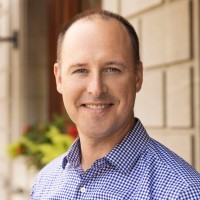
Mike Fitzgibbons, CEO & Founder, Claritas RxThe founding thesis was earned, not invented. Before Claritas Rx, Fitzgibbons spent seven years at Morgan Stanley as an equity research analyst, covering pharmaceutical services, drug distribution, and healthcare information technology. He held the Chartered Financial Analyst (CFA) designation - a credential that signaled not just number literacy but a specific way of thinking about markets, incentives, and information asymmetry.
Then he made an unusual move for a Wall Street analyst: he went inside. In 2005, Fitzgibbons joined Genentech as a Group Manager in Pricing Strategy. His work spanned lifecycle planning, commercial launch preparation, and distribution strategy - the entire arc of how a drug goes from approved to dispensed. By 2008, he had moved to the Avastin Marketing Team as Group Product Manager, sitting at the intersection of oncology's most closely-watched drug and the complex ecosystem of specialty pharmacies, payers, and patient support programs that determined who actually got it.
What he encountered there was a data problem masquerading as an operations problem. Specialty drug manufacturers relied on fragmented data coming in at different times, through different channels, often weeks old by the time it reached a commercial team. Patients were falling through cracks that nobody could see because nobody had a real-time view of where the cracks were. In 2011, Fitzgibbons left Genentech and founded Claritas Rx to build what the industry was missing.
Claritas Rx's name is Latin for "clarity" - a direct declaration of intent. The platform aggregates data from disparate specialty pharmacy partners, patient support centers, HUBs, and payers, then applies AI and machine learning to surface what's actually happening on a given brand. Which patients are at risk of abandoning therapy? Where are prior authorizations getting stuck? Which specialty pharmacy partners are outperforming and which are lagging?
The company's Patient Watchtower platform - a SaaS-based care coordination tool that earned recognition on PM360 Magazine's Best Innovations of 2025 list - goes further: it gives patient services teams daily priority case updates, predictive flags for patients at risk of prescription discontinuation, and a collaborative dashboard that connects case managers, field teams, HUBs, and specialty pharmacies in one place. Fitzgibbons describes the resulting efficiency gain with characteristic directness: targeted coordination can potentially increase fill rates by 20%.