Breaking
Jung Choi appointed President & CEO of Alterome Therapeutics | ALTA3263 doses first patient in Phase 1/1b KRAS trial - March 2025 | Alterome raises $132M Series B led by Goldman Sachs Alternatives | Alterome named Fierce Biotech's 2025 Fierce 15 | $231M total funding for precision oncology KRAS + AKT1 E17K programs | Choi previously led $5.4B Pfizer acquisition of Global Blood Therapeutics | 50+ transactions. $17B+ in deal value. Now targeting the untargetable. | Jung Choi appointed President & CEO of Alterome Therapeutics | ALTA3263 doses first patient in Phase 1/1b KRAS trial - March 2025 | Alterome raises $132M Series B led by Goldman Sachs Alternatives | Alterome named Fierce Biotech's 2025 Fierce 15 | $231M total funding for precision oncology KRAS + AKT1 E17K programs | Choi previously led $5.4B Pfizer acquisition of Global Blood Therapeutics | 50+ transactions. $17B+ in deal value. Now targeting the untargetable. |
Jung Choi, President and CEO of Alterome Therapeutics
YesPress Profile  /  Precision Oncology

Jung
Choi

He spent 20 years learning how pharma actually works - the deals, the launches, the exits. Then he walked into the one problem nobody had solved.

President & CEO Alterome Therapeutics Precision Oncology KRAS Inhibitors Stanford MBA
$231M Total Raised
50+ Transactions Led
$17B+ Deal Value

Mutation Hunter
Mid-Stride

Most biotech executives collect expertise. Jung Choi collected the whole map. McKinsey for strategy. Bay City Capital for the money side. Nine years at Gilead for the commercial grind - he launched Hepsera, ran M&A, built the business development machine. Then InterMune for integration complexity. Then Chimerix for the scrappy startup pace. By the time he landed at Global Blood Therapeutics as Chief Business and Strategy Officer, he had done almost every job that matters in this industry. Then he handed Pfizer a $5.4 billion invoice for the privilege of buying GBT.

That exit would have been a tidy career capstone. Instead, Choi went to Third Rock Ventures as Entrepreneur-in-Residence - the biotech equivalent of sitting in the waiting room, except the waiting room is one of the best venture firms in life sciences. He was looking for the problem that needed everything he'd learned.

He found it at Alterome Therapeutics. The company, founded in 2021 in San Diego, had been quietly building something engineers call "structure-guided drug discovery" - using co-crystal data and computational chemistry to design small molecules that fit into the exact pocket created by a specific cancer mutation. Not a broad-spectrum blunt instrument. A key cut for one lock.

The mutation they started with: KRAS. For three decades, KRAS was the poster child for "undruggable." It drives roughly 25% of all human cancers - lung, pancreatic, colorectal among the most brutal. The protein is small, smooth-sided, and spends most of its time in an "on" state that offers almost no binding pocket. Drug after drug failed against it. The oncology world shrugged and called it impossible.

Alterome's team didn't accept that framing. Using proprietary co-crystal structures and free energy perturbation calculations - the same quantum-mechanical methods computational chemists use to model how atoms actually behave - they built ALTA3263, a KRAS isoform-selective inhibitor that targets over 90% of KRAS mutations from a single compound. G12V. G12D. G12C. All of them, with one drug. Competitors targeting KRAS had been writing programs around one mutation at a time. Alterome is targeting the mechanism.

When Choi was appointed President and CEO in April 2025, Alterome had already dosed its first patient in the ALTA3263 Phase 1/1b trial - just weeks earlier, in March 2025. The second program, ALTA2618, targeting the AKT1 E17K mutation (a driver in breast, endometrial, and other cancers), was also in Phase 1/1b. Two programs, four years from founding, $231 million raised. The company has 43 employees. That ratio - roughly $5.4 million raised per person - says something about the bet being placed.

Choi stepped into this as the programs crossed from bench to bedside. His mandate is the pivot most biotech founders dread: from science-first to operations-and-execution-first. He's been here before - at GBT, he scaled a company from preclinical into full commercialization. He knows what breaks when a drug finally gets into a human. He knows which board conversations matter and which ones don't. And he knows, from fifty transactions and seventeen billion dollars of deal flow, where the value goes when the science works.

The question Alterome is trying to answer is one of the oldest in oncology: can you design drugs specifically enough that you hit only the mutated cancer cell, spare the healthy tissue, and do it without the cancer routing around you? The structure-and-computation-driven approach is Alterome's answer. It's not a guarantee. But it's a more rigorous attempt at the question than most.

Choi serves on the boards of Annexon Biosciences (where he chairs the Compensation Committee) and New York Blood Center, and is a board member at Marea Therapeutics. He is a Fellow of the Aspen Institute's Health Innovators Fellowship (class of 2019) and a member of the Aspen Global Leadership Network - networks that, in biotech, matter as much for the conversations they enable as for the credentials they represent. He is a named speaker at the BIO International Convention 2026.

He studied Human Biology at Stanford - the kind of degree that tells you someone wanted to understand systems before they committed to any one of them. He added an MBA at the same institution, which tells you he planned to do something about what he learned. Two decades later, the plan is playing out in a small lab in San Diego, one KRAS mutation at a time.
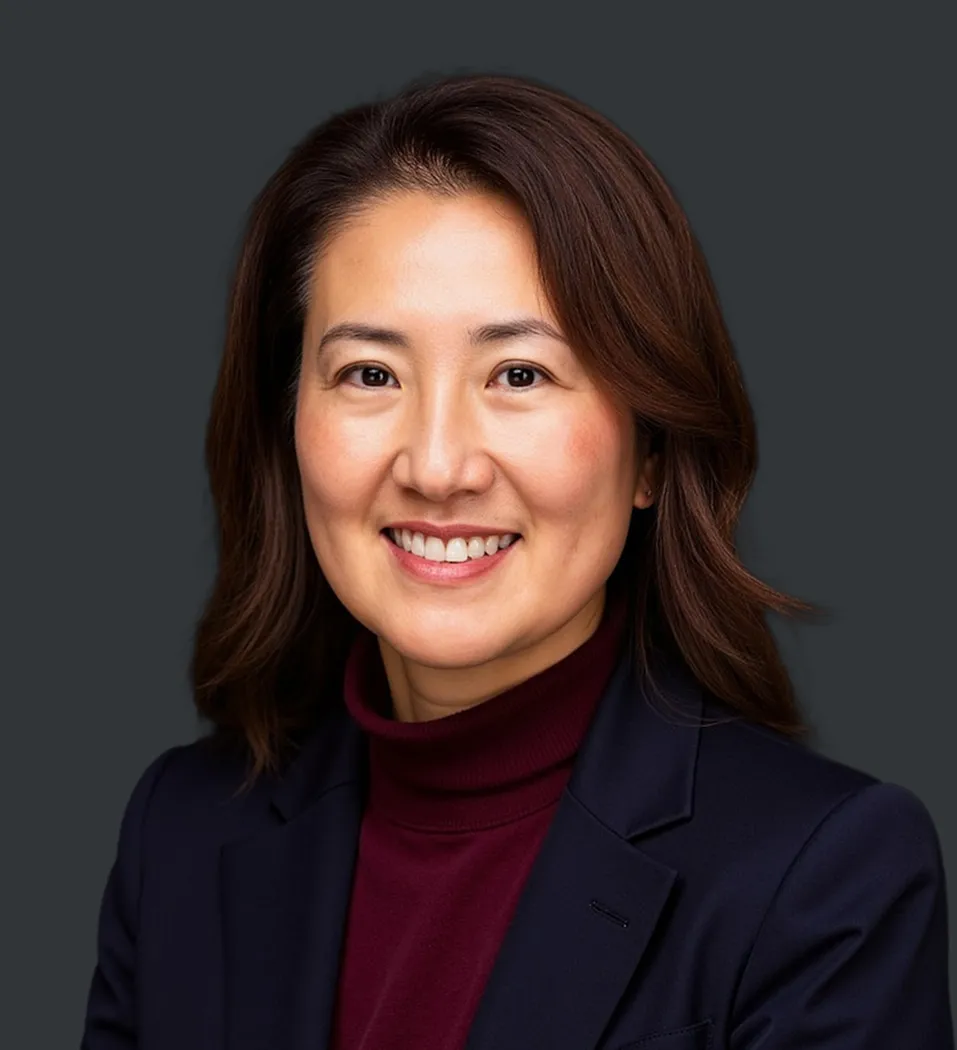
"Alterome has made great progress in treating the most aggressive and difficult to treat cancers with two potential best-in-class programs that we advanced from inception into the clinic in less than four years."
- Jung Choi, President & CEO, Alterome Therapeutics

Targeting the Untargetable

ALTA3263
KRAS Isoform-Selective Inhibitor
Structure-guided small molecule targeting over 90% of KRAS mutations - including G12V, G12D, and G12C - from a single compound. Phase 1/1b first patient dosed March 2025. Indicated for non-small cell lung cancer, pancreatic cancer, colorectal cancer, and other KRAS-mutant solid tumors.
KRAS G12V KRAS G12D KRAS G12C NSCLC Pancreatic Ca. CRC
Clinical Stage
Phase 1/1b
ALTA2618
AKT1 E17K Covalent Inhibitor
Covalent allosteric inhibitor specifically targeting the AKT1 E17K mutation - an oncogenic driver in breast, endometrial, and other cancers. Structure-and-computation-driven design. Currently in Phase 1/1b clinical development.
AKT1 E17K Breast Cancer Endometrial Ca. Covalent Allosteric
Clinical Stage
Phase 1/1b

Twenty Years,
One Direction

Early Career
McKinsey & CompanyEngagement Manager in strategy consulting - built the analytical scaffolding for everything that followed.
Mid Career
Bay City CapitalVice President - moved from advising companies to understanding how capital actually shapes them.
~2004-2013
Gilead Sciences (9 Years)Director of Corporate Strategy, Head of Business Development, Director of Marketing. Commercially launched Hepsera. Led M&A. Spent nine years learning the full stack of a global pharma company.
Post-Gilead
Chimerix - SVP Corporate DevelopmentGained experience at the clinical-stage startup pace, where every move is existential.
Post-Gilead
InterMune - SVP Corporate DevelopmentLed acquisition and integration activities during the company's acquisition by Roche and Genentech.
~2016-2022
Global Blood Therapeutics (GBT) - Chief Business & Strategy OfficerScaled GBT from preclinical stage through full commercialization of Oxbryta for sickle cell disease. Led the company's $5.4 billion acquisition by Pfizer in October 2022.
2022-2025
Third Rock Ventures - Entrepreneur-in-ResidenceStrategic advisory role at one of biotech's premier venture firms. Looking for the right problem.
April 2025
Alterome Therapeutics - President & CEOAppointed as CEO as Alterome crosses from preclinical science into clinical programs. ALTA3263 and ALTA2618 both in Phase 1/1b.

The Capital Bet

Early / Seed
~$99M
Series B
$132M (April 2024)
Total Raised $231,000,000
Series B investors: Goldman Sachs Alternatives (lead), Canaan Partners, Invus, Driehaus Capital Management, Digitalis Ventures, Blue Owl Capital, OrbiMed, Nextech Invest, Vida Ventures, Boxer Capital, Colt Ventures

What the Record Shows

💊
$5.4B Exit at GBT
As Chief Business and Strategy Officer at Global Blood Therapeutics, Choi helped scale the company from preclinical through commercialization of Oxbryta, culminating in a $5.4B acquisition by Pfizer in October 2022.
🎯
50+ Transactions, $17B+ Value
Across Gilead, InterMune, Chimerix, and GBT, Choi has led or managed over 50 transactions totaling more than $17 billion in value. Deal-making as a discipline, not an afterthought.
🔬
Two Clinical Programs in 4 Years
Alterome advanced ALTA3263 and ALTA2618 from inception into Phase 1/1b clinical trials in under four years from founding - an unusually rapid translation from computational chemistry to clinic.
🏆
Aspen Health Innovators Fellow
Selected for the Aspen Institute Health Innovators Fellowship in 2019 as part of the program's fifth class - a cohort of leaders working to reshape health systems and healthcare delivery.
🌟
Fierce Biotech's 2025 Fierce 15
Alterome Therapeutics was named one of Fierce Biotech's 2025 Fierce 15 - recognizing the most innovative and promising biotechs of the year. Choi's appointment came as the company received this recognition.
📍
Hepsera Commercial Launch
During his nine years at Gilead Sciences, Choi served as Director of Marketing and commercially launched Hepsera (adefovir dipivoxil), Gilead's treatment for chronic hepatitis B.

Why KRAS? Why Now?

KRAS has been called "the holy grail of cancer biology" - and for decades that was generous. It was the holy grail nobody could find. The first KRAS-specific drug (Amgen's sotorasib) only won FDA approval in 2021, targeting only the G12C mutation. That's meaningful for maybe 13% of KRAS-mutant NSCLC patients. The other 87% were still waiting.

Alterome's thesis is that structure-guided design, combined with computation - molecular dynamics simulations, free energy perturbation, quantum chemistry - can generate drugs that work across mutation variants. ALTA3263 is that thesis in drug form: one compound designed to hit G12V, G12D, and G12C with selective precision.

The timing matters. Compute got cheap. Structural biology got fast. Co-crystal techniques got reproducible. The tools that were expensive experiments in 2005 are now pipeline steps. Alterome built a platform around them before the rest of the field caught up.

Stanford, Twice Over

Choi earned a B.A. in Human Biology from Stanford - the interdisciplinary program that sits between biology, medicine, and the social sciences of health. It's a degree that resists specialization. Then came an MBA from the same institution. The double Stanford credential isn't just pedigree - it reflects a specific intellectual posture: understand the science, understand the system, then figure out how to move within it.

That framing recurs throughout his career. At McKinsey, he learned to diagnose organizations. At Bay City Capital, he learned how bets get made. At Gilead - nine years, multiple functions - he learned the full lifecycle of a drug. By the time he reached Alterome, he wasn't a scientist who learned business, or a banker who learned science. He was something harder to find: a person who had done both for long enough to know where they intersect.

His membership in the Aspen Global Leadership Network, and his board role advising the Center for Asian Health Research and Education at Stanford Medicine, suggest someone who thinks about healthcare as a system problem - not just a company-building problem.

Five Things Worth Knowing

01
ALTA3263 targets more than 90% of KRAS mutations with a single compound. Most KRAS programs target one mutation. Alterome decided to take on the whole family.
02
Alterome has 43 employees and $231M in funding - roughly $5.4M per person. The company is small by design: high signal, low noise, fewer meetings about meetings.
03
The company name is a portmanteau: "alteration" + "genome." Every drug program is designed around a specific genomic alteration. The name is the strategy.
04
Alterome won San Diego Business Journal's Best Places to Work award three years in a row - unusual for a clinical-stage biotech where pressure is constant and timelines are brutal.
05
Choi holds both a Human Biology B.A. and an MBA from Stanford. He is one of few pharma executives who has personally launched a drug (Hepsera), closed a $5.4B M&A deal, and now runs a company still daring first patients.

Board & Affiliations

Annexon Biosciences
Board Member - Compensation Committee Chair; Science & Technology Committee
New York Blood Center
Board Member - Ventures Committee; Compensation Committee
Marea Therapeutics
Board Member
Aspen Institute
Health Innovators Fellow (2019) - Aspen Global Leadership Network Member
Stanford Medicine CARE
Board of Advisors - Center for Asian Health Research and Education
California Life Sciences
Member
BIO International Convention 2026
Named Speaker
Third Rock Ventures
Former Entrepreneur-in-Residence (2022-2025)
Share This Profile