Thirty conversations can ruin a perfectly good first impression. They can expose the slogan customers never use, the product virtue nobody remembers and the internal certainty that dissolves on contact with an actual buyer. Michelle Randall schedules them anyway. Whenever she enters a new chief marketing officer role, she interviews 30 customers in her first 30 days. For an executive hired to tell a company’s story, her opening act is to stop talking.
The practice is less a listening tour than a method for escaping the company’s inherited mythology. Randall has explained that customer conversations let her make conclusions from knowledge beyond the internal, or “tribal,” view. The customer may confirm the sales pitch, complicate it or quietly demolish it. Each result is useful. By conversation 30, she has a working vocabulary of praise, irritation, need and surprise. That vocabulary becomes the raw material for a growth plan.
There is a comic modesty to the idea. The new CMO arrives with a title grand enough to require three initials and immediately admits that the people paying the invoices might know something. Randall has done this across a career in which the products rarely resemble one another. Childcare-management software is not remote-access software. Contact-center workforce tools are not governance, risk and compliance platforms. A customer interview, however, remains legible in every category.
A career made portable
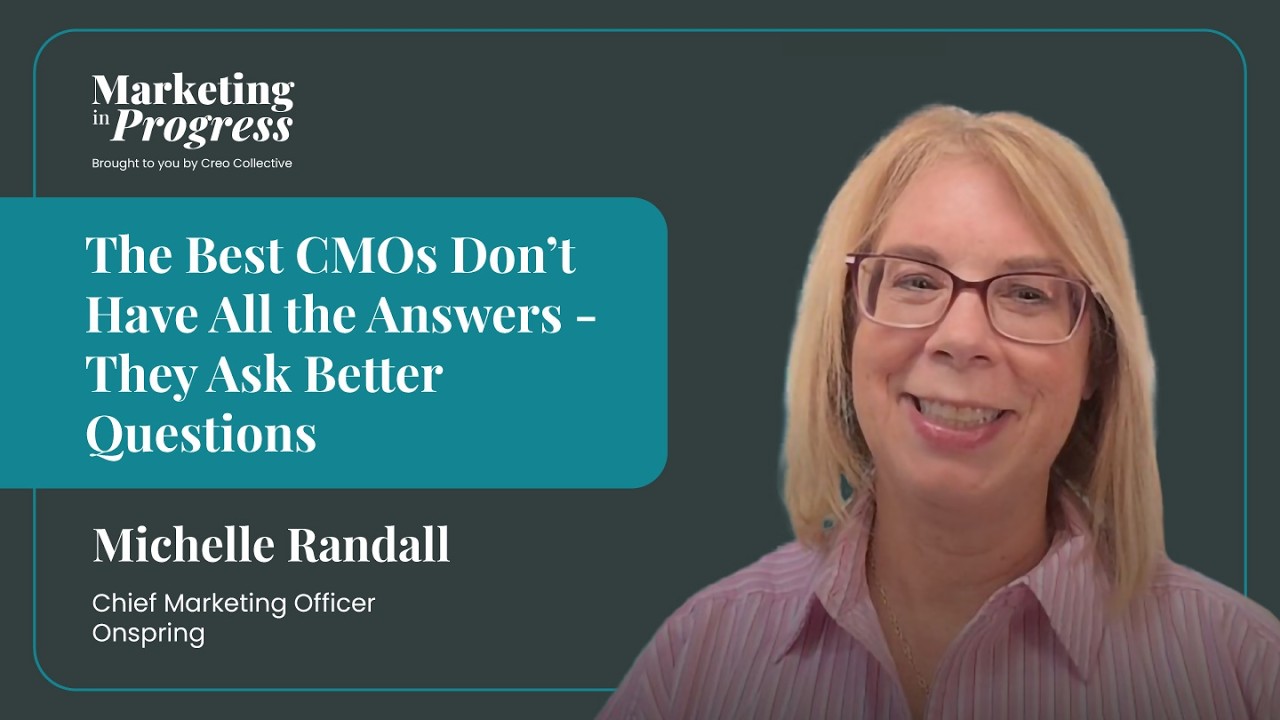
Randall is now chief marketing officer at Onspring, an Overland Park software company that builds no-code tools for governance, risk and compliance work. She joined in May 2024 with a brief spanning marketing, growth strategy and customer-success initiatives as the company expanded among enterprise, federal, state, local and education buyers. It was her fifth CMO appointment.
Before Onspring came Playvox, where she entered the contact-center world with unusually practical experience. At Comcast Business, Randall had led marketing and the western division’s 100-person loyalty contact center. She had seen the chain at close range: how an agent’s preparation affects the conversation, how the conversation affects loyalty and how loyalty eventually appears on a revenue report. At Playvox, which made workforce-engagement software for contact centers, she argued that improving an agent’s working life could improve the customer’s experience too.
Her route to Playvox ran through Splashtop, the remote-access company; Procare Solutions, which makes childcare-management software; and Serenova, the cloud contact-center business later acquired by Lifesize. Earlier roles included Comcast Business, Zen Planner, inContact, Rally Software Development, Verint and Genesys Conferencing. The list looks eclectic until one notices the recurring assignment: learn a technical product, find the customer’s language and organize people around growth.
Five CMO chapters, from customer care to connected risk
“There’s nothing that marketing really isn’t touching. Marketing raises all boats.”Michelle Randall, on the modern CMO’s reach
That line explains why her job history travels so well. Randall does not describe marketing as the department that decorates the product after everybody else has finished. She treats it as connective tissue through the funnel. Brand, demand, sales, customer success and revenue are different views of the same commercial system. If those views contradict one another, a brighter campaign merely illuminates the contradiction.
No buses were harmed in the making of this pipeline
Randall’s rule for sales relations is blunter than most management prose: “You never, ever, ever throw sales under the bus.” The repetition gives the sentence its proper amount of impatience. Marketing and sales may have distinct targets, tools and temperaments, but blaming one side does not repair the passage between them. She frames alignment as shared work on the system that produces revenue.
The 30 interviews help here too. A disputed opinion can harden into departmental theater. A customer’s exact description of the problem is harder to wave away. Randall uses those conversations to ground conclusions about opportunities and obstacles, then asks what the organization needs to do next. Curiosity becomes a management instrument. It can set priorities, settle arguments and prevent a leader from confusing fluency with knowledge.
Her own education combines communications and business: an undergraduate degree in communications from the University of Massachusetts Amherst, with work focused on public relations and advertising, followed by an MBA from the University of Denver. She later completed Comcast’s Women in Leadership program at the Wharton School. It is an apt pairing for a marketer who speaks in both narrative and operating systems. A story must move people; a business must move the numbers.
Moving among categories also creates a useful intolerance for borrowed language. At Procare, the customer’s day revolved around running a childcare organization. At Splashtop, secure remote access and support were the work. Playvox put the contact-center agent and manager at the center; Onspring speaks to professionals who live among controls, evidence, audits and regulatory change. Each market comes with fluent insiders and a dictionary of abbreviations. Randall’s 30 conversations force that dictionary to meet ordinary speech. What does the buyer call the problem before a vendor names the solution? Which part of the work consumes the afternoon? What would make the customer recommend the product when no marketer is present? The answers do more than sharpen copy. They tell a team which promise it can responsibly make. For a career spent in enterprise software, where buying committees are crowded and implementations matter, that distinction is valuable. A memorable line can open a door. Only an accurate one survives the meeting.
The org chart is temporary
Colleagues describe the human side of Randall’s system in unusually consistent terms. A former Playvox colleague called her empathetic, direct and funny, and praised her ability to recognize talent and deploy resources around what people do well. Another former colleague emphasized her customer focus, adaptability and gift for building collaborative teams. Recommendations can easily become ceremonial bouquets. These are more specific: gratitude, talent development, resource judgment and a willingness to roll up her sleeves.
Randall’s public service follows the same direction. She served as a board member and vice chairwoman of Dress for Success Denver, whose work supports women seeking economic independence and career development. She also participated in 100 Women Who Care Denver, a giving circle organized around collective local donations. Mentorship, though, is where she states the ambition most vividly.
“My dream is that every one of the women that I mentor pays it forward to the next woman.”Michelle Randall, on the legacy she wants
She has carried the idea one step further: nothing would make her happier than working someday for a woman she once mentored. It is both generous and delightfully subversive. Executive biographies usually point upward, each title balanced on the one below. Randall imagines the ladder bending into a circle, with authority returning through somebody else’s success.
This makes mentorship more than private advice between two people. In her telling, it is a network designed to reproduce itself. One woman gains confidence, judgment or opportunity, then supplies the same to another. Randall’s desired legacy is not a permanent seat at the head of the table. It is a table at which former protégées can eventually assign her work.
Risk, AI and the useful human in the room
At Onspring, the customer questions now arrive wrapped in the language of audits, controls, third-party risk, cybersecurity and regulation. The software centralizes data and automates workflows for organizations that cannot afford to treat compliance as filing. Randall entered as Onspring was broadening its public-sector business, including federal work supported by a FedRAMP-authorized cloud offering. Her role was to carry the company’s customer value into markets where trust must be demonstrated, not merely advertised.
Artificial intelligence has since become part of that conversation. Onspring introduced embedded AI capabilities intended to reduce repetitive work and surface context while keeping governance controls around their use. In her 2026 interview, Randall discussed thoughtful AI without surrendering the human touch. It is a natural extension of her contact-center view. Technology can augment the person doing the job, but efficiency that erases understanding is an expensive kind of neatness.
Her current subject may be risk, yet the method remains the same one she used in customer experience: begin with the people nearest the problem. Listen for the work they are trying to do. Connect the teams that influence the outcome. Measure what matters. Resist the vanity of instant certainty.
Away from the software vocabulary, Randall’s Onspring biography places her in the Colorado mountains. The detail is small but fitting. Mountains punish the assumption that a map and a landscape are the same thing. So do customers. After five CMO seats, Randall still begins by walking the ground.