There is a particular kind of difficulty in selling enterprise software: first you must persuade people that the problem has a name. Supriyaa Goswami knows this difficulty intimately. At Whatfix, where she leads global marketing, the category is digital adoption - software that helps people use other software. It is a business built around an everyday office truth. Buying an application is not the same as getting anyone to use it well. The invoice arrives at once; fluency takes longer.
Goswami’s work is to shorten the distance between those two events. The job involves positioning, demand, launches and brand, but its center is translation. A technical product has to become a recognizable human problem, then a useful promise, then a habit. The route that brought her here was not the standard procession through advertising agencies or brand departments. She began with the people themselves.
A career built across the seams
HR
Consulting
People systems
HR to marketing
Product to global
The long way round was the useful way
Her formal education reads like three different conversations held at one table: mathematics at Lady Shri Ram College for Women, human resources at the Tata Institute of Social Sciences, and an MBA from INSEAD. The pattern continued at work. She started in HR at Wipro Technologies in 2003, moved into talent and organization consulting at Aon, and later became a senior HR manager at Adobe. Each post sat near the machinery of how organizations ask people to change.
At InMobi, the machinery became the message. Goswami joined in human resources, then crossed into marketing. She went on to lead regions spanning India, Southeast Asia, APAC and the Middle East, followed by North America. By 2019 she was vice president and global head of marketing for InMobi Marketing Cloud, responsible for strategy, brand, demand generation, product marketing, and digital and field programs across a global team.
The move makes more sense than it first appears. Human resources and product marketing both live or die by adoption. A policy nobody understands is decoration. A tool nobody uses is an expensive icon on a screen. Both disciplines require an answer to the same impolite question: why should a busy person change what they do?
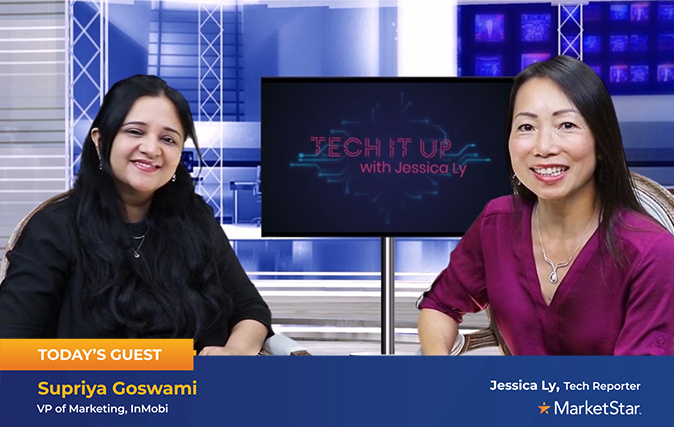
Her InMobi years put her in the middle of another young, noisy category: mobile advertising. She spoke about video as a way to build authentic customer relationships, and argued that mobile targeting had to respect privacy and autonomy. She also learned the geography of global marketing. The audience might be on the same internet, but it did not occupy the same market, regulation or cultural context.
“Product marketing is about communicating the product and its benefits to your audience.”Supriyaa Goswami
That definition is almost suspiciously plain. Its force is in the nouns. Product. Benefits. Audience. Expand each honestly, she has argued, and a company discovers what product marketing means for its particular case. She also advises young companies to hire hybrids early: a person deep in product marketing and capable in growth, or deep in product and capable in content. Startups cannot afford specialists who require a translator at every meeting.
Teaching a market to see the problem
Goswami joined Whatfix as vice president of product marketing in 2020, a year when offices emptied and enterprise applications suddenly had to carry more of working life. Whatfix reported that she was one of three executive hires made during a year in which the company added more than 260 people. She did not meet anyone in person on her first day. Her office was home. Yet she later said that the company’s tools helped her onboard quickly enough to feel not merely informed, but integrated.
The product was making its own argument. When software guidance appears inside a workflow, help arrives near the instant of uncertainty. The employee does not have to remember a training deck, hunt for a manual or send a ticket into the void. The idea is simple after somebody has explained it. Before then, it can sound like one more layer in a crowded technology stack.
Category creation is the prolonged business of making the explanation feel obvious. Goswami has described education as Whatfix’s biggest marketing challenge because buyers did not know that this class of solution existed. That meant steady content, webinars, analyst conversations and borrowed vocabulary from adjacent fields. It is marketing as patient instruction. There is no gong when the market finally learns the phrase.
The category-creation loop
Within three months of joining, according to a 2022 recognition profile, she conceptualized and launched Whatfix’s first vertical-focused go-to-market playbook. The work joined broad category education to specific industry problems. It is the difference between announcing that a bridge exists and showing a commuter precisely where it lands.
In January 2025, Goswami stepped into the role leading global marketing. By then the remit had widened from product and solution marketing to brand positioning, demand generation and go-to-market execution. The company had also widened its product story beyond in-app guidance to product analytics and application simulations. More capability brings more possible language, which is both a marketer’s feast and her indigestion.
The moments people keep
Goswami’s public writing suggests that she notices small acts with organizational consequences. An offsite early in her career happened to fall on her birthday. A company leader sent a luxury car to collect her, making an ordinary work obligation memorable. She later used the story to explain “moments that matter” - instances that shape how an employee feels about a workplace more powerfully than another general promise.
This is where her HR past stops looking like a prelude and starts looking like an operating system. In 2015, she wrote that driven people need trust, alignment with a larger purpose and opportunities to learn. She criticized restrictive processes created in fear of the small share of employees who might abuse freedom. The cost, in her telling, is imposed on everyone else.
“Empowerment and freedom to perform my job while being accountable for results.”What Goswami values at work
Her writing about women’s careers is more direct. In 2016 she asked why so few women led HR functions in India even though women made up a large share of HR graduates. She pointed to domestic responsibility, biased ideas of leadership, diminished networks during career breaks and the importance of structured return programs. Her closing counsel was practical: rekindle networks, state career goals, take the challenging assignment, and keep going.
It is tempting to file such writing under culture and her product work under technology. Goswami’s career resists the filing cabinet. Employee experience, product adoption and women’s advancement all turn on the same mechanisms: access to information, confidence at the point of action, and an institution designed to remove needless friction rather than admire it.
Give people context close to the moment they need it. The idea appears in her writing on leadership, her account of remote onboarding, and the product category she now markets.
Marketers become builders
The newest chapter adds artificial intelligence, though not as stage fog. In a ten-day internal build-off described on her LinkedIn profile, 15 Whatfix marketers built ten AI marketing agents and presented eight live demos. The projects addressed recognizable chores: generating branded event pages, predicting customer-advocacy opportunities, and checking whether content was likely to surface in answers from language models. Three winners were chosen, and Goswami said the company was setting up a Marketing AI Lab to keep testing and scaling what worked.
The exercise fits her preference for hybrids. People who once commissioned technology were asked to make with it. The point was not to turn every marketer into an engineer. It was to make the team literate enough to spot where a workflow breaks, build a modest repair, and judge the result. The future, in this version, arrives as a useful prototype rather than a keynote noun.
The same instinct appears in the way she discusses leadership. Recognition, in her account, is not reserved for the spectacular finish. After facilitating a marketing rewards gathering at Whatfix, she wrote about noticing the quiet, consistent work beneath results. Direction matters, but so does the pause in which a leader tells someone that the effort was seen. It is a humane observation with a hard operational edge: teams are more willing to experiment when useful effort receives attention, including the experiments that do not become a polished launch.
That combination - clear standards without theatrical severity - helps explain why her subjects keep converging. Privacy in advertising asks what autonomy a customer retains. Workplace policy asks how much trust an employee receives. Product guidance asks whether a user gets help without being made to feel foolish. Marketing asks whether a buyer is being educated or merely pursued. In every case, the person on the other side of the system is allowed some dignity.
Goswami has now spent more than two decades moving among functions that organizations often keep apart. Mathematics offered structure. HR and consulting supplied a view of incentives and institutions. InMobi taught her to market a new technology across borders. Whatfix gave those strands one problem: helping enterprises turn purchased software into practiced behavior.
Her career is therefore less a reinvention than a long refinement of subject. People want autonomy, but they also need context. Companies want change, but often underestimate the learning it demands. Products want attention, though usefulness is what keeps it. Goswami’s contribution is to stand between these wants and translate, patiently, until the software no longer feels like an instruction imposed from elsewhere. It feels like a tool a person can finally use.