Michael Wystrach had already built a company big enough to sell to Nestlé when his next chapter brought him back to a familiar arrangement: working with family. His sister Audrey had an idea. He had experience turning a small operation into a national business. Between them lay a shared childhood on an Arizona ranch, where the people who owned a business were also the people expected to do the work.
The company they built together, Petfolk, makes a certain kind of sense beside Freshly, the prepared-meal business he co-founded. Both ask a practical question about everyday life: why does getting something done have to involve so much friction? Wystrach tends to approach that question from the customer's side of the counter. It is a useful position for someone whose earliest business education involved clearing the counter.
There is a temptation to tell his story backward from the acquisition price. The more revealing route runs through a restaurant that failed, a kitchen that found a different use, and the people he kept close when the numbers changed.
The family business had a busboy
Wystrach grew up among six siblings in southern Arizona. His parents operated The Steak Out in Sonoita, and he and his twin brother started working there at ten. What began as the boys asking to join in became an expectation that they would show up. Childhood enthusiasm had negotiated itself a recurring shift.
His family offers several possible definitions of a working life. His twin, Mark, became the lead singer of Midland. His sister Alex Flanagan built a career in sports broadcasting. Audrey pursued her own profession and eventually became his co-founder. The siblings headed into different worlds without entirely losing the habits of the one they shared.
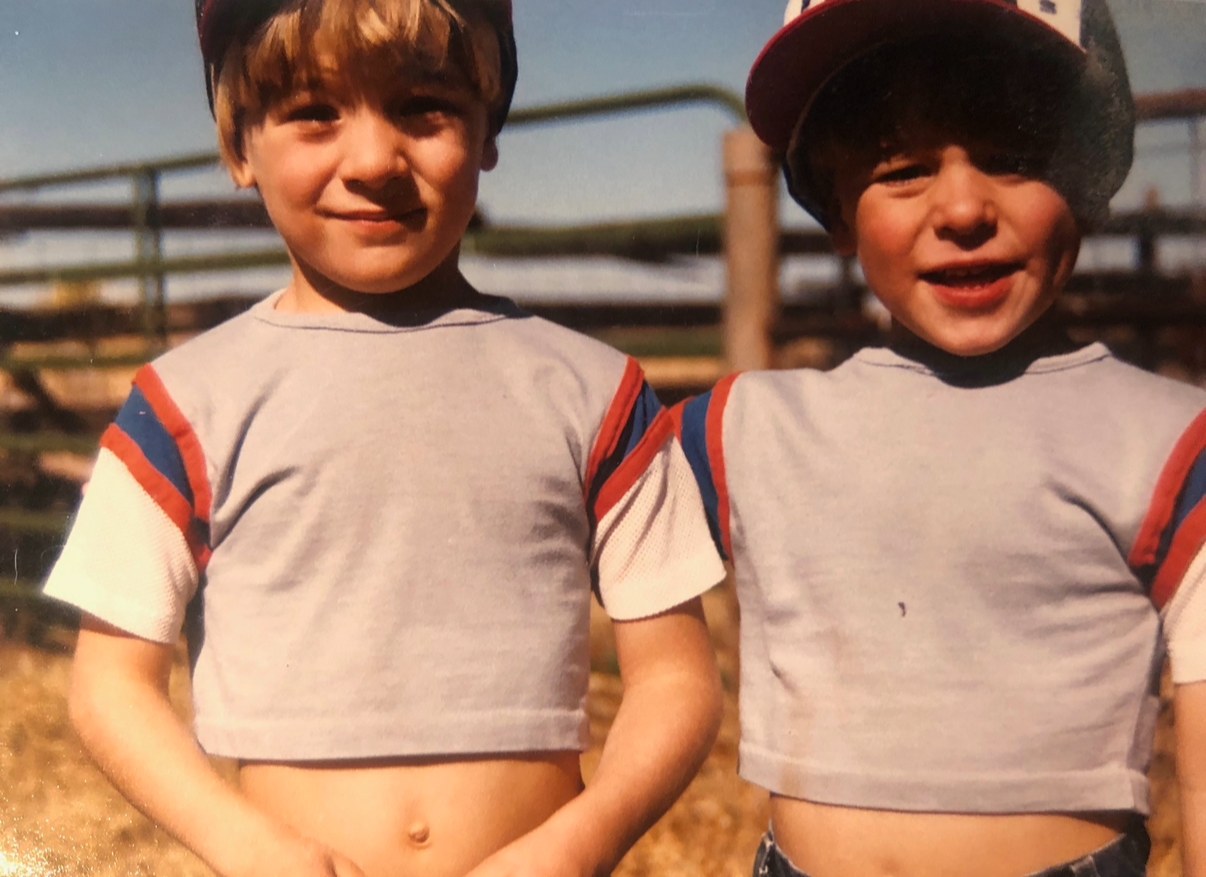
He has also credited Arizona's 4-H program with teaching responsibility. He participated for about five years, in a family that encouraged all the children to take part. His later accounts of that experience emphasize the company you keep: people with objectives, people who work, people whose expectations become your own. That description could serve equally well as a childhood recollection or a hiring philosophy.
He graduated from the University of Arizona in 2002 with a finance degree and worked on Wall Street. A life spent understanding businesses on paper was available to him. Running one would prove considerably less tidy.
A good location for customers who never arrived
The restaurant Wystrach opened at Dove Mountain in 2008 borrowed the idea of his parents' business and placed it near anticipated growth north of Tucson. The surrounding development promised houses, offices and shops. A restaurant would have people to feed. The calculation looked reasonable, provided the people arrived.
They did not arrive in the numbers the plan required. The financial crisis interrupted development. In his account of the venture, Wystrach described nearly $1.5 million invested and another $1 million borrowed. He kept the doors open for five years before closing. The original family restaurant and his failed expansion were separate businesses; affection for the first could not rescue the economics of the second.
A location is a peculiar kind of commitment. You can change the menu, the hours, the promotions and the person greeting guests. You cannot move a dining room closer to houses that were never built. Wystrach's story makes the distinction painfully concrete: effort can keep an operation going while the assumption underneath it remains wrong.
Yet one of the experiments inside that restaurant survived it. Meals prepared in the kitchen could leave the building and go directly to customers. There was demand beyond the dining room. The restaurant had fixed its future to a particular patch of Arizona. Delivery gave its cooking another route out.
The box could travel farther than the dining room
Wystrach and Carter Comstock began the business that became Freshly in 2012. Its early name was F3 Foods; the Freshly name followed in 2015. The proposition was plain enough: prepared meals delivered to the customer, with the cooking already done. A useful product can usually survive an unhelpful first name.
The operation grew out of the restaurant kitchen into a dedicated production facility. Wystrach and Comstock initially considered handling deliveries themselves, then worked with established carriers, including FedEx and UPS. That choice illustrates an unglamorous part of building a company: deciding which tasks deserve your particular attention and which someone else already knows how to do.
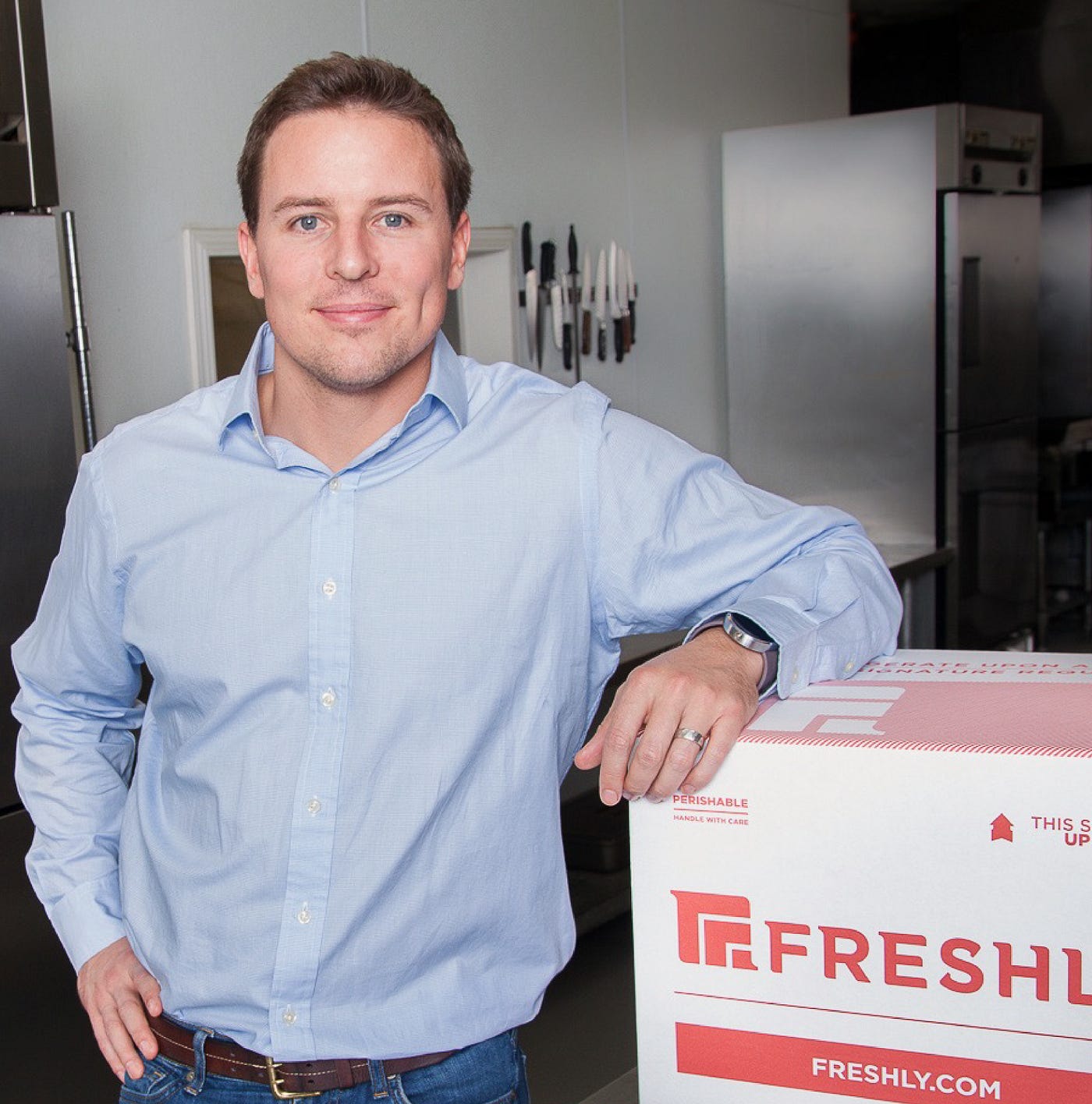
The appeal of the business was also its operating challenge. Customers were buying the arrival of dinner, rather than a plan to make it. Each box had to turn a promise on a website into something that reached a real doorstep. Marketing could win an order. The operation had to make that order worth repeating.
Wystrach has described himself as a founder who starts with a customer's frustration, often his own. In a 2024 conversation, he called it “scratching my own itch.” That gives him a starting point, rather than a guarantee. A personal irritation becomes a business only when enough other people recognize it and continue paying for the solution.
The price had two parts
On October 30, 2020, Nestlé announced its acquisition of Freshly. The initial value was $950 million, with up to $550 million in additional earnouts tied to the business's growth. Together those figures produced the widely repeated $1.5 billion headline. The terms matter: a maximum transaction value describes a deal, rather than an amount deposited into a founder's personal account.
$950MInitial value
Up to $550MContingent earnouts
At the announcement, Freshly was shipping more than a million meals a week across 48 states. Nestlé had already bought a roughly 16 percent stake in 2017. The buyer knew the company; the acquisition extended an existing relationship. Wystrach's kitchen experiment had become a distribution operation large enough to attract a global food group.
Freshly later shut down. Wystrach has acknowledged that outcome while discussing what he wants from Petfolk: a business built to endure. The sale remains a career milestone. The subsequent closure gives his next venture a question that an acquisition announcement cannot answer. How long will the thing you build keep serving people?
Audrey brought the idea
In August 2022, Wystrach publicly announced that he had joined Petfolk as co-founder and co-CEO alongside his older sister. The company had launched in 2020. He dated her pitch to him to roughly three years before his announcement, placing their conversation while he was still building Freshly.
Her starting point came from their own upbringing. The family remembered a local professional, Jim Pickrell, who visited the ranch and took time to explain his work. Audrey wanted to recover that sense of connection and hospitality in a modern service business. Michael could recognize the ambition without pretending her professional expertise was his.
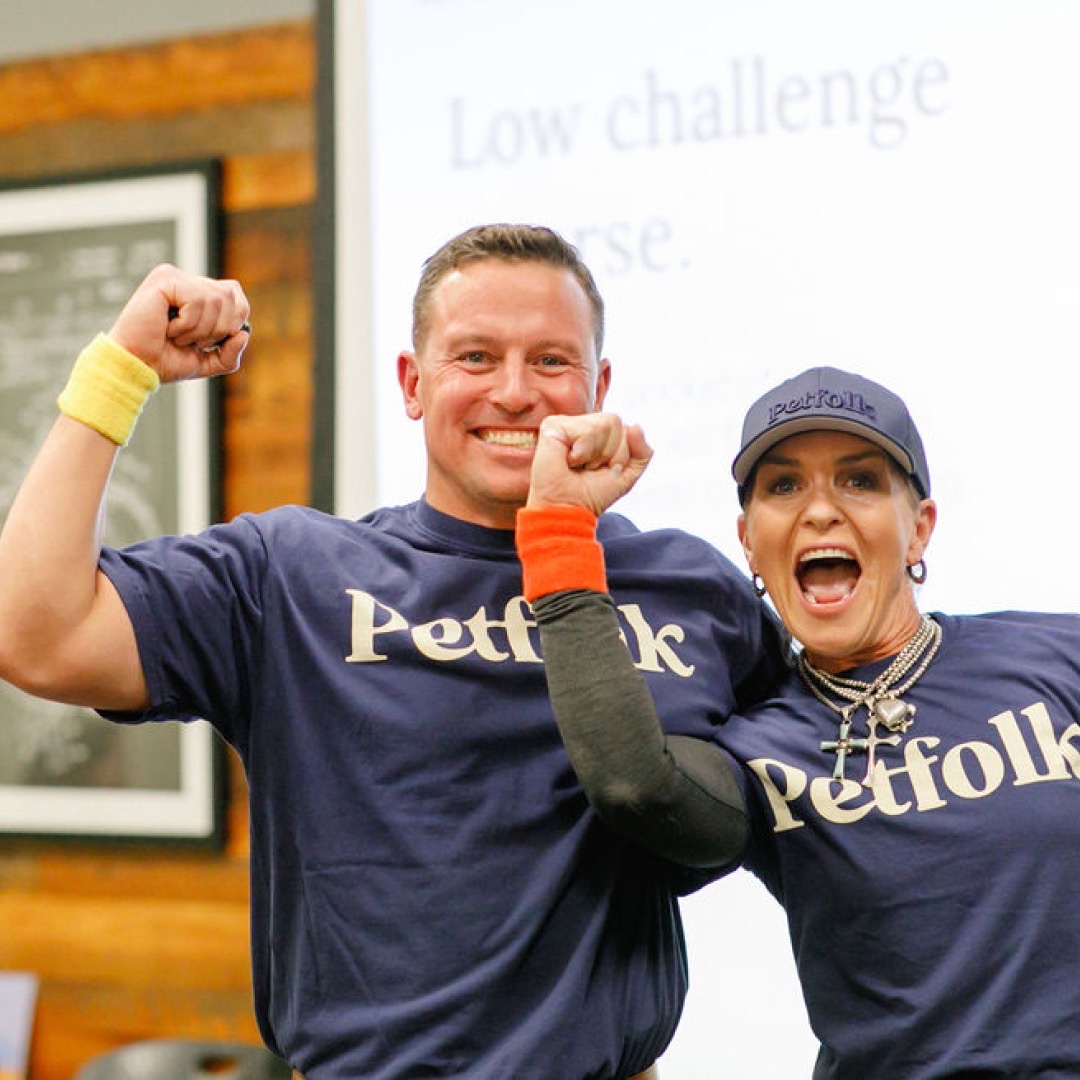
The division is central to the partnership. Audrey brought experience in her field. Michael brought finance, real estate, technology and the practical experience of growing a consumer company. Shared history supplied familiarity; different careers supplied reasons to work together. A sibling partnership becomes useful when each person brings something the other has spent less time learning.
He also put capital behind the plan. Petfolk's $40 million Series A in 2022 was led by White Star Capital and Wystrach. Its investors included Miranda Lambert, Dierks Bentley, Jimmie Johnson and Danica Patrick, along with Mark Wystrach and Midland's Cameron Duddy. The guest list could have supported an entertaining party. The money had the less leisurely assignment of helping a young company expand.
His current biography describes more than 40 Petfolk centers across eight states. The scale is different from a family restaurant, but the company still depends on people showing up, working together and making a customer want to return.
A working horse, and another familiar partner
Wystrach has since added another form of company building. With Chris Protasewich, he co-founded Cutting Horse, a growth equity firm backing consumer businesses. Their relationship stretches back to Freshly, where Protasewich's investing and operating experience intersected with Wystrach's work as a founder.
In February 2026, Cutting Horse announced a $75 million first fund, above its original $50 million target. Its stated approach combines minority investments with operating support. The premise is understandable for a founder who has experienced both fundraising and the work that follows it: a check pays for decisions, but it does not make them.
The firm's name returns the story to ranch country. A cutting horse is a working animal, chosen here to suggest focus and precision. It is a fitting preference for someone whose career keeps returning to businesses with tangible tasks, customers and deadlines. Even the investment firm has found a way to require a horse.
Something to do after the exit
There is now a public outlet for these conversations, too. Wystrach hosts The Advantage, a podcast and newsletter about building consumer companies. In October 2026, he interviewed Super Coffee co-founder Jordan DeCicco about taking over a business facing a turnaround. The subject sits comfortably beside his own history: what happens after the appealing origin story, when someone has to make the operation work?
He has long said he enjoys teaching and helping people avoid mistakes he has made. An interview chair offers another place to do it. His own experience gives him reasons to ask about the decisions behind a company's reported results.
“Making money or being famous is a byproduct not a mission”.
Michael Wystrach
In a July 2026 interview, he described no appetite for retirement and placed being a husband and father at the center of how he wanted to be remembered. Work continues to occupy him, but the people around it remain a recurring part of the story.
He has built with a friend, with a sister and with a longtime colleague. Before any of them, he worked with his parents. The businesses changed. So did the sums involved. The family restaurant's early lesson has proved harder to outgrow: owning something still leaves plenty to do before closing time.