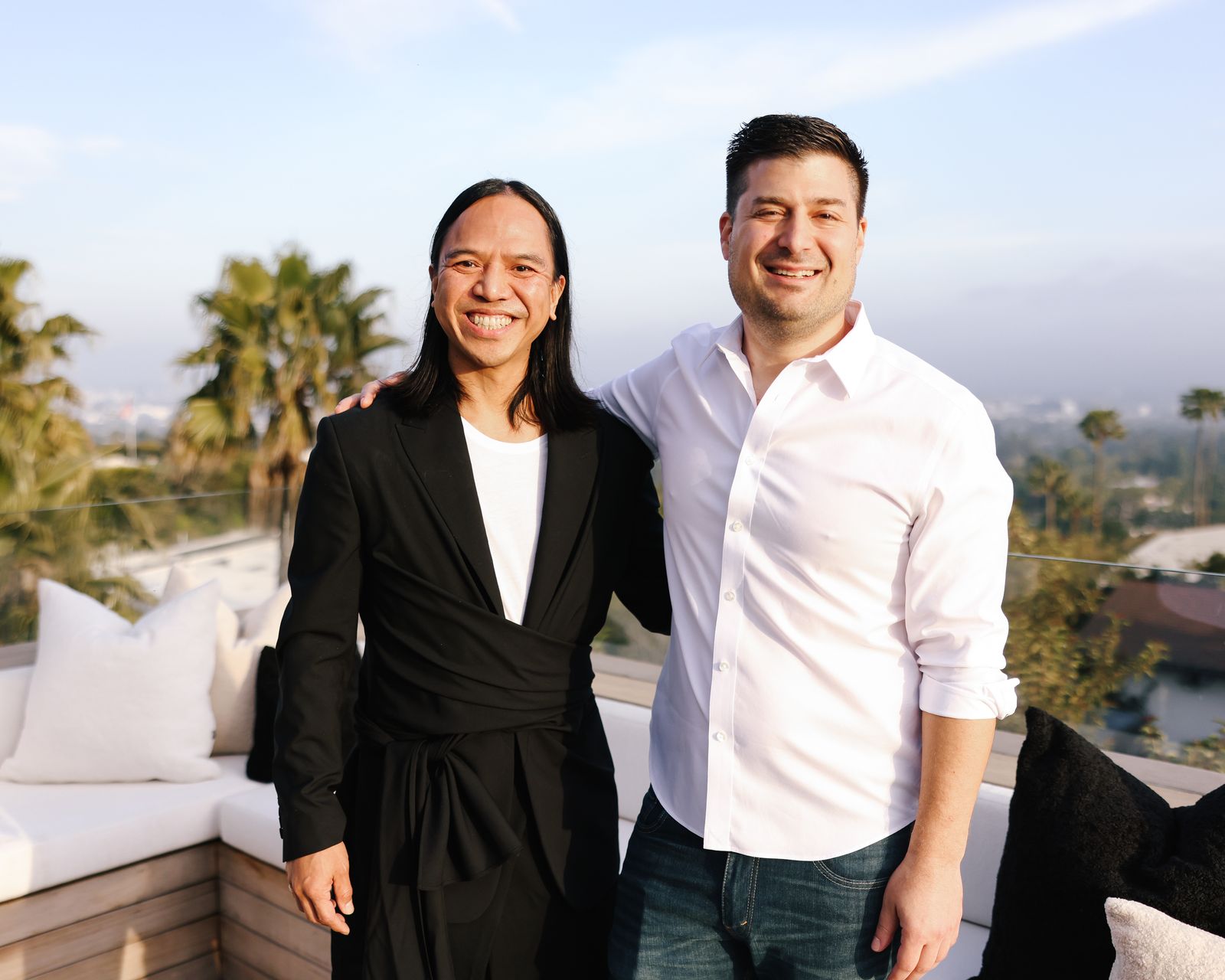
Michael Mente once persuaded his business partner to stay overnight in the Hamptons. This was an achievement worth mentioning. Mente had been spending weekends there for REVOLVE’s influencer events; Mike Karanikolas had finally appeared for a single day. The two shared a company, a history as roommates and a title: co-chief executive. Their appetites for the social calendar differed. Somebody, after all, had to enjoy the party.
By 2018, when they recounted the episode, their division of labor was well established. Mente handled fashion, brands and marketing. Karanikolas concentrated on technology, logistics and finance. Earlier, Karanikolas had built the shopping cart while Mente designed the interface and menus. The arrangement makes a useful opening scene for a business whose public face can obscure the machinery underneath it. A good photograph looks effortless. Getting the right product to the person admiring it takes rather more organization.
The search box before the guest list
REVOLVE began in 2003 with $50,000 of the founders’ savings. Stock lived in the apartment where they worked. Before the clothes, there had been software: the pair met at NextStrat, where Mente worked as an analyst. The dot-com collapse left them looking for another business and gave them a practical education in how quickly a promising industry could change.
The opening they found was almost embarrassingly legible. People were searching online for fashion brands, but the merchandise often could not be bought there. Demand was announcing itself in the search box. The supply had yet to show up. Neither founder needed to pretend to be a couturier to understand the gap. They needed to put something purchasable at the other end of the query.
That origin helps explain Mente’s unusual position in fashion. His route ran through consumer behavior and software rather than a design studio. He could take the clothes seriously while approaching distribution as an unfinished problem. The internet offered an audience beyond the reach of a neighborhood boutique, provided somebody could reproduce enough of the boutique’s appeal on a screen.
His professional biography gives him a B.S. in business administration from the University of Southern California. The credential sits comfortably beside the analyst’s job. Both belong to the less photographed portion of the story: the person examining a market before deciding how to participate in it.
A boutique with a much longer reach
Mente had liked fashion before it became his livelihood. Growing up, he had treated interests such as clothes and music as things one enjoyed outside a proper career. Discovering a business opening in clothing brought those categories together. Premium denim helped establish the early assortment; Los Angeles retailer Fred Segal supplied a reference for the kind of shopping experience he admired.
A boutique earns attention by choosing. A website can offer far more stock than a boutique, but abundant choice brings its own difficulty: the shopper still wants help deciding. REVOLVE’s proposition occupied that tension. Its catalog could grow while its presentation offered a recognizable point of view. For Mente, merchandising and the customer interface belonged in the same conversation.
In 2008, the business extended into luxury through the sister offering that became FWRD. Different price points did not erase the question beneath them: what would a customer want to discover through this particular retailer? Expansion required a point of view that could travel, rather than an endless addition of unrelated things.
Before “influencer” became a job title
In 2009, REVOLVE worked with Rumi Neely, the creator of Fashion Toast. Bloggers were already interpreting clothes for readers who trusted their taste. For a retailer built around discovery, that relationship offered something a product photograph alone could not: a person showing how an outfit might fit into a life.
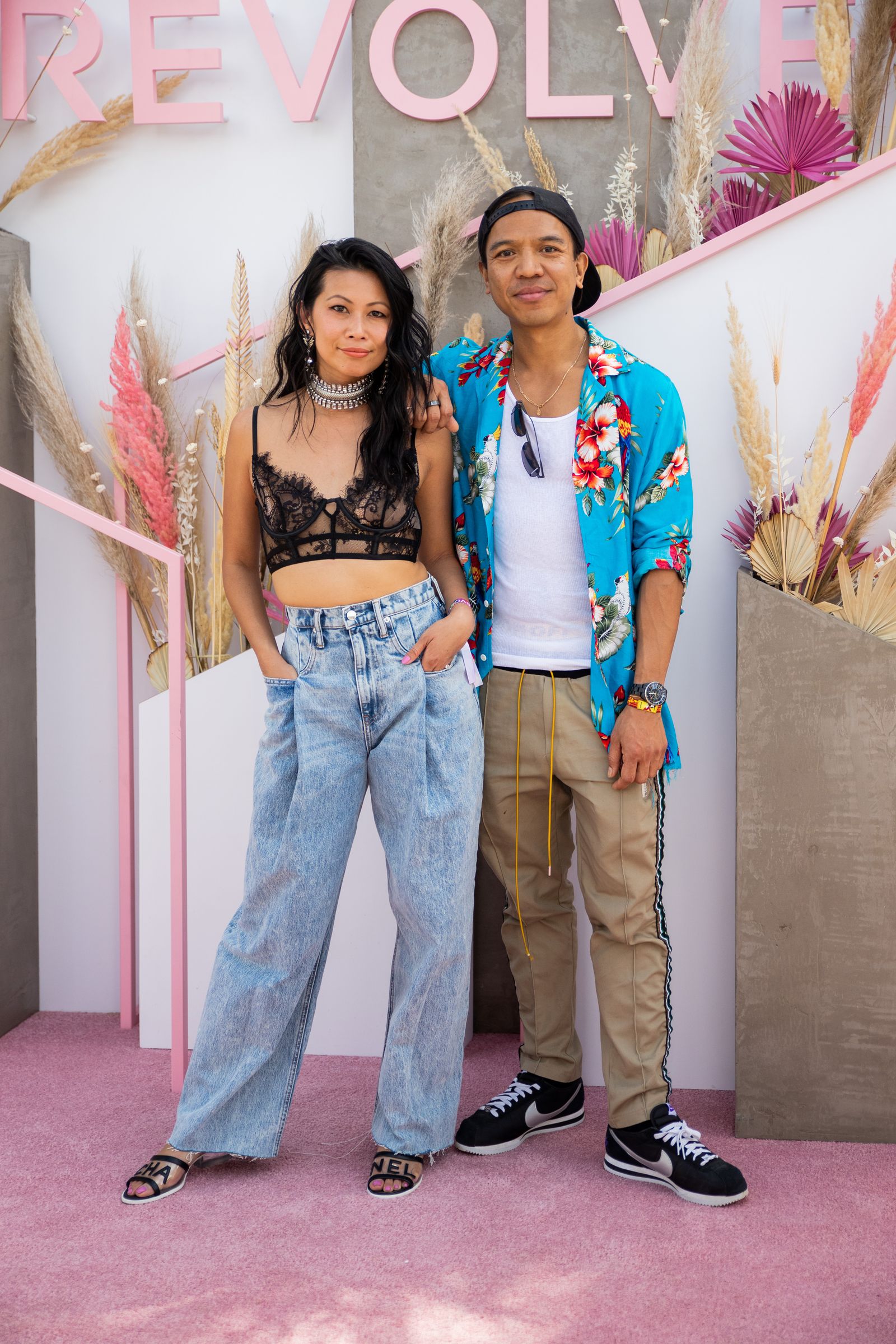
The subsequent trips and events made that idea visible. A dress could appear at dinner, by a pool or during a weekend away. The setting supplied a reason to imagine wearing it. A retailer was arranging occasions as well as assortments. Whether someone bought the exact outfit or simply remembered the name, the company had entered a different kind of conversation.
Raissa Gerona deserves a place at the center of this chapter. She pitched the travel concept to the founders and helped turn it into a repeatable program. Her relationship with Mente had begun through clothing: after her earlier label closed, he proposed building another brand together. That became Lovers + Friends. REVOLVE bought Alliance Apparel, which housed the label, in 2015.
The sequence matters because it resists the tidy portrait of a solitary founder discovering everything himself. A supplier relationship became a creative partnership; a creative partner proposed a way to reach customers. Mente’s contribution included recognizing the people whose ideas could enlarge the company. An organization claiming to understand personal influence needed to practice listening inside its own walls.
“It’s all about showing people a genuinely good time.”
Michael Mente, The School of Greatness, 2018
The spreadsheet gets an invitation
Mente described REVOLVE’s decisions as a mixture of data and intuition. Brands, partners and social content could be examined, small experiments attempted and promising ones expanded. Taste still had a role. Numbers could inform whether an idea deserved another outing; they could not provide the entire personality of the outing.
That combination is easy to endorse in the abstract and harder to maintain in practice. A retailer wants enough consistency to be recognizable and enough surprise to remain interesting. An experiment needs room to disappoint. A successful event invites the awkward follow-up question of what to do next year. The calendar is rather inconsiderate that way.
Mente’s version of company culture also had a social requirement. He valued employees who worked hard and were pleasant to spend time with. For a business whose customers encountered it through people, that preference had practical force. The invitation, the conversation and the working relationship all became part of what the brand was offering.
By June 2019, REVOLVE had reached the New York Stock Exchange. The IPO raised $212 million. A business that had waited until 2012 to seek outside funding was now asking public investors to understand its mixture of retail, analytics and creator relationships. The parties had acquired a ticker symbol.
- 2003An online shop
- 2008A luxury sister
- 2009A blogger partnership
- 2019A public company
- 2026A wider cultural business
Twenty years later, dinner is still work
In 2023, Mente hosted a dinner at his Los Angeles home to mark REVOLVE’s twentieth anniversary. Kendall Jenner, Paris Hilton, Lori Harvey and Rachel Zoe were among the guests. The gathering offered a compact picture of the world the company had assembled: fashion, entertainment and commerce occupying the same dinner table.
There is an occupational joke buried in that picture. Once hospitality becomes part of a business, an evening with friends can acquire professional consequences. The founder who enjoys bringing people together also inherits the task of making those gatherings mean something to a customer. Enjoyment becomes a skill with a budget attached.
By August 2026, Mente was discussing a move to the Las Vegas area during a Group Chat appearance with Gerona. Their conversation touched on the adjustment of working apart after years in close proximity. It was an ordinary logistical development with particular resonance for this company. Physical presence had helped build the relationships on which its public identity rested.
Working together over that span also gives the original partnership a different weight. At the beginning, the founders shared the immediate problem of getting a shop to function. Later came the need to keep distinct responsibilities connected across a larger organization. Their early split between the interface and the shopping cart remains a useful illustration: a customer experiences one business, even when several people are responsible for making its parts fit together.
A longer conversation, on paper
The next chapter has included a medium older than the search engine. On September 29, 2026, REVOLVE launched an annual print and digital magazine, with separate covers featuring Jenner, Teyana Taylor and Alex Consani. Mente described wanting space for a longer customer conversation. The issue also included Los Angeles recommendations from him and Gerona.
That is a revealing ambition for a founder associated with the social feed. A magazine asks someone to linger. Its sequence, photography and physical presence can supply a different rhythm from an endlessly refreshed screen. For REVOLVE, the experiment carries a familiar premise into another format: people may return for a perspective as well as a product.
Eight days earlier, the group announced a joint venture with Donatella Versace. She would lead its creative vision, while REVOLVE supplied capabilities including technology, operations and marketing. The planned business would begin with beauty and extend into fashion. The announcement placed Mente’s company in the role of infrastructure partner for a designer with an established cultural presence.
Then, on October 13, the company expanded Jenner’s relationship, naming her Global Creative Director of FWRD and an ambassador for REVOLVE Los Angeles. Across these moves, the ambition becomes easier to read: give distinctive people more ways to build a business around their taste, with REVOLVE handling more of what makes that possible.
For Mente, the distance from an apartment full of stock to these partnerships is substantial. Yet the work retains a recognizable shape. Find where attention gathers. Understand what people want there. Make the purchase possible. Then find somebody who knows how to make the invitation appealing. He has spent more than two decades working on both ends of that transaction, including, when necessary, convincing Mike to stay for dinner.