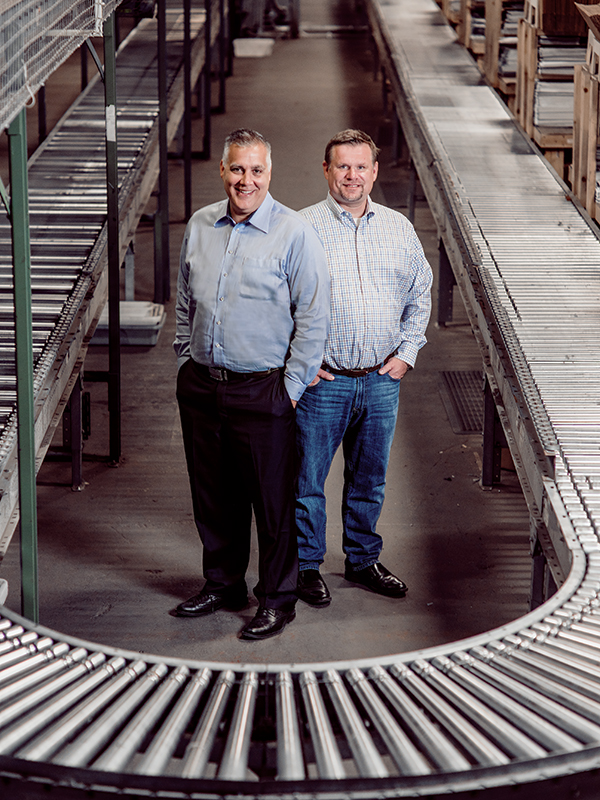
Dan Sustar returned to a Ford factory with a business that needed room. He had spent ten years working for the automaker, first as a weld engineer and later in management. Now the former plant in Lorain, Ohio, housed the company he had founded after leaving Ford in 1999. The building connected two working lives. In one, he helped make vehicles. In the other, he helped make online shopping arrive at somebody’s door.
A factory is a useful place to consider the internet. Shopping websites offer apparent weightlessness: another listing, another category, another item added to a cart. Somewhere, the item has weight. Someone must find it, pack it, and send it. Sustar’s career settled into that space between a retailer’s promise and a customer’s doorstep. The merchandise changed considerably along the way.
A basement business needs a loading dock
The beginnings were domestic. Sustar sold collectibles through eBay from his home. An early account of the business describes Budweiser collectible mugs going up for sale. This was commerce conducted through a screen, but the stock still occupied the house. Eventually, the house ceased to be a sensible headquarters for the quantity of things leaving it.
He also bought roughly 400,000 poker chips from his uncle, a wholesaler, for two cents apiece. Three neighborhood children helped sort them by color, receiving pizza and yo-yos. It is an origin anecdote with a refreshing quantity of actual inventory. Before strategy could become a presentation, the chips needed separating.
By 2002, Sustar appeared in television coverage of eBay selling casino supplies, power tools, and jewelry. He spoke enthusiastically about what the platform had made possible. The assortment already suggested that his entrepreneurial life would be organized around the opportunity to sell and move goods, rather than lifelong devotion to a single kind of merchandise.
That distinction became useful when more poker-chip sellers arrived. Dan and his brother Jim reconsidered their place in the transaction. They began supplying other sellers. In 2005, Overstock and Target approached Trademark to fulfill poker orders. Competition had helped reveal another customer: the retailer that needed somebody else to handle the goods.
Sustar later described the sequence as fulfillment preceding product development. The order explains a good deal. Start with a product and you must build the machinery around it. Start with the ability to handle products and there is room to expand the assortment. Each route has demands. His business had already spent years confronting the physical ones.
The office empties into the warehouse
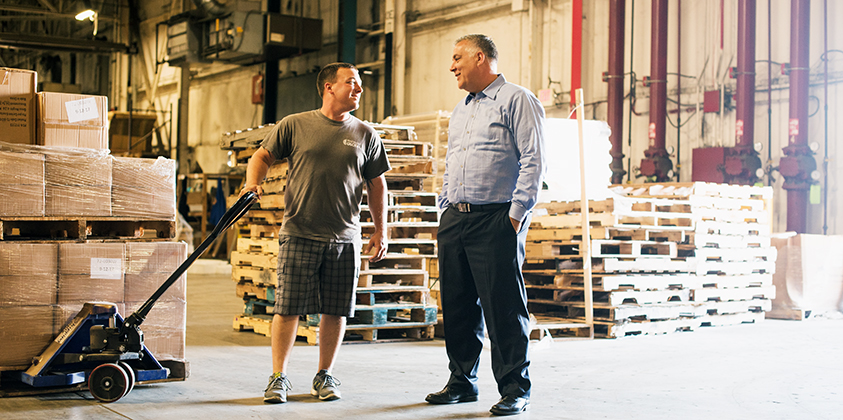
A growing order book is easy to admire from a distance. Inside a warehouse, it becomes a staffing calculation. In a 2018 account of Trademark’s operations, Sustar described the occasions when seasonal projections missed the mark and office employees went to work among the packages. He recalled one stretch of approximately three weeks when he and colleagues worked seventeen-hour days.
The scale of the seasonal change was substantial. During the 2016 holiday period, the Lorain operation sent roughly 40,000 to 50,000 packages daily, about five times its ordinary volume. That distinction matters: the holiday figure describes a surge, rather than an everyday shipping rate. A company has to prepare for both the ordinary Tuesday and the extraordinary December.
Packaging provided another lesson in the stubborn individuality of objects. A forty-inch billiard lamp required repeated attempts to produce packaging that reduced shipping damage. A spreadsheet may give every item a row of equal height. A parcel network does not grant lamps and soft goods equal manners.
This is where the engineer’s experience becomes relevant to the story. Sustar’s own description of Ford was brief: “No, that was my training ground.” The connection is practical. Both working lives involved the organization of physical processes. An online order could begin anywhere; its successful execution still depended on people and equipment doing the right things in sequence.
“No, that was my training ground.”
Dan Sustar, on his decade at Ford, 2018
Room for another brand
Private equity became part of the next chapter. Blue Point Capital partnered with Trademark in 2013 and sold its interest to Bertram Capital in 2016. At the time of that sale, Trademark served 32 of the top 100 American e-commerce retailers. Sustar credited the Blue Point partnership with improvements and opportunities at home and abroad.
Bertram’s announcement made the founders’ continuing involvement explicit. Dan and Jim would retain significant ownership and roles. The transaction brought a new investor into a business whose founders remained participants. Bertram also offered its in-house technology operation, Bertram Labs, as part of the resources available for expansion.
The opportunity rested in the retailer’s assortment. A partner could add products without taking on all the associated operational work. Trademark’s business joined goods, sourcing, and delivery into an offering that other companies could use. For Sustar, that meant a route to growth through relationships with retailers already attracting shoppers.
In May 2017, Trademark acquired the Home-Complete product line and intellectual property, its first acquisition under Bertram ownership. Home-Complete sold household goods primarily through Amazon. Sustar’s stated plan included both developing products internally and making further acquisitions. Those are different ways of adding merchandise, but both require an organization capable of absorbing the addition.
The next purchase that October brought DTX International into the group. Founded by Tom Gerard in 2005, DTX sold specialty products across categories including home and kitchen, hardware, tools, and automotive accessories. Gerard would continue as president and join Trademark’s broader executive team. The purchase therefore added a working relationship as well as a catalogue.
For a founder who began by selling objects individually, buying another operating business changes the unit of work. A product arrives with a specification and a cost. A business brings established relationships, an assortment, and people who understand why its customers buy. The announcements about Home-Complete and DTX reveal that change in the work around Sustar. His company could now grow by adding what another entrepreneur had built, alongside the products developed within Trademark.
Seen together, the two transactions show how far the early chip-selling business had traveled. The decisions now involved which product businesses belonged together and which experienced people would continue running them. The question of capacity remained. Adding a brand makes an announcement; handling what follows gives the announcement substance.
The company around the product
Trademark’s present description of its operations reaches from product development and global sourcing through inventory, warehousing, advertising, and creative work. It lists sourcing origins across thirty countries and teams in the United States, China, Vietnam, and India. The structure puts a range of commercial responsibilities inside one organization.
For the shopper, most of that organization remains out of view. Retail names such as Amazon, Walmart, Target, and Wayfair supply the familiar setting. Trademark supplies products and the work that supports their journey through those channels. Its categories encompass such everyday purchases as tools, furniture, toys, pet products, and wall art.
Sustar’s involvement in investment also appears in his relationship with Kaulig Capital, which identifies him as an operating and investment partner. His public testimonial emphasizes matching financial partners with useful skills and adding experience and ideas to management teams. It is a practical account of partnership: capital arrives with people who have something to contribute to the work.
A conversation becomes an $18 million purchase
A recent transaction offers a closer view of Sustar himself taking the first step. On June 15, 2025, he emailed Aterian chief executive Arturo Rodriguez to ask about a discussion of potential synergies between the businesses. Four days later, they met by video. They discussed market trends, the economic and regulatory environment, and possible ways the businesses might fit together.
In another video meeting on June 26, Sustar asked about a potential strategic transaction. Aterian was considering a different strategy at that point but remained open to discussion. The chronology is a reminder that an acquisition can have a long, conversational prehistory. The final agreement gives a date and a price to a process that begins much less formally.
Cash consideration for specified Aterian brand assets and liabilities, subject to purchase price adjustments.
Trademark signed an asset purchase agreement in April 2026. On July 17, the sale closed for $18 million in cash, subject to purchase price adjustments. It covered specified assets and liabilities associated with six Aterian consumer brands, including Mueller Living, PurSteam, and Photo Paper Direct. The transaction concerned brand businesses and their associated assets; Aterian continued with remaining operations.
At the announcement stage, the plan also anticipated bringing over most Aterian employees dedicated to supporting the acquired brands. Once again, the business being assembled extended beyond names on packaging. People, inventory, sourcing, marketing, and selling all formed part of what had to fit together.
The return to the Ford building gives Sustar’s career its memorable image. The years between engineering and acquisition conversations give it its substance. There were collectibles to list, chips to sort, rivals to supply, and holiday parcels to move. The work kept acquiring new forms. A customer, somewhere, was still waiting for the box.