In November 2004, an online shop made a small, revealing journey into a music store. Digital Planet installed a kiosk at Look & Listen in Fourways Crossing, Johannesburg. Customers could browse more than 200 technology products, including MP3 players, digital cameras and wireless devices. Mark Levy, then a director of Digital Planet, explained the attraction: there were people the company wanted to reach who did not shop online. The internet had acquired a shop assistant.
The detail feels wonderfully of its period. Music, DVDs, a digital camera, perhaps a purchase using eBucks: the future had arrived with several separate instruction manuals. Yet Levy’s reasoning has aged better than the gadgets. A useful product still needs a way into somebody’s life. Putting it on a website settles only part of the matter.
Follow that question through Levy’s career and it leads somewhere less predictable than a larger electronics catalogue. The co-founder and CEO of Digital Planet would also become the founder of Playbox, an education venture built around South African people sharing what experience had taught them. The route runs from access to equipment toward access to judgment. Along the way are business partners, other entrepreneurs and three children with questions of their own.
The shop inside the shop
Levy and Neil Watson established Digital Planet in 1999. South African online retail was still young, and their early business sold computer hardware and software directly to customers. Starting an internet business in that period meant dealing with the physical consequences of a digital promise: something ordered on a screen still had to arrive, work and make sense to its buyer.
The Look & Listen experiment brought those two worlds visibly together. An existing retailer supplied an audience; Digital Planet supplied a technology offering. Levy spoke about giving customers “a choice of how, where and when to buy.” It is a modest ambition beside the language technology companies often reserve for themselves. It also describes a real customer problem.
There is a useful distinction between predicting that people will eventually change their habits and building a business that accommodates the habits they have today. The kiosk belonged to the second activity. An early online retailer was prepared to meet its customers beside the records. Progress could apparently tolerate a little foot traffic.
is established
catalogue into retail
venture gains coverage
Learning to work behind somebody else’s name
Digital Planet’s subsequent development took the business into a different relationship with its audience. It began building and managing ecommerce channels for established organisations. Banks and other businesses could offer technology to people who already knew them, while Digital Planet handled the work required to make those offers function.
Its company history describes relationships with FNB, Standard Bank and Discovery. The operating model expanded to encompass the customer journey, product handling, delivery and support. Levy’s business was learning to serve a customer whose first loyalty might belong to somebody else. That requires a certain tolerance for being useful without receiving all the applause.
Today, Digital Planet describes its role as helping banks, telecom companies and mobile virtual network operators develop technology and education propositions. Its stated purpose places access to both in the same sentence. The pairing matters for Levy’s story: the educational interest has a place within the commercial business as well as in his later venture.
- PartnerA bank or telecom business brings its customer relationship.
- Digital PlanetThe offer, technology, logistics and support are brought together.
- CustomerThe proposition becomes something a person can receive and use.
Three children, rather a lot of questions
In his own writing, Levy offers a more personal entry into education. In 2022, he described being the father of three and reconsidering his decisions as a parent. Children, he observed, develop from people who ask questions into people rather eager to supply the answers. The parent continues the interrogation internally.
That is a recognisable predicament for someone whose working life involves making decisions. A business can offer a report, a delivery record or an order confirmation. A parent looking for evidence that a lesson has landed may have to wait considerably longer. Levy’s writing allows the uncertainty into view instead of tidying it away.
His concern centred on the skills young people need beyond their formal school subjects. He wanted storytelling to help carry those lessons, with entertainment providing a reason to pay attention. Reading his account, the education venture feels connected to a practical parental question: how do you make worthwhile experience available to somebody who has yet to acquire it?
Experience gets a play button
Playbox began, Levy said, with a telephone conversation between friends about keeping their children entertained. The idea developed into online lessons drawn from South African lives. He worked with Natasha Fracchiolla of the media business Room 206. Their collaboration brought a technology entrepreneur together with someone whose work concerned the making and telling of stories.
Launch coverage in July 2022 described episodes of around ten minutes. Early coaches included former footballer Lucas Radebe, comedian Joey Rasdien and chef The Lazy Makoti. The announced line-up also extended to business, law and broadcasting. A learner could move between fields without first having to decide that a single profession contained every answer.
The format offers a different encounter with a familiar face. A public reputation provides the invitation; an account of how somebody learned, worked or persevered supplies the substance. For a platform concerned with skills, the interesting material lives inside the decisions. Success is easier to admire than to examine. A story can slow it down enough to show some of the work.
Other coverage explored contributors such as photographer Jodi Bieber and fashion entrepreneur Tshepo Mohlala. The range makes the educational proposition concrete. Looking carefully, making something, handling a setback and continuing with a project can be discussed through the work itself. A lesson about persistence becomes less airy when there is a pair of jeans or a photograph in view.
“We need more mentorship like this.”
Mark Levy, writing about Playbox in 2022
A table for difficult questions
Levy’s interest in shared experience also has a conversational form. He moderates the Deep Dive Series with Raizcorp founder Allon Raiz and Spartan’s Kumaran Padayachee. The series examines dilemmas that entrepreneurs encounter in ordinary working life. Its premise gives a complicated decision time to remain complicated.
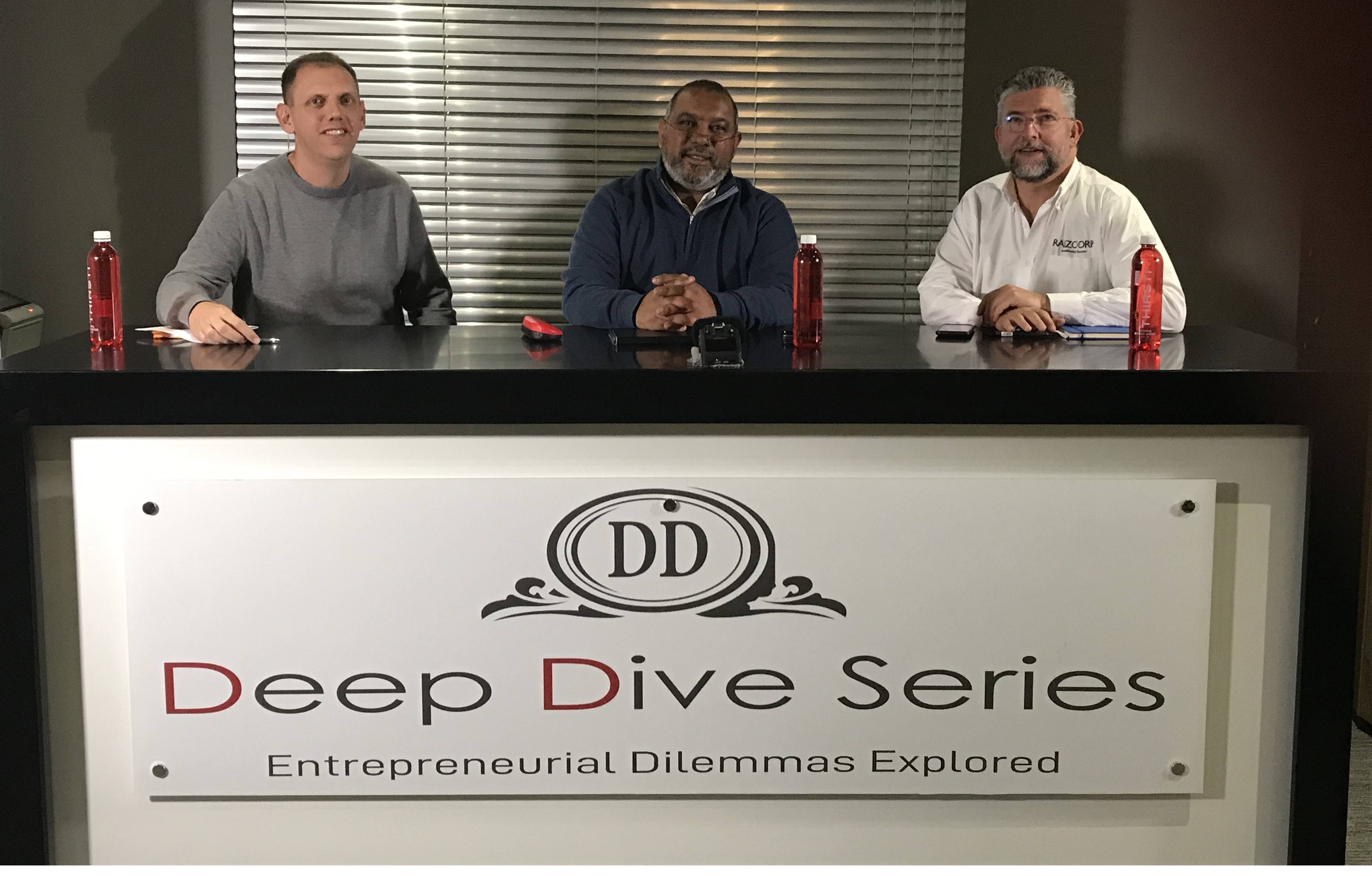
The programme’s previous subjects include hiring for growth and the relationship between strategy and games such as chess or poker. A recorded discussion in July 2020 examined business pivots. The questions included whether a supposed pivot was actually a fresh start, a minor adjustment or a reason to continue with the existing business.
That distinction is especially apt beside Levy’s own working history. Digital Planet’s evolution and Playbox’s creation represent different kinds of business decision. Calling everything a pivot would save space and lose meaning. The conversation format leaves room to ask what changed, who it served and what the people involved were trying to accomplish.
His Deep Dive biography also identifies him as an investor in education, media and retail businesses, and as the founder of Signal, an international business immersion group. Those interests extend the picture beyond one company. They place him among people comparing experiences, observing businesses and asking how an idea behaves when it meets an actual organisation.
Grace, on the syllabus
In September 2022, Levy set out five human skills he believed deserved attention in working life: collaboration, empathy, optimism, adaptability and grace. The last word makes the list particularly his. Grace does not usually appear near the top of a technology purchase order. It does have quite a lot to do with how people experience the person on the other side of a transaction.
His examples connected these ideas with Playbox contributors, including business leader Santie Botha, runner Ryan Sandes and singer Yvonne Chaka Chaka. The argument gave practical experience a teaching role. People who have worked in demanding settings can offer more than an account of their achievements; they can describe the conduct that helped them work with others.
There is an appealing tension here for an entrepreneur whose first enduring business concerns technology. A device can extend somebody’s reach. Deciding how to collaborate, adapt or show consideration remains work for the person holding it. Levy’s educational interests keep returning to that person, and to the habits a catalogue cannot conveniently list under technical specifications.
A catalogue with room for people
Levy’s published biography describes an avid reader and lifelong learner. His endorsement of Alan Knott-Craig’s book How to Fail and Win is pleasingly economical: “Brave, smart and raw. Read it.” The attraction of another entrepreneur’s account fits the rest of the picture. Experience becomes useful when somebody is willing to share its awkward parts.
Put the kiosk, the commerce operation, the discussions and the lessons together, and a pattern emerges. Levy has repeatedly worked on ways to connect people with something they could use. Sometimes that has meant a computer. Sometimes it has meant a person explaining how a difficult decision felt before its outcome became obvious.
The music-store kiosk offered shoppers a choice of where to begin. Playbox offers a learner another kind of starting point: somebody else has already attempted something, made decisions and accumulated experience. Listen for ten minutes. There may be a useful question to take away. For the father who wrote about second-guessing his own answers, that seems a rather fitting product.