The first clue that Digital Planet is not a normal electronics retailer is the list of chores it is willing to do. It will choose a laptop, negotiate with the supplier, build the online offer, connect the stock system, coordinate the warehouse, watch the courier, answer the customer and deal with the machine if it comes back. It can verify identity, check a television licence and design the campaign too. The checkout button is almost incidental. The company lives in everything that button sets in motion.
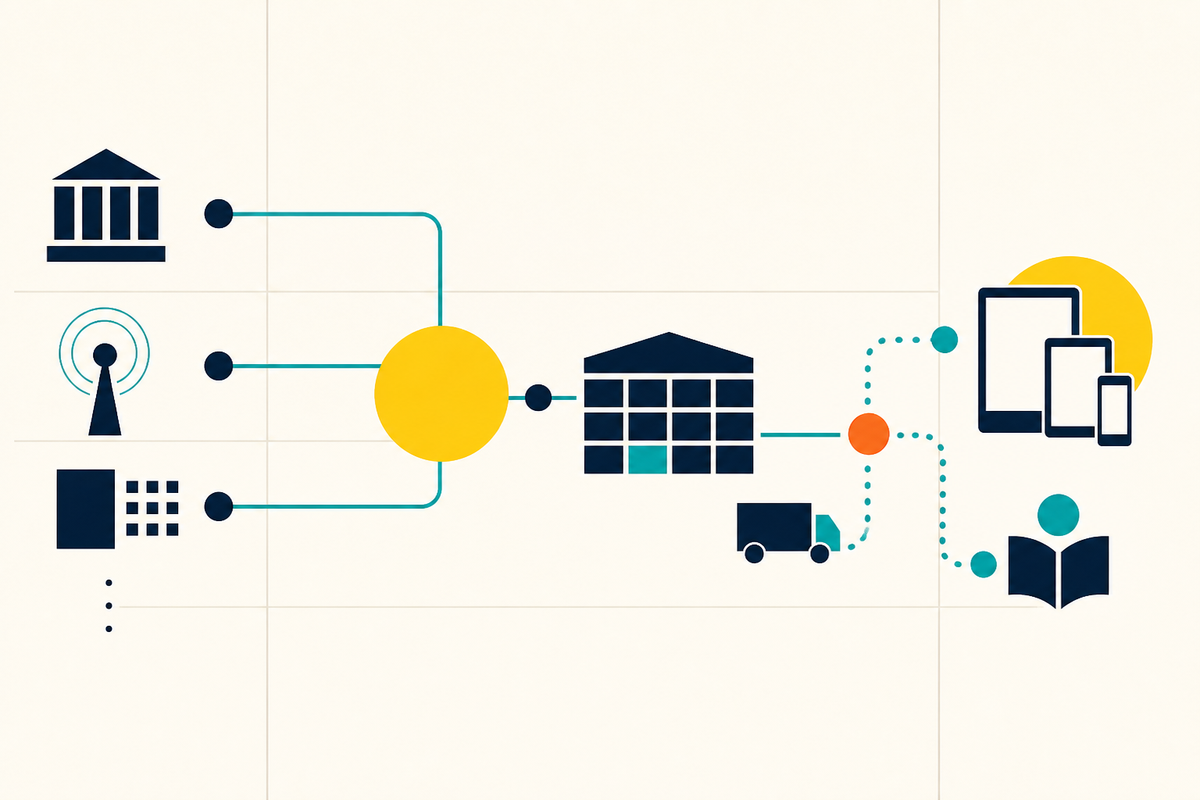
That position is useful in South Africa, where banks, telecom operators and mobile virtual network operators have large customer bases, trusted brands and recurring billing relationships - but do not necessarily want to become electronics retailers. Digital Planet gives them a retail capability that can operate under their own names. It calls the model B2B2C: sell through a business to reach the consumer, while managing the experience from catalogue to complaint.
Early enough to hear the dial-up tone
Mark Levy and Neil Watson started Digital Planet in 1999 after travelling in the United States during the first internet boom. They returned convinced that online commerce would matter and began selling computers on the web. Their conviction was right; their timing was uncomfortable. Watson later joked that they were perhaps 12 years early. In the first few years, one employee covered operations and service - and did not have much to do.
The quiet shop became an education in the parts of ecommerce that do not fit inside a browser. Digital Planet began working with HP in 2003. The company says that relationship led to South Africa's first HP ecommerce store. In 2004, it placed a kiosk inside a Look & Listen branch in Fourways Crossing, offering more than 200 technology products and letting customers pay with loyalty-linked cards. The language of “omnichannel retail” had not yet become compulsory at conferences. Digital Planet was already testing it beside the music and DVDs.
“We see this as complimentary to our strategy of offering customers a choice of how, where and when to buy.”Mark Levy, on the 2004 Look & Listen partnership
Over time, the company moved away from competing only for individual shoppers and toward enabling institutions that already had them. That shift turned an early online store into a commerce operator. Digital Planet now says it works with more than 15 trusted client partnerships across banks, telcos, MVNOs and enterprises. A public FNB Connect promotion, for example, identified it as a supplier and voucher sponsor. HP remains the longest visible thread through its history.
A retailer in someone else's jacket
A bank might want to offer laptops to account holders. A telco might pair a television with connectivity. An enterprise might use devices to reward customers or employees. Those offers sound simple until they meet inventory, affordability, product life cycles, warranties and delivery addresses. Digital Planet helps decide which device belongs in the offer, forecasts demand, buys stock and constructs bundles with accessories, services or learning vouchers. It can then build a branded digital storefront and connect it to the client's systems.
The catalogue reaches across familiar global brands: Samsung, HP, Microsoft, Acer, Dell, Lenovo, MSI, Hisense, TCL and others. Yet distribution alone is not the point. The purchasing team assesses availability, function, price and user experience; the inventory operation uses Acumatica and separates stock control from stock-finance approval. Warehousing and courier work are performed with outside partners. Digital Planet acts as the integrator, monitoring performance and producing reports rather than painting its name on a fleet of vans.
Then comes the part many sales funnels politely stop drawing. A contact centre handles inbound and outbound work. Field teams merchandise products and train people at retail locations. Client-service staff watch fulfilment and complaints; the company advertises a two-hour complaint-response target. Its technical desk troubleshoots returned devices and assesses their condition. Digital Planet says this reverse-logistics system processes approximately 1,000 cases each month, including movements between retail branches.
The promise after the promise. Digital Planet advertises a rapid two-hour response to client complaints. Whether the issue is a courier scan or a faulty device, the work protects the partner's name, not merely the parcel.
The bundle is the product
The company's more distinctive ideas appear around the hardware. Dress Your Tech can add accessories, gift cards, affiliate links, discounted products, catalogue feeds or a white-label store. Duo is Digital Planet's own technology label; its first announced device was a portable speaker that separates into two units. Circular Services extends the relationship through warranties, repairs, trade-ins, refurbished devices, recycling and e-waste disposal.
Playbox takes the bundle outside hardware. Launched during the strict COVID-19 lockdown by Levy and media entrepreneur Natasha Fracchiolla, it packages lessons and stories from South African talent into episodic online learning. Customers can buy subscriptions or receive physical and virtual vouchers, including codes tied to particular coaches. For a bank or telco, that means an education benefit can sit beside a streaming device or laptop rather than arriving as an unrelated promotion.
The device gets attention. The integration, delivery and after-sales work earn the repeat business.
This is where Digital Planet differs from a distributor, a courier broker or an ecommerce agency. Each can perform one slice. Digital Planet sells the assembled journey, and the assembly creates switching costs: product data, client systems, stock rules, customer scripts, courier reporting and warranty processes all learn to work together. Its advantage is operational memory accumulated across categories and channels, plus a willingness to stay present after the sale.
Where it sits in the market
The competitive map is untidy because the business overlaps several industries. An institution could hire a web agency, buy from a distributor, contract a fulfilment warehouse, add a contact centre and keep warranty administration in-house. South African ecommerce and logistics specialists such as Parcelninja, Pargo and Bob Group cover adjacent ground. Large banks and telcos can also build more of the stack themselves. Digital Planet's pitch is that one accountable operator reduces the seams between those choices.
Its revenue follows that position. The company earns from business clients by designing and operating commerce programmes, supplying products and value-adds, and managing fulfilment and service. Exact fees, margins and annual revenue are private. It also touches direct consumer revenue: on 16 November 2024, Digital Planet opened the DP Store at Menlyn Park, offering products, connectivity and in-person advice. The return to a physical shop feels less like a reversal than another channel in a long experiment.
The model also explains why product forecasting is more than a warehouse exercise. A device offer can be tied to a credit application, a mobile contract, a loyalty benefit or a customer-retention campaign. The right stock must be available at the right price for the right slice of a partner's customer base. Too little inventory wastes the campaign; too much leaves ageing hardware on a shelf. Digital Planet's three-step procurement language - availability, selection and forecasting - sounds dry because it is. It is also the financial hinge of the entire proposition.
For the end user, the practical outcome is simpler. A customer can discover a device inside a channel already used for banking or connectivity, choose an offer designed around affordability, receive the item at home and contact a support operation if something goes wrong. For the institution, that same journey can create non-core revenue and another reason for a customer to return. Digital Planet's work sits between those two experiences, translating a corporate partnership into something a person can open, switch on and use.
The broader mission is access to technology and education. That language could float away as corporate wallpaper, but here it shapes the product mix: devices paired with finance, learning discounts, vouchers and lifecycle services. It also supplies a rationale for community work and employee programmes. Digital Planet describes a culture of innovation, collaboration and community engagement; its public Multipliers programme offers mentorship and leadership exposure to high-performing staff. A June 2025 certificate recorded Level 2 B-BBEE status, while the company says it completed ISO 9001:2015 certification after a 2022 external audit.
The unglamorous middle
Digital Planet's story is not the familiar one in which an online pioneer becomes a giant consumer marketplace. It is stranger and, for operators, more useful. The company discovered that established institutions already owned the scarce asset - customer trust - while technology brands owned the products. The opportunity was the middle: design an offer that suited both, then make every handoff behave.
That middle is full of small frictions. A television cannot be delivered until a licence is checked. A laptop promotion fails if stock arrives after the campaign. A courier's delay becomes the bank's angry customer. A return needs a diagnosis, a warranty decision and a route home. Digital Planet has turned those details into its product. The work is rarely visible on the box. That is precisely why its clients pay for it.
Keep exploring