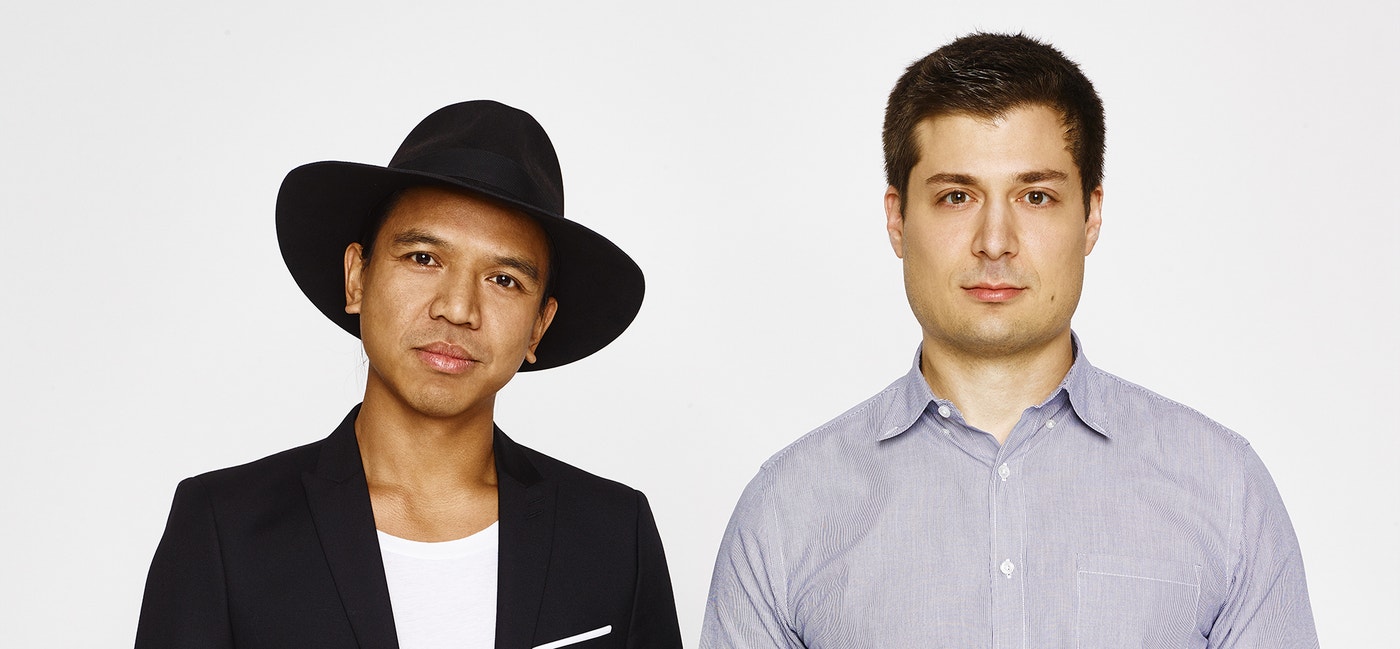
Before REVOLVE became associated with people having enviable weekends, it was two men trying to sell clothes on the internet. Michael Mente and Mike Karanikolas started in 2003 with $50,000 in savings. They did not spend it all at once. They opened with a little inventory, watched what happened, and discovered something useful: people wanted designer jeans.
- Find the customer. Premium denim supplied an early clue.
- Follow the purchase. Feed demand back into buying and design.
- Own more of the experience. Add labels, stores and editorial.
A little inventory. A very useful clue.
In Mente’s account, 7 For All Mankind and the early-2000s appetite for Los Angeles denim gave the experiment its first commercial direction. The founders had begun without a tightly defined customer. Selling something people actually wanted helped them find one. The sequence matters: the audience emerged from transactions, rather than arriving fully described in a presentation.
“It was a cautious, deliberate investment.”
Michael Mente, recalling the launch in 2019
The broad assortment faced a test during the 2008 recession. Competitors were discounting heavily. REVOLVE responded by concentrating on Millennial women, according to a later account from Raissa Gerona. A business that had tried to offer lots of fashionable brands needed a clearer reason for a particular shopper to choose it.
The buyer still has a vote
Today, the shopper can browse dresses, denim, shoes, bags and beauty through REVOLVE, or move into luxury designers through FWRD. The company targets mainly Millennial and Gen Z consumers. It solves an ordinary shopping problem: finding an outfit across an exhausting number of labels. Its proposed shortcut is an edit with a recognizable point of view.
Behind that edit is a less glamorous activity: recording what sells. A 2018 account described detailed product tagging and daily reorder alerts to buyers. Humans still made decisions. A dress’s length or a shirt’s color could become evidence for the next purchase, or feedback to a designer. When suppliers could not replenish, the company’s own design capabilities offered another route.
- 01Introduce
a style - 02Observe
demand - 03Adjust buying
and design
Then do it again. Diagram: editorial interpretation.
That combination gives REVOLVE a different proposition from a department store’s broad selection or a single label’s world. It is a multi-brand destination that can also develop its own products. The useful expertise sits between merchandising, engineering and creative work. A persuasive photograph gets the shopper through the door; the assortment gives her something to buy.
For a customer, this is a practical distinction. Someone choosing a wedding-guest dress can compare several designers in one place, then look for shoes or a bag alongside it. Someone seeking a luxury piece can use FWRD. The benefit depends on liking the retailer’s taste; a curated selection is useful precisely because somebody has already made choices.
The bill behind the beach trip
The influencer relationships fit into this system. They give clothes a setting, a person and a reason to be noticed. The company combines those relationships and events with performance marketing. The photographs are the visible output of a continuing customer-acquisition operation.
There is a substantial bill. In 2025, REVOLVE spent $175.4 million on marketing. Selling and distribution cost another $209.6 million; fulfillment added $39.5 million. Those are separate expense categories. The beach trip is easier to remember than the shipping charge, but both belong in an explanation of the business.
$1.226 billion
Annual net sales
Bars compare these three expenses. They do not represent all costs.
Group net income for the year was $61.1 million. That is the more sobering companion to the sales figure. REVOLVE buys and sells merchandise, carrying inventory risk and handling returns. Its 2025 filing reported 81.4% of net sales at full price, which it defines as at least 95% of full retail price. Selling the right clothes without deep discounts is central to the arithmetic.
For another business trying to learn from this, the order of operations matters. A campaign that attracts customers to an unsuitable assortment can leave expensive leftovers. A popular product that cannot be replenished leaves sales unmade. The commercial task is to bring the pace of promotion, buying and supply closer together. That interpretation is less exciting than a guest list, but it gives an operator something concrete to examine on Monday morning.
A staircase changes the experiment
The next clue came from a physical shop. An Aspen pop-up produced sales and helped acquire customers, the company said. In June 2024, REVOLVE announced it would make the location permanent. Here was evidence that an online relationship could become useful in a room with fitting rooms.
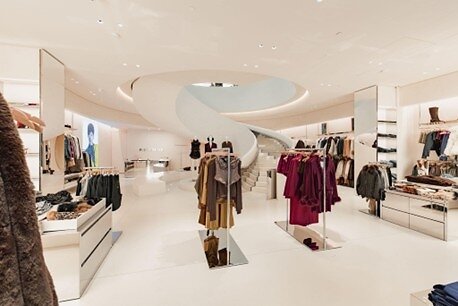
In January 2026, it opened an 8,450-square-foot store at The Grove in Los Angeles. REVOLVE occupies the main level; FWRD supplies the luxury environment upstairs. A spiral staircase connects them. The architecture makes the portfolio legible: two shopping moods, sharing an operating platform, now sharing an address.
Now put the name on the dress
March brought REVOLVE Los Angeles, the first namesake label. Its debut collection ran from $200 to $3,500, with Bella Hadid as its first ambassador. A retailer that had spent years helping customers discover names was asking them to wear its own. The range included embroidered eveningwear and satin gowns, a concrete expression of its emphasis on occasion dressing.
The expansion continued in September with an annual print and digital magazine and an announced beauty and fashion venture with Donatella Versace. The latter’s first launch was still forthcoming in its announcement. In October, Kendall Jenner became FWRD’s Global Creative Director and a REVOLVE Los Angeles ambassador. These projects extend the company’s ability to shape what customers see before they shop.
There is also a difference between learning what shoppers like and learning what they will pay for. A magazine cover can earn attention without proving demand for a collection. The next useful evidence will come from purchases, repeat purchases and the expense of generating them. That is the discipline the original experiment suggests applying to every new format.
Copy the listening
By June 2026, the group counted 3.041 million active customers over the preceding twelve months. Scale makes the feedback richer, but the principle is available to a smaller retailer: test an assortment, identify a customer, and let purchasing evidence change the next decision. Copying a party is relatively straightforward. Connecting it to profitable replenishment takes considerably more work.
That approach needs responsive suppliers, enough margin to pay for attention and delivery, and customers who return to buy again. It becomes less useful when demand changes faster than inventory can move. REVOLVE’s most transferable idea is the habit established in that first denim experiment: make the next commitment better informed than the last.