The first inventory was waiting at the bottom of a lake. As a teenager in New Zealand, Mike Bell recovered golf balls from a nearby course and sold them on Trade Me. He reckons he hauled out more than 30,000. There are worse introductions to commerce than finding something other people have lost and discovering they will pay to have it back.
Honey would complicate that education. With golf balls, the product had already been made, paid for and enthusiastically misplaced. A food business required Bell to understand everything that happened before a customer opened the package. His route into Manukora would take him through an accounting office, a packing shed and conversations with people who knew considerably more about bees than he did.
A lake full of inventory
Bell had been finding customers before the golf balls. Living near schools, he sold parking and food prepared by his mother during large events. These were small enterprises with wonderfully clear demand: people needed somewhere to leave the car and something to eat. A child with access to both could conduct a brisk trade.
University and accounting followed. His public professional profile records study at the University of Auckland from 2011 to 2014. KPMG supplied the conventional career opening. Meanwhile, a surfing friend from a third-generation beekeeping family had introduced another possibility. The honey trade appeared again in his professional work. A subject first encountered through friendship was beginning to look like a business.
That overlap matters. Bell could approach the opportunity from two directions: the company and its accounts, and the person actually working with hives. Plenty of ideas look tidy in a spreadsheet. The useful education comes when someone has to put the contents into a jar.
The education in the shed
Experienced beekeeper Bryce Hooton became Bell’s teacher. At a small packing shed in Matamata, at the foot of the Kaimai Ranges, Bell spent time outside his day job learning the process. He remembers absorbing the details and making sticky mistakes. The early office occupied space at the back of the original shed. This was a business close enough to its product to get covered in it.
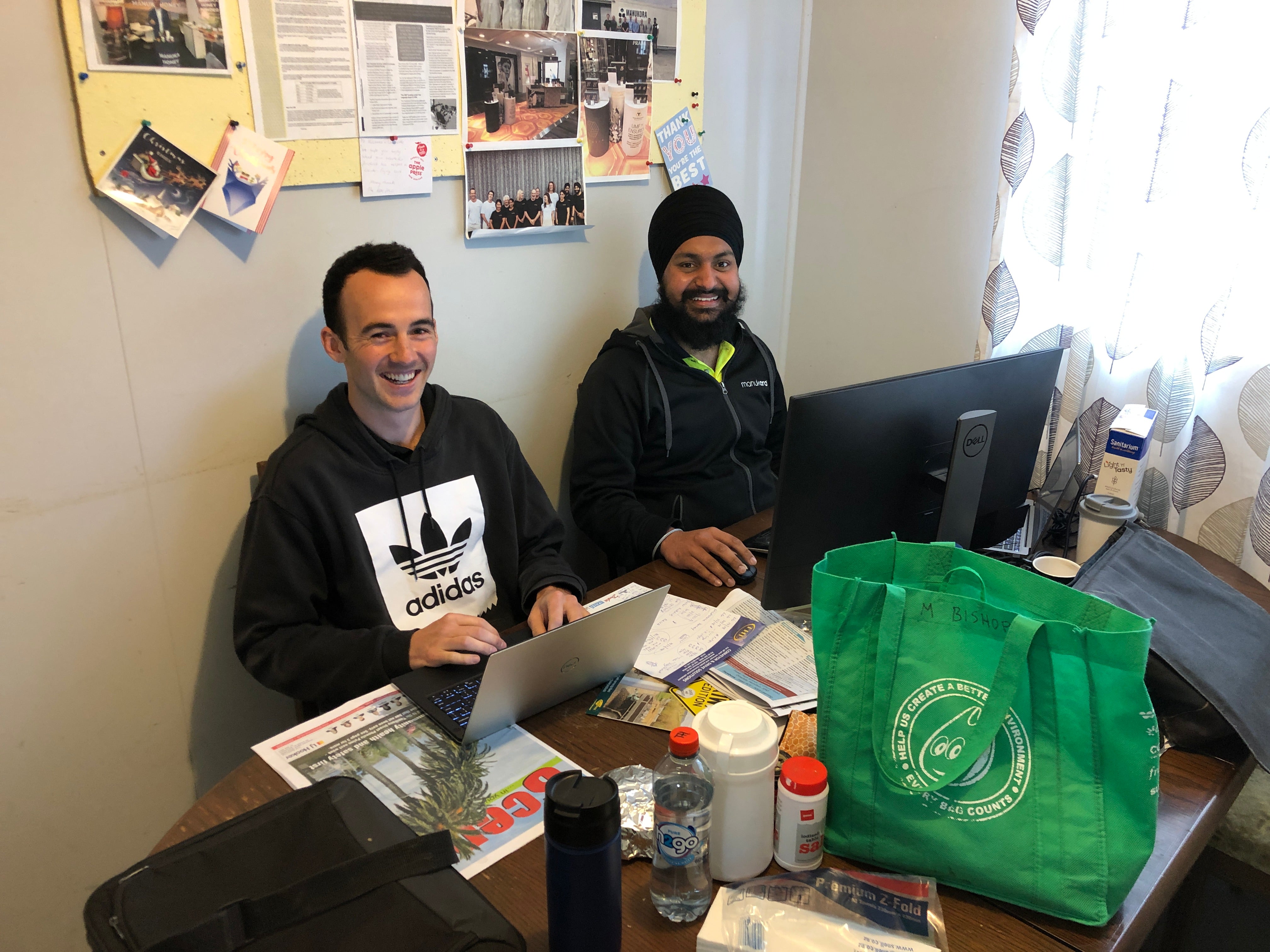
Farmers markets offered an early outlet. Amazon followed in 2015, bringing a few orders a day and the possibility of customers far from the shed. Bell remembers watching that number climb. Each jar sold made the opportunity more tangible; each jar packed made clear how much work sat underneath an online listing.
The setting is worth remembering when looking at the polished brand. An online order may take a moment; the work it triggers has weight, equipment, packaging and a place where somebody has to stand and do it.
One early batch reached Amazon without batch codes. The stock had to be withdrawn, and Bell spent weekends fixing labels. He subsequently took over the processing factory. The episode has an almost comic economy: an entrepreneurial education delivered by a missing piece of print. It also supplies a practical explanation for his attention to traceability. Responsibility follows the product all the way out the door.
The buyer wants to know where it fits
A public retail pitch gives us Bell in working mode. Speaking to Nugget Markets buyer Saj Khan, he described Manukora’s push into California after building an online customer base. His team had mapped the retailer’s locations against existing customers. The proposal arrived with a picture of potential demand around particular shops.
It was useful homework. A grocery buyer has a finite shelf, expensive inventory and other brands already asking for attention. Bell had to explain why another jar belonged there. Khan pressed him on that question and on how a retailer would compete with the company’s online business. The exchange brought the conversation down to the shelf and the till.
The international work had started early. By September 2017, Manukora was shipping to 13 countries. Bell was appearing at Vitafoods Asia as CEO of Ora Foods, a separate business created to supply mānuka ingredients to other brands. Selling a finished jar and supplying another producer require different conversations. Both ask the founder to explain what is distinctive about the honey and how a distant customer can obtain it.
Bell also explained the company’s serialized codes, which let customers authenticate a product and inspect accompanying documentation. A code gave the sales story somewhere concrete to go. For a shopper looking at an unfamiliar honey, the opportunity to check is a meaningful part of the purchase.
“We think nature is awesome.”
Mike Bell, during his retail pitch
The sentence is cheerful. The preparation behind the pitch is methodical. Together they make a useful miniature of Bell’s approach: enthusiasm for the product, followed by work that makes the enthusiasm easier for somebody else to act on.
Let the beekeepers keep beekeeping
In his 2022 account of the business, Bell described a deliberate choice: Manukora would work with independent local beekeepers rather than own a beekeeping operation. The distinction puts a network of skilled people at the centre of the company. A customer may encounter a single brand; behind it are practitioners working in their own regions.
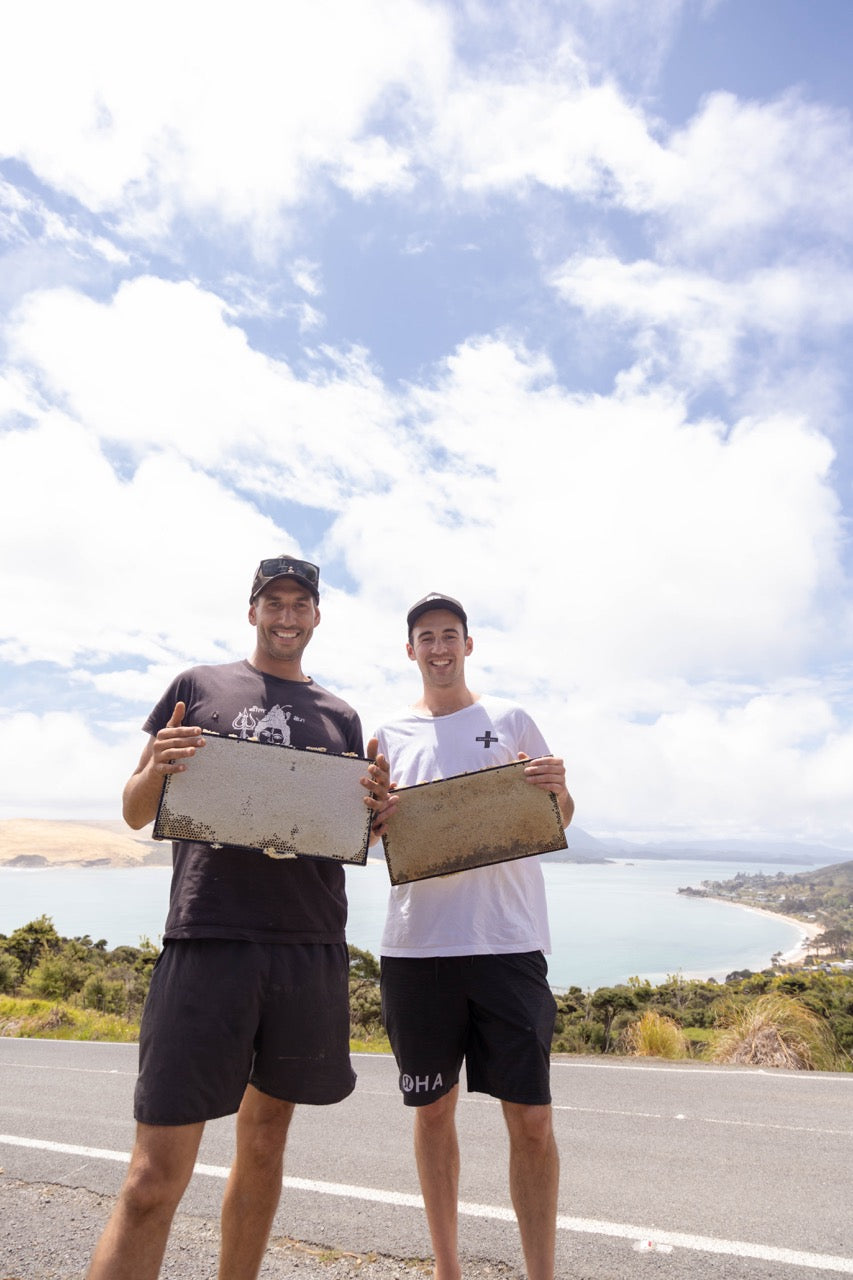
Bell wanted more of the economic benefit to remain in those communities. That gives the partnership model a purpose beyond securing supply. The company’s growth and the beekeeper’s livelihood have to make sense together. Buying honey becomes a recurring decision about relationships, local knowledge and where value accumulates.
The brand calls its shared approach the Art of Ethical Beekeeping. The phrase reaches back to the attention Bell saw in Hooton’s work. It is also a reminder of the distance between describing a practice and keeping it consistent across a network. Expansion makes that task larger. An experienced partner’s judgement remains part of what the company is buying.
- 01Local expertiseIndependent New Zealand beekeepers
- 02Recorded originsPacking, batch records and testing
- 03A customer can checkA scannable code on the jar
A process diagram, not a measure of performance.
A purpose with dates attached
Manukora became B Corp certified on January 5, 2022. The company later described a two-year effort involving documents, changes to the business and coordination across the team. The date is a milestone; the work leading to it sounds rather like running a company. People had to divide the task, gather information and agree on why it mattered.
Its published sustainability roadmap extends to 2035, with an ambition for the business and supply chain to run on renewables. That is a future objective. The distinction between a completed certification and a longer-term plan deserves to stay visible. A calendar makes an aspiration easier to revisit, and gives growth a second set of questions beyond sales.
B Corp certification achieved
Published horizon for the renewables ambition
Bell has named Patagonia, Allbirds and Sawmill Brewery among his inspirations. The brewery is an especially human detail. A founder can admire a business on the world stage and a business up the road. The relevant example may be close enough to visit.
The work of finding people
As Manukora grew, Bell’s job also became one of finding colleagues. In a public testimonial for recruitment partner Hire Central, he describes access to a global pool of candidates and a recruiter working closely enough with the company to feel embedded in its team. It is an account of hiring as an ongoing relationship, with time spent understanding the organisation.
Another recruitment testimonial, for Dimond Connect, credits the process with helping build a capable, motivated team. These comments offer a less picturesque view of the founder’s working life than a trip to the hives. The people who can run the next stage of the business have to be found, persuaded and given useful work.
Bell has also argued that a supportive workplace begins with the leaders a company hires. That puts recruitment and culture in the same conversation. A founder’s intentions have limited reach on their own. As the team grows, other people make decisions in the company’s name, often well beyond the founder’s immediate view.
Five jars and a table of friends
There is a more convivial version of Bell’s work on Manukora’s tasting page. He guides customers through five New Zealand honeys. Participants gather spoons, tasting cards and pens, keep the labels concealed and compare impressions. For once, the business presentation comes with permission to eat the exhibits.
The exercise centres on difference: place, flavour and the words people find for what they taste. A group can follow Bell’s video or guide itself through the experience. The founder supplies a starting point, then the table supplies its own opinions. The title Chief Honey Officer, used on the page, acquires a reasonably practical job description.
Outside work, Bell talks about surfing, hiking and skiing, and about exploring food with his wife, Freya. Those interests fit comfortably beside the tasting table. Curiosity about a place often begins with wanting to spend time there; curiosity about a product can begin with wanting another spoonful.
He also listens to How I Built This, the founder-interview podcast hosted by Guy Raz. In 2023 he singled out the episode with Orgain founder Andrew Abraham, whom he described as a friend. It is a small connection with a familiar rhythm: another person building a food brand, another account of the decisions behind a finished product. Bell still seems interested in how other people do the work.
The golf balls make a memorable opening. The recurring thread afterward is attention: to an experienced teacher, a missing label, a buyer’s question, the people hired to carry the business forward. Bell’s company asks customers to look beyond a jar. His own story becomes more interesting when we do the same.
Follow the thread
- Manukora website
- Michael Bell on LinkedIn
- Watch Bell’s guided honey tasting on YouTube ↗
- The packing shed years and Bell’s outdoor interests
- The full retail pitch and buyer conversation
- Bell’s B Lab interview
- The early ventures and batch-code lesson
- Manukora’s sustainability roadmap
- Bell on building a global team · Recruitment reflections
- Manukora on Instagram · Facebook · YouTube · TikTok