A box of tissues has a peculiar ambition. It wants to be within reach, to do its job, and to be replaced by another box with the same name. There is no applause at the end. For Michael Hsu, chairman and chief executive of Kimberly-Clark, that quiet second purchase is where a considerable amount of work comes due.
Hsu’s working life has taken him through frozen potatoes, grocery aisles, restaurant supply and household staples. The products change. The commercial predicament remains recognizable: people must have a reason to choose your version of something they can obtain elsewhere. A familiar name helps. It also creates an expectation that somebody, somewhere, is still paying attention.
At Kimberly-Clark, he has moved from running North American consumer products to overseeing the whole company. He became CEO in January 2019 and chairman a year later. His story makes most sense through the jobs between those titles: marketing, sales, logistics and operations, the unromantic machinery that allows a brand to keep its promises.
The education of a repeat purchase
Hsu graduated from Carnegie Mellon University in 1986 and earned an MBA at the University of Chicago. Carnegie Mellon now lists him on the Tepper School’s Business Board of Advisors. The connection gives his career a pleasing circularity: a business graduate returning to a school whose students are preparing for decisions he has spent decades making.
He began his consumer-products career at Booz Allen & Hamilton, rising to partner in its consumer practice. Consulting put him on the advisory side of business. The jobs that followed put him inside companies selling things with recognizable names, where recommendations eventually had to survive budgets, distribution and an actual customer.
At H.J. Heinz, his six years included responsibility for marketing Ore-Ida and frozen meals, followed by the presidency of Foodservice. Frozen potatoes are a useful reminder that a product can be ordinary and its business demanding. A shopper choosing dinner and a restaurant ordering supplies may buy related things while requiring rather different reasons to feel satisfied.
His next stretch made that range broader. He ran Kraft’s grocery business from 2008 to 2010, then sales, customer marketing and logistics from 2010 to 2012. He became executive vice president and chief commercial officer in 2012. A career told through titles can sound bloodless. Read through these responsibilities, it becomes a tour of the distance between making a product and getting somebody to buy it.
- Booz AllenConsumer consulting
- HeinzMarketing & foodservice
- KraftGrocery, sales & logistics
- Kimberly-ClarkOperations & leadership
The sequence suggests a useful way to read Hsu’s experience. Marketing considers why somebody might want a product. Sales deals with the customer who stocks it. Logistics concerns whether it arrives. Leading across those functions means confronting how one department’s decision can create work for another. That is a practical background for a chief executive asking an organization to coordinate change.
An $8 billion introduction
When Hsu joined Kimberly-Clark in 2012, his assignment was its North American Consumer Products business, then nearly $8 billion in size. He arrived with experience of food brands and took responsibility for a different set of household routines. The move was substantial, though the questions about consumer choice, retail execution and product performance travelled with him.
He became group president for North America, then president and chief operating officer in 2017. That latter job included day-to-day business operations and the global innovation, marketing and supply-chain functions. The breadth matters. A promising invention, an intelligible message and a product that arrives where it belongs all have to meet before the customer sees any benefit.
His appointment as CEO followed years inside the business. He succeeded Thomas Falk in January 2019; the chairmanship followed in January 2020. It was a progression through increasing responsibility rather than an entrance from outside. By the time he held the top job, he had already worked across several of the functions he would be asking to change.
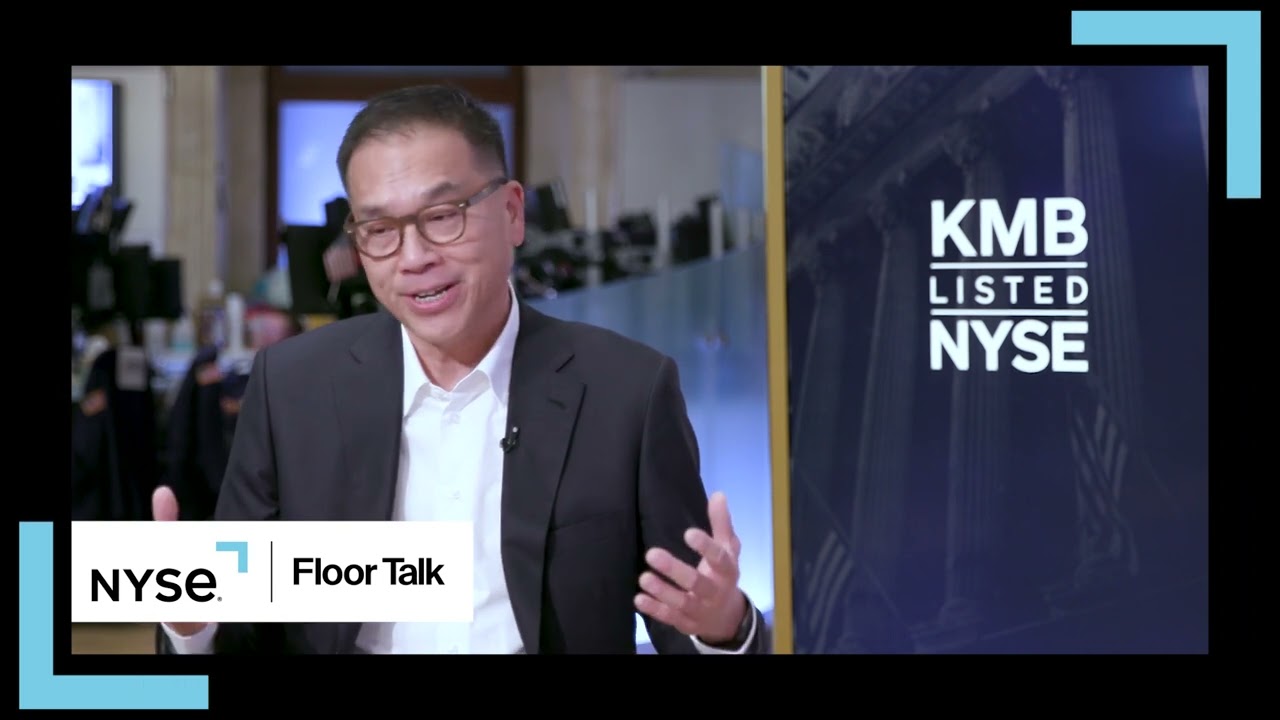
The colleague’s description
There is a small but revealing account of Hsu from Alison Lewis, then Kimberly-Clark’s chief growth officer. In a December 2022 conversation, she explained that his vision for transforming the company had attracted her to the role. She described a leader with little ego, an understated manner and a habit of following through.
“What he says he will do, he does do.”
Alison Lewis, describing Mike Hsu, December 2022
Robert Long, the company’s then chief research and development officer, recalled a conversation with Hsu about its purpose when explaining his own arrival. Together, the recollections show Hsu in a role a chart of executive appointments can obscure: persuading experienced people that an established company contains work they want to do.
That is a particular recruiting proposition. A company with famous brands already has a past. The person joining it needs a reason to care about what happens next. Lewis spoke about commercial, cost and cultural change. Long spoke about the fit between his experience and the company’s needs. Their accounts make the ambitions feel like working assignments, with names attached.
These are colleagues’ descriptions, and should be read that way. Still, they offer a more useful glimpse of a chief executive than a collection of adjectives on a corporate biography. Dependability can sound almost disappointingly modest until someone has accepted a demanding job on the strength of your plan.
Familiar names, unfamiliar instructions
In March 2024, Hsu introduced the next phase of Kimberly-Clark’s transformation, called Powering Care. The plan joined three priorities: developing products through science and technology, improving the economics of making and delivering them, and changing how the organization worked. It placed invention and operating discipline beside each other.
The original announcement focused on 12 major brands accounting for more than 80 percent of company sales. It also set out ambitions for more than $3 billion in gross productivity savings and roughly $500 million in working-capital savings. Those were announced targets, with the intention of helping fund growth. They were never a sensible substitute for checking what actually happened.
Different measures, different jobs. These ambitions are shown separately and are not realized results.
The change carried costs of its own. The company initially expected around $1.5 billion in pretax transformation charges, approximately half in cash, with cash costs primarily associated with workforce reductions. Its filing also anticipated about $800 million in related capital spending through the end of 2026. An organization can describe itself as becoming faster; the people and assets inside it experience the actual rearrangement.
By January 2025, Kimberly-Clark was reporting volume gains, improved product mix and efficiencies from the first year of the program. In February 2026, it said innovation had contributed more than 75 percent of its volume-plus-mix growth during 2025. The wording is worth preserving: that measure describes part of sales growth, rather than three-quarters of total revenue.
For Hsu, the practical test sits beyond the vocabulary. An improvement must make it through development, manufacturing, marketing and distribution before it reaches a household. His earlier jobs ran through much of that route. The 2024 plan asked a large organization to make the connections work more effectively.
A different shape for the business
Hsu’s agenda has also involved changing what Kimberly-Clark owns. In June 2025, it announced an agreement with Suzano for an international tissue and professional-products venture. The proposed ownership split gave Suzano 51 percent and Kimberly-Clark 49 percent. The announcement presented the arrangement as a way to concentrate Kimberly-Clark on businesses with higher growth and margins.
That decision places a different kind of judgment beside product invention. Running a business better and choosing how much of it to own are separate questions. The Suzano agreement made the second one explicit. A career spent among consumer brands had brought Hsu to decisions about the boundaries of the company itself.
There is another connection to his earlier life in food: McDonald’s. Hsu joined its board in 2024 and remained listed as an independent director in its 2026 proxy. The appointment returned him to a familiar commercial landscape from a different seat. Restaurants and packaged goods share an interest in customers coming back, even when the operating details differ.
His public record also includes community organizations. In introducing his board nomination, McDonald’s highlighted his work with Catalyst and the United Way of Metropolitan Dallas CEO Council, alongside earlier board service with United Way Worldwide and Big Brothers and Big Sisters of Metropolitan Chicago. These roles belong beside the corporate résumé without needing to become a personality theory.
The next box on the shelf
By October 2026, Hsu was preparing for another substantial change. Kimberly-Clark’s October 1 leadership announcement described its Kenvue acquisition as pending, with completion expected in the fourth quarter subject to approvals and other closing conditions. Jeff Melucci would oversee integration plans and programs, while finance chief Nelson Urdaneta would oversee synergy-delivery plans. Preparation and completion remained separate events.
Meanwhile, the business kept introducing products. On October 19, Kimberly-Clark launched Big Dreams diapers and wipes, developed with Amazon and available exclusively in its stores. A large corporate transaction and a new product collection occupy different scales of attention. Both still require people to execute the details.
That is where Hsu’s career becomes most legible. The consultant became a marketer, a foodservice leader, a grocery executive and an operator. Each job added another part of the journey from a company’s intention to a customer’s cupboard. The progression has brought him considerable authority over what happens along the way.
A tissue box will never thank its chief executive. Nor will the customer generally pause to admire the logistics. She will reach for what she needs and, later, decide what to buy again. Hsu’s work travels a long way to arrive at that small moment.