Michael Brady has a ready answer for people who ask about his clothes. He has heard the Ace Ventura comparison before. In a public reflection on founding Bede Gaming, he puts the wardrobe joke beside a rather more consequential question: why did the company need to exist? It is a pleasing juxtaposition. The shirt gets the first look. The answer concerns software, frustrated customers and promises that have to survive contact with a deadline.
Brady’s account starts on the buying side of the table. He and his fellow founders had worked with gaming operators and thought the available platforms gave those customers too little freedom. In 2012, they set about building an alternative. The grievance was specific enough to become a business: operators wanted more control over their own products and fewer constraints imposed by the companies supplying the machinery underneath them.
There is an ordinary human irritation inside that technical proposition. Anyone who has bought a system and then discovered that every change requires someone else’s permission can recognise it. Brady’s career makes more sense when read through that irritation. He keeps appearing where a business needs to understand its customer, negotiate with a partner or turn specialist knowledge into something another company can use.
He joined Cashcade in 2000 as one of its early employees. The business behind Foxy Bingo put him inside online gaming while the sector was still developing its commercial habits. Later came ventures including Business Betting and Gamblemob, and a spell as bingo commercial director at bwin. By the time Bede arrived, he had accumulated experience of the operator’s side of the relationship. He knew what it felt like to depend on a supplier.
Permission to do things differently
Bede’s proposition put that experience to work. Brady described an open approach in which customers could connect other suppliers and shape their own offerings. Application programming interfaces, or APIs, supplied the connecting points. The commercial argument was easy to understand even if the plumbing was complicated: a client should be able to choose a direction and have the platform accommodate it.
In 2017, he pointed to the integration of Kambi’s sportsbook for Rank as a practical example, saying it had taken ten weeks. That was a claim about execution, rather than a mood board for the future. For an operator, a functioning integration changes what can be offered to customers. It also gives the supplier’s sales pitch an awkward but useful companion: something that can be checked.
The product continued to gather content. A January 2018 agreement with Genii offered Bede’s clients access to more than 140 games. The importance of such deals lay in the cumulative work behind them. A platform had to accommodate separate suppliers while remaining useful to the operators buying it. Brady’s public role involved explaining why those connections made commercial sense, as well as announcing that another connection had been made.
By May 2018, he was discussing the ambition to connect different channels through a common player account and experience. The industry called this omni-channel. Brady acknowledged the term’s popularity around conference halls. Beneath the fashionable language sat a recognisable inconvenience: customers moving between products and settings should not encounter a business that appears to have forgotten who they are.
Kambi sportsbook integration for Rank, as described by Brady.
The founder makes room
Bede’s growth also changed the job of its founders. In June 2018, Alex Butcher became managing director, taking control of the leadership team. Brady and Dan Smyth moved into more strategic board roles. Butcher had been chief technology officer. The change gave the person responsible for much of the technical operation a broader mandate over the business and its people.
A leadership handover can look like a small paragraph in a company announcement. For a founder, it concerns a substantial question: which decisions still need you? Brady’s move is a useful early marker of the chairman and adviser he would become. Bede was developing a management structure that could carry more of the operating responsibility. A company intended to give customers room to act was making room within its own leadership.
That September, Ontario Lottery and Gaming selected Bede Gaming Canada after a competitive procurement process. The assignment extended beyond supplying an attractive website. OLG wanted a new digital foundation linking products and channels, with capabilities around registration and player accounts. Its annual report described contracts covering the core account system, a gaming website and mobile applications.
For Brady, the Ontario agreement was a collective achievement. He expressed pride in the team effort that had secured it. The distinction matters in a founder’s story: the person who explains a business can become more visible than the people delivering it. His response put the team into the picture. Ontario also gave Bede an institutional customer overseas, making its international ambitions considerably more concrete.
- 2000Early employee at Cashcade
- 2012Co-founds Bede Gaming
- 2018Moves into a strategic board role
- 2020Gauselmann acquires a majority stake
- 2026President of gaming at Brothers & Sisters
A sale, followed by more work
In March 2020, Gauselmann Group acquired a significant majority stake in Bede. The arrangement kept Bede operating as an independent business within the group, with management retaining a holding. The buyer saw both technology it could use and a route into the North American lottery market. The company Brady had helped establish had become part of another organisation’s plans for digital expansion.
An acquisition supplies a convenient ending to a business biography. Brady’s subsequent diary refuses the convenience. Later in 2020, he and Joe Saumarez-Smith were involved in Eyas Gaming, backed by Gauselmann. By September 2023, he was identified as Eyas’s chief executive alongside his position as Bede’s chairman. His career continued to involve both operating a business and overseeing one.
The Conexus Group added another board appointment in September 2023. It brought him in as an independent non-executive director. The group’s businesses covered services including recruitment, training and advice for gaming companies. Brady had used its recruitment arm, Pentasia, himself. He was joining a supplier whose work he had already encountered as a customer - a familiar position in a career repeatedly shaped by experience on the other side of the transaction.
By August 2026, he was chairman of both Conexus and Bede. These roles put a different demand on experience. Running a company requires decisions every day; chairing one requires judgment about the decisions other people bring to you. The record of Brady’s appointments shows an expanding set of places in which that judgment is sought, rather than a single operating title held indefinitely.
An adviser who has worn the gloves
ClearStake appointed him adviser to its board in May 2025. His brief concerned commercial strategy and helping the business scale. ClearStake supplies financial due diligence technology to gaming operators, giving Brady another business whose product has to work inside other companies’ operations. He welcomed the opportunity to help Martin Burt and the team develop their commercial approach.
The appointment also makes the boundary of his role clear. He joined to advise the board. That is a different responsibility from founding ClearStake or running its daily affairs. By this stage, his experience of building and selling companies was becoming a service he could provide to other teams. The recurring question remained practical: how does this technology find customers and become useful enough for them to keep using it?
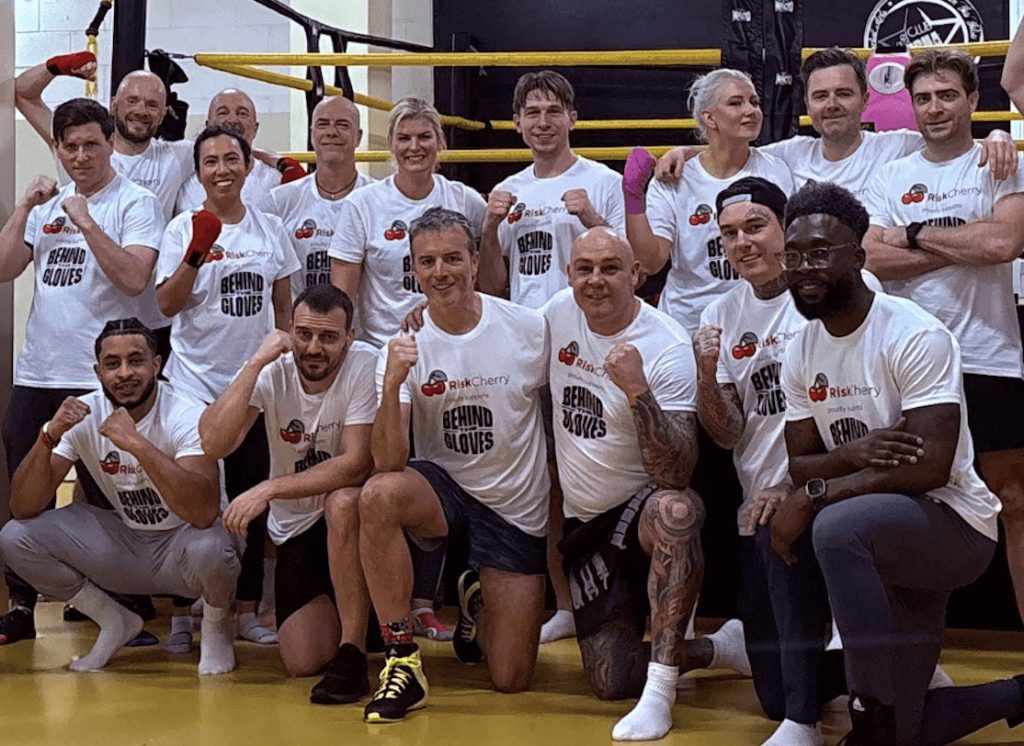
Then there is the boxing. Brady trained with Lee McFarland for the SBC Boxing Championship and later appeared with him in a January 2026 video conversation. Their subjects included Behind The Gloves, the boxing community McFarland founded, as well as Bede’s Canadian business. It is a more physical setting for the same busy industry network. A pair of gloves does rather limit the temptation to check your phone.
In April 2026, Behind The Gloves announced a founding advisory board including Brady, RiskCherry chief executive Rob Fell and former Light & Wonder executive Katie Byers. The organisation was preparing to expand its business beyond individual events. Brady’s involvement had progressed from participating in boxing to helping advise the organisation around it. Here again, a firsthand experience preceded a formal role.
The next brief is a creative one
His August 2026 move to Brothers & Sisters widened the setting again. As president of gaming, he was brought in to help the creative agency develop its sector work globally. The agency was looking at opportunities where gaming, sport, streaming and entertainment overlap. Brady arrived with experience in technology and operations, but also with a history in gaming marketing, including his involvement as a founding shareholder in Rocket9.
The agency already had specialist experience in adjacent fields. Robert Tansey brought a background at Sky Sports; managing director Steph Hobart had worked on Candy Crush. Brady’s appointment placed him among people who understood different parts of the audience business. For an entrepreneur who had spent years explaining the infrastructure behind brands, the new brief moved attention towards how those brands tell their stories.
“I look forward to demonstrating their original brand of storytelling to the international gaming and sports industries.” His ambition for the agency was explicit. The work ahead would involve bringing its creative capabilities to a sector he knew. The appointment joined his existing chairmanships, extending a portfolio that already crossed software, professional services and commercial advice.
Away from appointment notices, his sporting loyalties are less complicated. He has described himself as a lifelong Liverpool supporter, with games at Anfield his preferred sporting occasion. In 2017, he also spoke about annual visits to Cheltenham and Aintree. Those details put a person inside the conference biography: a football fan, a racegoer, someone who has enjoyed the hospitality his industry supplies and is prepared to say so.
The shirts belong in that picture too. So does his willingness to laugh about them before explaining Bede’s original purpose. His public story contains the usual corporate milestones - new customers, a change of management, an acquisition, a string of appointments. The useful thread runs between them: a customer’s complaint turned into a supplier’s proposition, and an operator’s experience became something other founders could call upon. The wardrobe can take care of itself.
“As a lifelong Liverpool fan, my favourite sporting event will always be any game at Anfield.”
Michael Brady · 2017