A shopkeeper can remember a face long after a computer has forgotten the conversation. Sharon Segev has spent several chapters of his career working around that mismatch. He has sold businesses a way to organize their marketing, helped build a fashion retailer and co-founded a service for online shopping assistance. Across those settings, the technology has had to answer a rather personal question: what would make this customer’s next encounter with the business worth having?
Consider the range of places where that question appears. A promotion must give someone a reason to visit. A boutique needs to understand what a regular customer likes. An online shopper may want a demonstration before deciding. Segev’s work connects these everyday exchanges to the software operating behind them. The interesting unit is the encounter, with all its small opportunities to be helpful or irritating. Anyone who has received an enthusiastic offer for something they have just bought will recognize the distinction.
His own description is compact: “I’m an entrepreneur and operator.” The two jobs sit comfortably together in this story. A founder proposes a system. An operator discovers what happens when people actually have to use it.
A salesman’s view of the shop window
Before Alicanto, Segev held commercial roles at Plimus and Wibiya. By April 2012, his résumé included sales leadership at the former and business development at the latter. These were businesses concerned with the workings of the web; his next company would direct that experience toward smaller merchants, whose daily priorities were often much closer to the street.
He co-founded Alicanto with Zvika Zisser in 2011. Segev served as chief executive; Zisser was the technical co-founder. The company’s proposal was understandable without a software demonstration: give a small business help with marketing when hiring a dedicated employee was beyond its budget. The owner would supply information about the business and customers. The service would suggest activities and make them easier to carry out.
There was money behind the proposal. In 2012, Shlomo Kramer invested approximately $4 million. The business had offices in California and Tel Aviv, and plans called for its team to grow from 13 people to about 30. Those were plans for expansion, with all the work still ahead of them. A funded company could hire people; its prospective customers were often trying to accomplish the opposite, adding a useful business function without another salary.
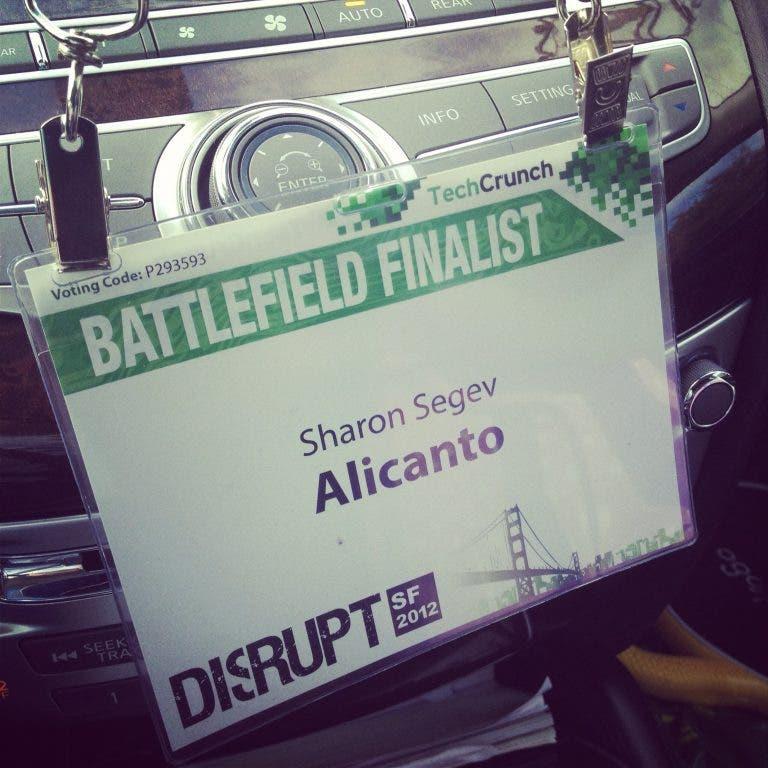
By September, Alicanto was appearing at Disrupt SF. Segev’s surviving event badge says “Battlefield Finalist,” his name printed above the company’s. The photograph captures it hanging against a car console. It is a pleasingly ordinary resting place for a Silicon Valley credential: between a public pitch and whatever appointment came next.
The neighboring shop had customers, too
Alicanto described its offering as a marketing department in a box. Its daily recommendations used business information to suggest a next step. Prepared material and delivery tools then helped turn that suggestion into a campaign. The design joined advice to execution. A good idea that sits untouched on a merchant’s task list has a remarkably poor delivery rate.
That approach acknowledged a problem familiar to anyone running a small operation. Choosing what to do takes time; learning how to do it takes more. A service that joins the two can remove an awkward handoff. The merchant still needs judgment about the offer, the timing and the audience. The software’s job is to make the decision easier to act on.
Segev also made a case for looking sideways. In 2013, his advice on local marketing emphasized nearby businesses serving people with similar interests. The attraction was geographic as well as commercial. A relevant customer who already shops close by may have a plausible reason to visit another business in the same area. Distance, in that argument, belongs in the marketing calculation.
By 2014, Alicanto was explaining joint promotions through an example involving a swimwear retailer and other neighborhood merchants. Businesses could coordinate a campaign, and customers could receive the participating shops’ offers together. The company said merchants retained control of their individual lists. Its delivery options included physical mail alongside digital messages.
This is a different sort of network from the one usually celebrated in technology. The participants have opening hours, nearby competitors and customers who may need parking. Cooperation has to produce an offer worth reading. The software can arrange the introduction; the businesses must still be good company.
- 01UnderstandBusiness and customer information
- 02RecommendA relevant marketing activity
- 03SendThe merchant puts a campaign into motion
Conceptual illustration of Alicanto’s described workflow.
Across the counter at Ruti
Segev had a close connection to the kind of merchant Alicanto served. His wife, Ruti Zisser, owned the Ruti clothing business, which used Alicanto in 2012. Fashion retail supplied a setting where a campaign had a destination: an actual shop, with clothes to try on and customers whose preferences mattered.
Ruti would also become a substantial chapter in his own operating career. Zisser and Segev are identified as its co-founders. By 2019, he was speaking as the company’s chief technology officer. Here the systems were part of the business he helped run, and decisions about them reached beyond marketing to the machinery of selling.
One account of Ruti’s store technology describes an earlier checkout system tied too closely to local hardware. When a computer failed, replacing it could interrupt store operations. Moving to a cloud-based system supported management across locations, with inventory and connections to other business software. This is the less photogenic side of retail technology. It rarely gets the window display, but everybody notices when it stops working.
Segev described the supplier relationship in the language of a continuing association: “We’re partners.” The phrase fits a retailer’s dependence on its systems. A payment, an inventory record and a customer conversation all need the underlying operation to hold together. A useful technology partner has to remain useful after the installation.
The move from selling merchant software to working inside retail changes the view. The same decision can appear as a feature in one office and as an extra task for a sales associate in another. Segev’s documented career gives the reader both settings, making the distance between product design and daily use unusually visible.
A boutique with a memory
In October 2019, Ruti announced a $6 million Series A led by Viola Ventures. Its technology ambitions centered on personalization. The company described a system that gathered shopping preferences and purchase histories, including information about items customers had tried. Customer feedback could also inform future collections.
The proposed usefulness was specific. A sales associate who knows a customer’s preferences can make a more relevant suggestion. Keeping that information available across visits reduces the need to begin each conversation from the beginning. The company’s system included facial recognition, described at the time as opt-in only. That permission was part of the announced design.
Segev said the funding would help carry Ruti’s personal store experience into its online business. The ambition joined two settings that make different demands on the customer. In a boutique, someone can answer a question, bring another size or explain a garment. Online, much of that work has to be arranged deliberately.
Viola’s investment rationale put the tension plainly: a retailer could grow while preserving the feeling of a small boutique. Its assessment connected the brand’s audience, its physical operation and its technology. Growth would ask the business to repeat a personal experience across more encounters, rather than merely repeat the layout of a store.
Read alongside Alicanto, this chapter suggests a continuity in the problems Segev chose to work on. The earlier service helped a merchant make contact. Ruti’s systems tried to make the contact more informed. That is a connection between the work, rather than a claim that the businesses followed one master plan. A career can have a recurring question without having a screenplay.
2012 investment
2019 Series A
Separate company financings, shown as historical milestones. These figures do not describe Segev’s personal wealth.
“I’m an entrepreneur and operator.”Sharon Segev
The showroom moves online
Feel added another setting. Founded in 2021, it names Oren Harnevo, Segev and Avi Revivo as co-founders, with Segev associated with product leadership. Its offering connects online shoppers with assistance and virtual product demonstrations. A product called The Showroom organizes interactions between customers and sales associates.
The premise gives a person a role inside an online purchase. Some products invite questions that a photograph and a checkout button cannot settle. A demonstration can show an item in use. A conversation can address what the shopper is trying to accomplish. Software arranges the meeting and the tools around it.
Alicanto, meanwhile, belongs to an earlier chapter: the original marketing venture is listed as non-active by December 2017. Its place in Segev’s story remains concrete. It was the business where he and Zisser tried to give small merchants practical marketing assistance, including ways to cooperate with their neighbors.
The later work enlarges the picture of its co-founder. Across these businesses, Segev has operated on several sides of a transaction: helping the merchant initiate it, supporting the retailer conducting it and building ways for an online shopper to ask for help. Each setting makes a relationship depend on different practical details.
A customer’s return is a small event from the outside. Someone opens a door, starts a conversation or comes back to a website. Behind it may sit a useful reminder, a preference remembered or a question answered well. Segev’s career has repeatedly brought software into that everyday territory, where the next visit has to be earned.