On a customer's birthday, a store has a rare excuse to say hello. Alicanto turned that excuse into software. It could send a greeting by text, email or postcard, append an offer and bring a familiar customer back through the door. A postcard is an old trick. Putting it inside a service that watched the calendar, prepared a campaign and suggested the next one was the Palo Alto company's new trick.
There was a larger ambition behind the stamp. The founders wanted to give small merchants something resembling a chief marketing officer without asking them to hire one. Their imagined customer was the shopkeeper who knows every regular by sight but has neither the time nor the staff to plan a sequence of promotions. That makes Alicanto's story more revealing than a routine tale of marketing automation: it is about what happens when software tries to make local business owners act in concert.
- Alicanto gave small businesses tailored campaign suggestions and tools to send them.
- Its Alliances feature let neighboring merchants run joint offers while keeping customer lists separate.
- The company raised about $4 million in 2012; startup directories later marked the original software venture closed.
The manager in the browser
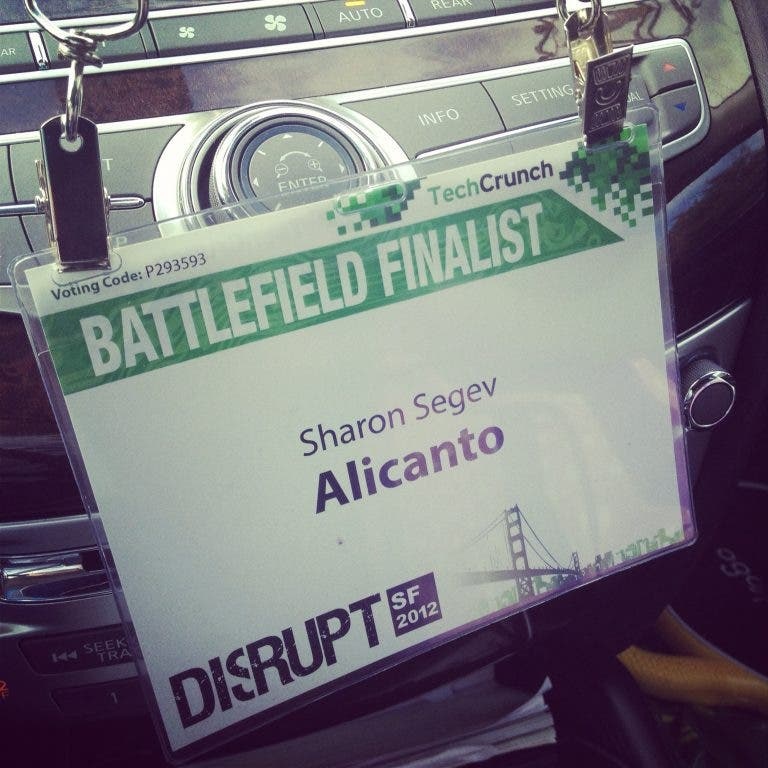
Sharon Segev and Zvika Zisser founded Alicanto in 2011. By September 2012 it was onstage at TechCrunch Disrupt in San Francisco, pitching a marketing assistant for small businesses. Segev, its chief executive, described the job in plain shop-floor terms: get more people through the door. The software looked at a merchant's business, location and customers, then offered daily recommendations that the owner could put into action with a few clicks.
A recommendation could become an email offer, a direct-mail postcard or a promotion timed to a customer's birthday. The service also managed lists, showed previous activity in a feed and plotted campaigns on a calendar. In a 2012 local interview, Segev called it a “Virtual Marketing Manager for small businesses who don't have the money to hire a full time marketing manager.” That is a tidy description of the product's customer and its price comparison. The alternative was not some glamorous marketing suite. Often it was the proprietor doing nothing because the till, the inventory and the next shift came first.

Alicanto used a freemium model. Registration and many basic services were free; premium activities cost money. The company was not selling attention to consumers. It was selling a merchant a way to earn attention from people already nearby or already on a customer list. That distinction mattered because a neighborhood retailer needs a sale it can recognize, not merely an impressive chart of impressions.
A shopkeeper's network effect
The most peculiar part of Alicanto's pitch was called Alliances. Imagine a swimwear shop planning a July Fourth offer. It invites a bakery, party-supply shop and convenience store nearby. Each merchant sends one shared promotion to its own customers; those customers see all four offers. Alicanto said the underlying lists stayed with their owners. It is a modest but useful bit of design: a shop can borrow the reach of its neighbors without handing over the names in its address book.
This was its answer to the scale advantage of chains. A large retailer can buy reach and hire specialists. Four independent merchants can neither become a chain nor summon a marketing department, but they can combine their audiences for an afternoon. The offer works best where customer interests overlap and the shops are close enough for one trip to become two. A gym and a clothing store, for example, need not sell the same thing to share a customer.
This is also where the product's promise becomes conditional. A joint campaign needs a reason for the customer to visit, compatible merchants and a clear way to honor each offer. Add partners indiscriminately and the postcard becomes a crowded leaflet. The principle a merchant could copy today is narrower and stronger: pick one adjacent business whose customers have a credible reason to cross the street, then test one shared offer with permission-based lists.
What a birthday can buy
Segev had an unusually close test bed. His wife owned Ruti, a clothing retailer in Palo Alto. In a 2012 interview he said birthday postcards accounted for 12% of the store's sales. That is a reported store-specific result, not proof that the same card would lift another shop by the same amount. The useful observation is more ordinary: birthdays give a retailer a reason to contact a known customer, and a physical card may survive the crowded inbox long enough to be noticed.
Share of Ruti's sales attributed to birthday postcards in Segev's 2012 account. One store's reported experience, not an industry benchmark.
By 2014, Alicanto was talking about Birthday Clubs as a central offering. Its LinkedIn description later claimed thousands of clubs around the world. The company said customers included Ruti, Jigsaw London, SingTel and Glacier Media Group, and that its product was available to more than 100,000 Shopify merchants. That last number described potential access through a platform, not 100,000 users. The distinction is easy to lose in startup marketing and vital to keep in an honest account.
Alicanto had also raised roughly $4 million from Shlomo Kramer in 2012. Coverage at the time reported plans to expand a 13-person team toward 30, with work in California and Tel Aviv. It was a substantial wager on a hard market: owners were busy, local businesses varied enormously and the cost of reaching them could consume the value of a small account. TechCrunch identified the difficulty at launch. Alicanto's solution was to reduce the owner's work to a specific next action, then make the act of sending easy.
“We are trying to increase the foot traffic.”Sharon Segev, speaking at Alicanto's 2012 launch
The name outlived the pitch
The recorded arc of the original venture has an unusual final page. Startup Nation Central lists it as non-active by December 2017; TechCrunch's company profile marks it closed. The alicanto.com domain now presents an investment and business consulting proposition rather than the old campaign software. Its pages still include generic Wix copy, placeholder staff names and a “Dean & Brooks” label. Those pages do not establish a link between the historical marketing startup and a functioning new advisory firm. The documented Alicanto story remains the one about merchants, birthdays and local alliances.
One need not resurrect the product to learn from it. The owner of a bakery can still ask whether the florist next door serves the same celebration. A gym can ask whether its members would welcome an offer from a nearby café. A store can count how many birthday offers were redeemed instead of congratulating itself for how many were sent. Alicanto packaged those questions in software, but the hard part was always choosing the right occasion and the right neighbor. The postcard was merely the messenger.