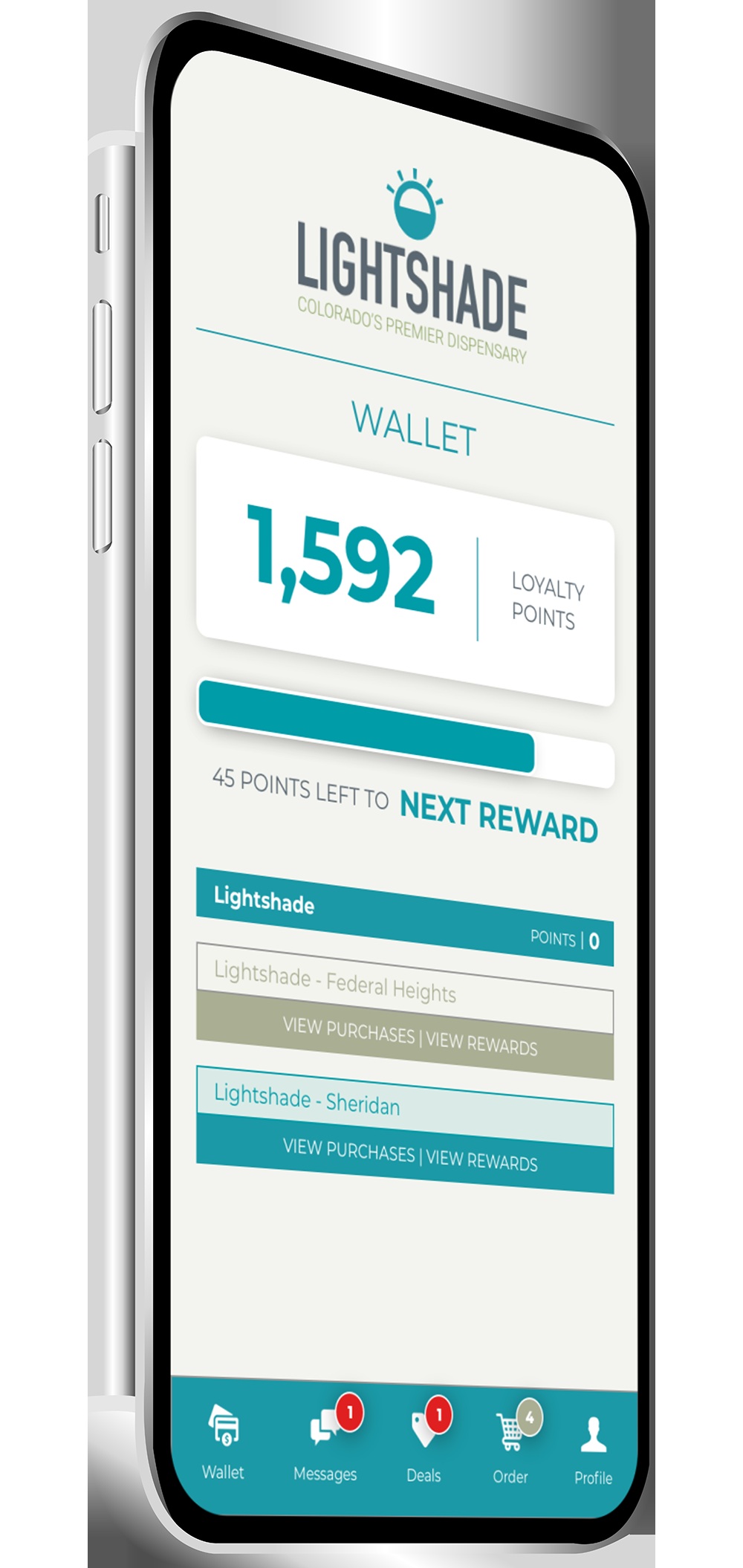
In February 2020, Lightshade had a loyalty problem. The Colorado dispensary chain wanted to reward repeat shoppers. Its software was irritating them instead. In Leafbuyer’s published account, marketing director Lisa Gee describes an unreliable platform and a search for a more responsive provider. The reward was supposed to bring people back. First, it had to work.
THE STORY IN 30 SECONDS
- The job: help dispensaries find customers and earn repeat visits.
- The mechanism: connect public deals, private messages, rewards, and ordering.
- The catch: message delivery and customer trust determine whether the machinery pays.
Lightshade already knew Leafbuyer as a directory. That relationship helped win the software contract. Gee reported average savings of $2,000 a month and better retention, without attaching a percentage to the improvement. It is a vendor-published testimonial, but its explanation is refreshingly ordinary: working software, useful rewards, someone who answers.
A loyalty program has one very basic feature requirement: don’t annoy the loyal customers.
A directory learns to bring people back
Leafbuyer’s operating company, LB Media Group, dates to 2013. The founders brought experience from older corners of the internet economy. Kurt Rossner had built an internet hosting business. Mark Breen came from broadcast sales. Michael Goerner’s background included work on the original MapQuest website. Selling attention, building infrastructure, helping someone find a place: their earlier careers supplied surprisingly useful ingredients.
The first proposition was easy to understand. Cannabis shoppers could compare local deals; dispensaries could pay to appear where those shoppers were looking. A directory can introduce a customer. After that first purchase, however, the store still needs a reason for the customer to choose it again.
Leafbuyer gradually filled that gap. It added texting, loyalty, and branded applications. Its technology site describes hundreds of dispensary relationships. The customers are medical and adult-use retailers, alongside cannabis product businesses, operating within legal US markets. They buy help with a retail problem that survives every industry forecast: getting another purchase from someone who already knows the shop.
Give the same offer a second job
The clever connection arrived in March 2023 with Total Network Solution. A dispensary’s SMS or MMS campaign could also appear on Leafbuyer.com as a searchable deal. The message reached existing subscribers; the public listing could attract people outside that list. One offer did two jobs.
ONE OFFER / TWO AUDIENCES
A product workflow, not a measured conversion funnel.
Around that connection sits a practical toolkit. Loyalty points can follow spending or visits. A branded SmartApp puts rewards, purchase history, messages, and ordering on a customer’s phone. Leafbuyer lists ordering integrations with Jane and Dutchie and retail-system connections including Treez, Flowhub, Cova, and BLAZE. Transaction history can inform the next offer instead of leaving every subscriber with the same promotion.
For the shopper, most of this machinery stays out of sight. The visible test is simple: can they find the offer, see their points, and place an order without starting again at each step?
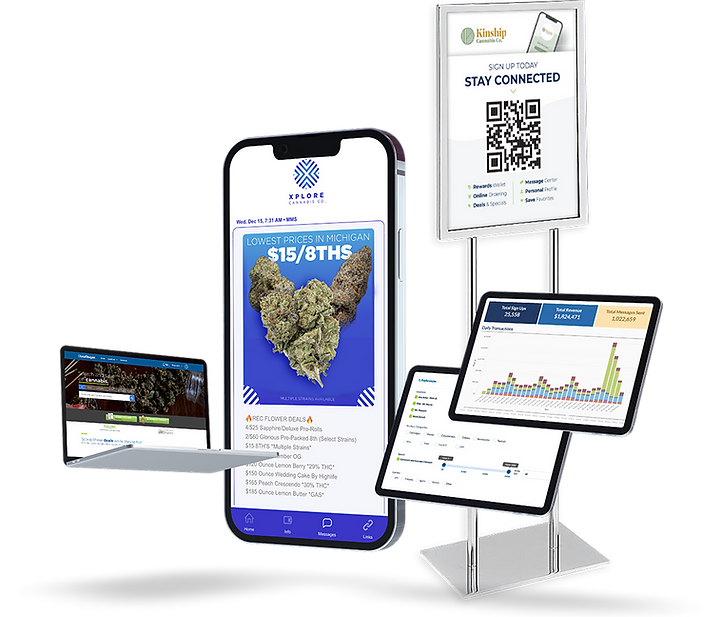
Springbig and Alpine IQ sell competing loyalty and marketing tools. Leafbuyer’s particular pitch ties those retention functions to its own consumer discovery site. The useful comparison is the whole route: discovery, permission to communicate, a relevant offer, redemption, another order.
The Message Center adds a web-based place to revisit offers. Leafbuyer also says retailers can take their subscriber lists with them if they leave. Those are useful details when choosing software: a campaign has a short life, while a customer relationship should remain useful after the campaign ends. A retailer can ask to see both the signup experience and the export process during a demo.
There is something worth copying here, even outside cannabis. Give an existing piece of marketing another distribution outlet. Then connect that outlet to a customer relationship the retailer can manage. Judge the result by purchases and repeat visits. A larger subscriber list, by itself, still has to earn its keep.
The bill behind the message
Leafbuyer’s historical model combines recurring subscriptions with message usage charges. Premium features add another revenue stream. In June 2024, for example, it released Instant Action, an upgrade supporting video and social media reels within its MMS offering. A retailer’s bill therefore depends on the package and how much messaging it uses.
For a buyer comparing vendors, the sensible exercise is to price a realistic month: the intended audience, sending frequency, app requirements, and integration work. Lightshade’s reported saving describes its own switch. Another retailer needs its own calculation, especially if a lower monthly subscription comes with higher delivery costs.
The company reported $6,471,573 in revenue for the fiscal year ended June 30, 2025, up about 16% from $5,601,357. Its annual results announcement also reported lower operating expenses. That combination matters: growth can improve a software business while delivery costs and staffing still demand attention. Leafbuyer had previously financed expansion through a $4.5 million stock-and-warrant private placement announced in July 2019.
“We have saved on average $2,000 per month by switching to Leafbuyer”
Lisa Gee / Lightshade, in Leafbuyer’s customer case study
The channel gets a vote
Then the direction changed. For the quarter ended March 31, 2026, revenue was $1,128,797, down from $1,728,744 a year earlier. Management attributed the decline primarily to lower message volumes and customers leaving amid registration and age-gating changes. It said it had restructured the platform and that some customers had returned. That is management’s explanation of the reversal.
SAME QUARTER / DIFFERENT VOLUMES
The practical limit is visible. A messaging business depends on customers sending messages. Push notifications offer another route, but they require an app audience willing to receive them. Poor purchase data weakens targeting. Unappealing rewards give people little reason to return. Connecting these tools helps only when the underlying customer experience deserves another visit.
The company and the business part ways
There is one final distinction for anyone looking up Leafbuyer today. On June 8, 2026, its former public parent completed a merger with RagingBull and became DATZ World Holdings. Immediately afterward, it sold LB Media Group, the cannabis operating subsidiary, to Foundation AI LLC for $750,000 cash. LB Media also assumed associated business loan obligations. The founders left their public-parent roles.
The transaction separated the familiar cannabis business from its former listed parent. It also makes a tidy ending misleading. Leafbuyer’s useful idea remains specific: turn a discovered deal into a relationship, then make the next purchase easier. Every loyalty point and every delivered message has to justify that next step.
FOLLOW THE BUSINESS