Meredith Brace has spent much of her career near the expensive moment when an elegant marketing plan meets a stubborn operating system. The plan has a headline, a target and a budget. The system has regional taxonomies, agency spreadsheets, delayed reports and a reconciliation meeting nobody adds to the mood board. Brace knows both characters. She has run media for global technology brands, sold new advertising formats, marketed television data and helped reposition adtech companies. Her latest role asks her to make the second character interesting.
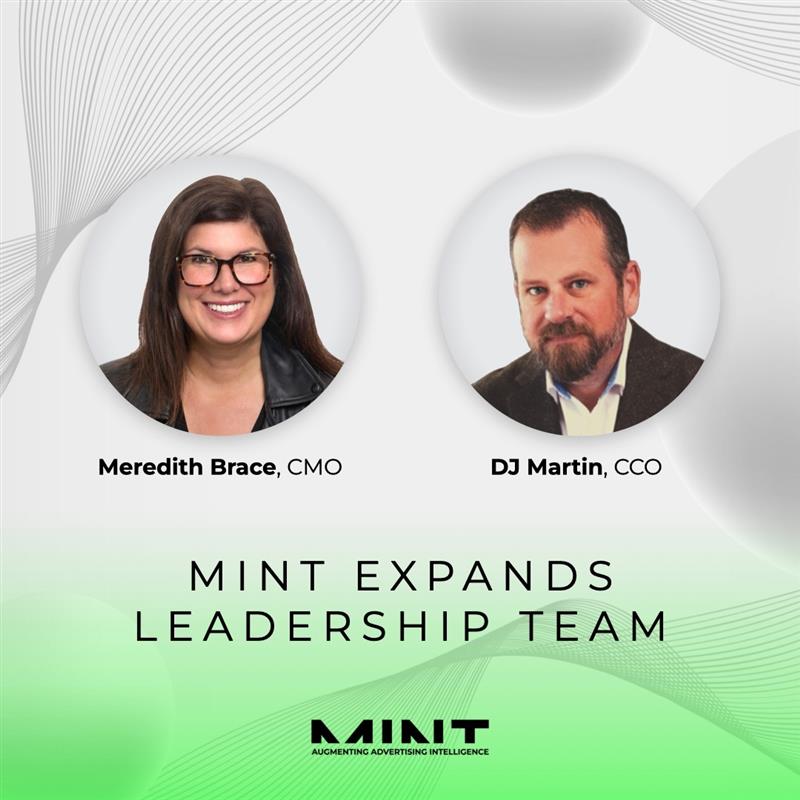
In early 2026, Brace joined MINT as chief marketing officer. The company builds software for what it calls Advertising Resource Management, a category designed to connect planning, buying, execution, performance and financial information. Her mandate is not modest in scope: build the category, sharpen the company’s global visibility and persuade marketing and finance leaders that operational truth belongs in the infrastructure of advertising.
The phrase sounds severe enough to require a hard hat. Yet Brace’s case begins in a recognizably human place. Teams lose time when tools do not speak to one another. Creative people become budget detectives. Decisions arrive after the moment for deciding has passed. The industry, having automated the delivery of ads with impressive zeal, has often left the management of that delivery scattered across systems and sheets.
“I have lived the pain MINT solves.”Meredith Brace, on joining MINT
The view from both sides of the table
Brace’s authority on the subject comes from range rather than abstraction. She began the public arc of her career in advertising and global media leadership at HP, then spent roughly seven years at Microsoft. There she led global media, consumer campaigns, branded content and sponsorship work. It was a seat on the advertiser side of the table, where media plans must ultimately answer to the customer and the business paying for them.
That perspective followed her into adtech. In 2014 she moved to true[X], the interactive advertising company acquired by 21st Century Fox the following year. She led national sponsorships and brand partnerships before Fox named her senior vice president of digital sales in 2016. Her task was to align advertiser spending with audiences moving beyond linear television.
A career across the media table
advertiser side
formats and sales
measurement
creative systems
media operations
At Fox, one experiment made the tradeoff unusually clear. The company cut the advertising load on digital FX programming by 75 percent. Brace later recalled that the move “shocked the market.” Fewer ads meant less clutter and more attention for each brand that remained. It also demanded creative cooperation and a willingness to try a model that gave viewers more choice. Her pitch was pragmatic: attention improves when the experience respects the person giving it.
Following the 2019 creation of Fox Corporation, Brace moved into executive leadership spanning client solutions, portfolio marketing, brand marketing and category sales. She helped announce the OpenAP Market, which brought audience-based buying to premium digital and linear television inventory, and served on OpenAP’s board. Cablefax named her among its Most Powerful Women in advertising that year.
Measurement, reinvention and the crowded screen
By 2021 the television world had splintered across screens, services and currencies. Samba TV hired Brace as chief marketing officer to explain its approach to connected-TV data and cross-channel measurement. The assignment fit the pattern of her career: a technical product, a shifting market and a customer trying to understand what happened after the money moved.
She described Samba TV as a catalyst for a “multi-currency future,” meaning a television market no longer dependent on a single measurement standard. In 2022, Next TV recognized her with an Innovation Award tied to the company’s work on streaming audience metrics. At Advertising Week New York that autumn, she moderated a conversation with leaders from Warner Bros. Discovery, TikTok, WWE and Initiative about using data to improve planning without losing the willingness to test.
Then came two shorter, concentrated chapters. At XR Extreme Reach, she helped rebrand and reposition a company operating across creative logistics, data and global advertising delivery. Her public work there included conversations about inclusive audience data, accessibility and the use of creative intelligence. At TripleLift, which appointed her CMO in December 2024, she marketed retail media, connected television and creative technology. She framed the product challenge plainly: make high-impact creative easier for publishers and advertisers to use at programmatic scale.
The transitions also reveal a taste for institutional renovation. Brace describes herself as a brand builder inspired by storytelling and insightful data, but her résumé repeatedly places her inside businesses whose categories are still being negotiated. She enters when a company must explain not only what it sells, but why the market should arrange its thinking around the product.
The human operating system
Her career advice is notably free of software. In a 2022 interview, Brace argued that a network defines a career. She did not mean a glossy stack of contacts. She described leaving the comfort zone to meet one additional person, attend an event or accept a dinner, then allowing those encounters to become friendships, alliances and sources of guidance.
“Put yourself out there, meet as many people as you can, because those people will be your extended network.”Meredith Brace
She pairs that advice with a two-mentor system. One mentor should sit inside the company, close enough to understand its incentives and dialect. Another should sit outside, where candor has more room. Formal programs can create the useful pressure of a calendar invitation, she has said, but informal mentors matter too: people collected across a career who are willing to listen before a change or a consequential initiative.
Stretch beyond the comfortable room. Relationships compound across a small industry.
Keep one trusted guide inside the institution and another beyond its walls.
Listen to the objection, understand its source, then choose the next move.
Respect is useful at every level and does not require a quarterly business case.
Flexibility is the third piece. Brace has talked about walking into a boardroom convinced that a proposal will travel in one direction, only to hear why someone dislikes it. Her response is to listen for the perspective beneath the objection, decide whether it changes the recommendation and proceed without treating disagreement as a theatrical insult. Nothing goes exactly as planned, she has observed. Anyone who has presented slide 47 to a distracted executive committee may recognize the scene.
The fourth piece is even simpler: treat people as you would want to be treated, whether they sit above, beside or below you on an organization chart. Advertising is a small world with a very large guest list. Courtesy travels.
Purpose without the ornamental plaque
Brace’s public commitments also include inclusion. While at FOX, she argued that the industry needed to focus on cultural diversity alongside gender diversity and to reach young people before college, expanding the pool from which companies recruit and promote. At XR, she spoke about data that can reveal whether advertising represents audiences authentically. She has served on the boards or advisory bodies of the American Advertising Federation, the Academy of Television Arts & Sciences, The Forem and WeAreBRIDGE.
In August 2025, she left TripleLift and wrote that she wanted purpose-driven work capable of producing a positive social impact. That led to TrustWorks, a nonprofit venture focused on trust in news and information, where she became a founding partner and CMO. The move did not abandon her commercial experience. It applied the same questions of credibility, evidence and audience to a different kind of system.
Her arrival at MINT brings those themes back into advertising. MINT argues that teams cannot create trust with disconnected records and retrospective explanations. Brace’s version is more vivid: brands commit millions across channels, sign guarantees with confidence, then wait weeks or months to learn whether execution matched the deal. By the time the answer arrives, the money is spent and the leverage is gone.
In 2026 she began promoting Argus, MINT’s always-on product for monitoring media commitments, framing it as a move from auditing the past to owning the present. The language is characteristically built around the user’s frustration rather than the software’s inventory. She has worn the “brand hat” too long to confuse a feature list with a reason to care.
Making the pipes part of the promise
The wager of Brace’s current chapter is that advertising operations can become a boardroom subject without becoming a sedative. CMOs want creative freedom and visible growth. CFOs want control and reconciliation. Media teams want data that arrives before it becomes archaeology. A common operational layer has to speak to all three without promising that complexity will politely leave the building.
Brace is well cast for that translation. She knows the buyer’s impatience, the seller’s pitch, the platform’s complexity and the category-builder’s burden. She also knows that the people asked to adopt a new system are not abstractions. They are teams already carrying too many tools, deadlines and definitions.
There is a small irony here. A career built around new media technology keeps returning to durable, almost old-fashioned ideas: attend to the customer, listen before reacting, seek honest counsel, preserve human attention and treat colleagues decently. The machinery changes. The judgment required to operate it does not.
MINT has given Brace a technical noun phrase to popularize. Her career gives it a more interesting story. Advertising’s back office is where the ambitious plan either becomes observable reality or wanders into a spreadsheet fog. Bringing it into the light may free more people to do the work they entered marketing to do. Even the pipes, properly arranged, can make room for imagination.