After more than 7,000 hours of teaching, Mehmet Umut Ermeç had a provocative suggestion for students: spend less time in classrooms. He put the thought in the title of an essay in 2017. A few years later, in Denizli, he would help build a company where learning happened alongside the work of making games. The teacher had acquired a production schedule.
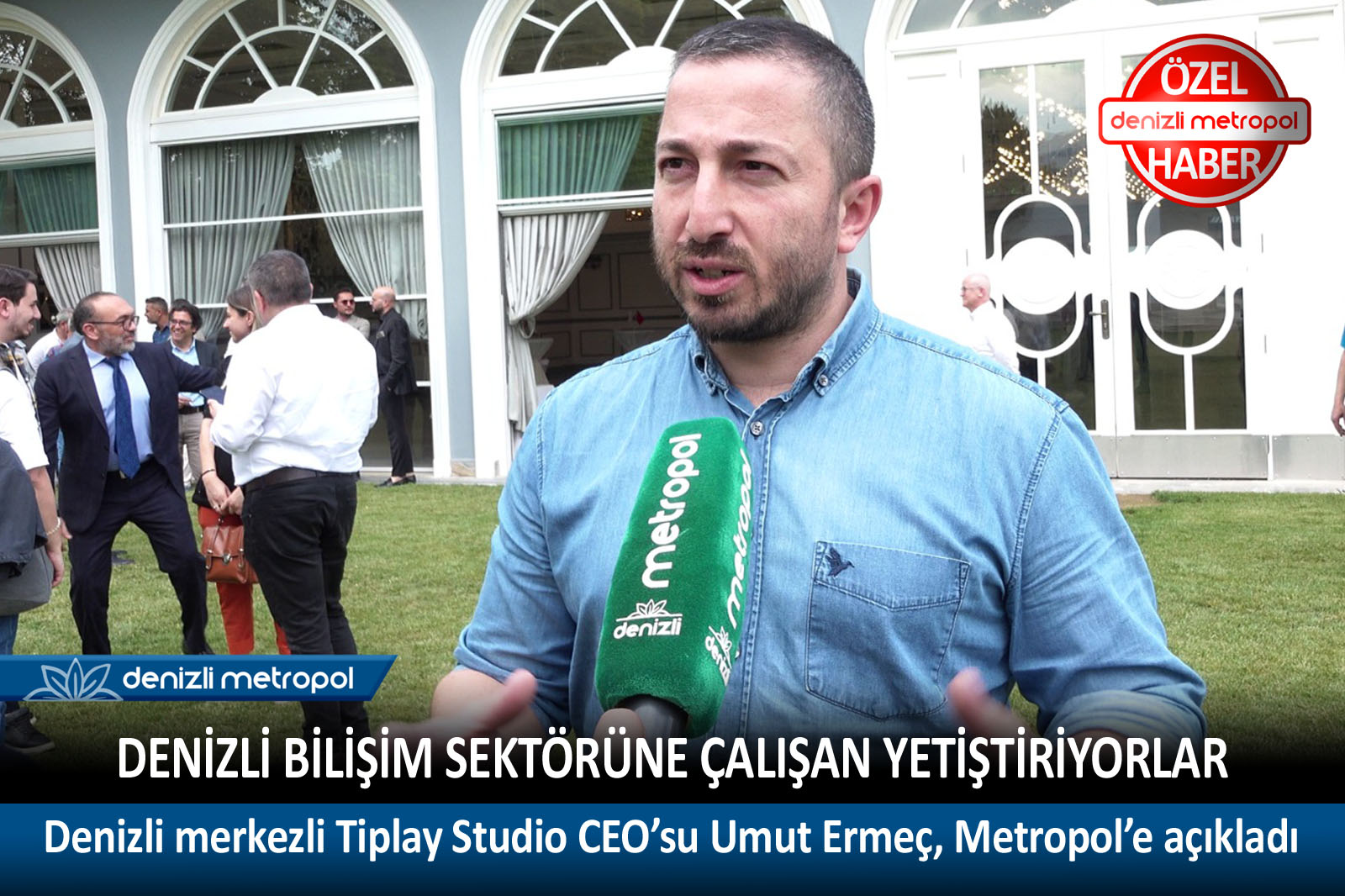
By May 2022, Ermeç could point to 36 people trained through tiplay’s apprenticeship program. More than half the company’s employees, he said at the time, had come through that route. For a founder in an industry short of experienced people, those were consequential numbers. They described colleagues who had once been beginners, and a business willing to help them make the transition.
Ermeç’s career gives this arrangement a history. Before tiplay, there was recording arts study in Tennessee, audio instruction in New York, a business concerned with professional development, and a game-audio venture with an unusually cheerful executive title. The route to mobile games had several stops. Teaching kept turning up along the way.
Seven thousand hours, and a question
Ermeç studied Recording Arts and Technologies at Middle Tennessee State University between 2008 and 2011. His working life included audio engineering and teaching at the Institute of Audio Research and New York Film Academy. Sound production asks people to combine technical understanding with judgment: knowing how something works and deciding whether the result is any good are related skills, but each takes practice.
His writing from those years suggests that the mechanics of learning interested him beyond the classroom door. In 2017 and 2018, he published essays about experience, degrees and the way education prepares people for employment. One headline announced his accumulated teaching hours before inviting students to reconsider where learning should happen. It was a lively position for someone whose work had involved standing in front of them.
“After 7000+ Hours of Teaching, I Started Telling Students to Stay Away from Classrooms”
Mehmet Umut Ermeç · essay title, August 2017
There was a business attached to these questions. Smart Professions, which he founded and ran in New York, combined digital media production services with talent development. The pairing put a commercial requirement beside an educational one. Someone needed work completed; someone else needed to develop the ability to complete it. Read against his later career, that pairing looks like an early version of a problem he would keep choosing.
The long way back to Denizli
After ten years in the United States, Ermeç settled in Denizli. He later recounted that journey while discussing tiplay’s founding and growth at an entrepreneurship workshop. An international career had brought him back to a Turkish city from which he would help build a business reaching players elsewhere. Returning home did not require shrinking the intended audience.
In 2019, he co-founded Mad Rooster, providing music and sound effects for games. His title there was Chief Executive Rooster, a small contribution to the otherwise solemn literature of executive job descriptions. The work connected composers, sound designers, engineers and programmers with game developers. Audio gave him a place inside the production process before his public identity became closely associated with running a game studio.
That same year, he co-founded tiplay with Ahmet Öney and Osman Tutum. The company developed mobile games, including Water Shooty and Car Restoration 3D, and built a structure that could support other teams. In his early leadership as CEO, Ermeç kept returning to a larger ambition: creating a sustainable environment for producing games. That ambition required attention to the people doing the producing.
- 01 / AUDIOLearn the craftRecording arts, engineering and game sound.
- 02 / EDUCATIONTeach the craftNew York instruction and talent development.
- 03 / TIPLAYBuild with othersGames, apprentices and support for studios.
Thirty-six beginnings
When Ermeç described tiplay’s apprenticeship program in May 2022, the invitation was specific. Motivated applicants could arrive without professional experience or a relevant educational background. They needed certain abilities and a willingness to learn. The company would train them toward a career in areas such as game design, software or art. Experience could be acquired inside the business that needed it.
His figure of 36 trained apprentices gave the invitation substance. So did his statement that graduates accounted for more than half the workforce at that point. Training had become part of how the company staffed itself. A beginner’s development and the studio’s need for capable colleagues occupied the same calendar.
people trained through tiplay’s apprenticeship program
There is an appealing practicality here. A talent shortage can sound like a weather report: unfortunate conditions, expected to continue. An apprenticeship asks a company to take on some responsibility for changing those conditions. It also makes demands on the company. Beginners need instruction and feedback, which means experienced colleagues must spend time helping them improve.
Ermeç’s earlier teaching work makes this choice easier to understand without turning it into a sentimental tale. A game still has to be made. The program’s significance lies in placing learning close to that obligation, where an idea eventually encounters the exacting question of whether it works.
A studio with room for other studios
The same concern extended beyond individual applicants. Through oFON, tiplay worked with Rollic to support game teams. Its incubator was described as an entry route for small teams with limited professional experience, preparing them for further development within the accelerator. Financial, technical and entrepreneurial support sat alongside the work of developing games.
For Ermeç, this widened the unit of attention. An apprentice might need to learn a production skill; a young studio might need to learn how to operate as a business. Those are different tasks, and oFON offered a way to address the second alongside tiplay’s own production. Games including Joust Run and Dodge Master were associated with teams in that wider structure.
The distinction matters when considering his career. A founder can put every available hour into one internal team. Ermeç also helped build programs around teams outside it. That created another place for his interest in developing people to operate, this time through the practical problems of a fledgling studio.
The founder takes a seat in class
In April 2022, Snap announced tiplay as one of eight companies in the fifth cohort of its Yellow Accelerator. The program began in Santa Monica and offered investment, mentorship and thirteen weeks of programming. A business helping other people learn was now participating in a structured learning program of its own. Even the teachers had homework.
Ermeç appeared at the program’s Demo Day and spoke about plans for a future funding round. The appearance belonged to a period when he was taking the company’s ambitions to international investors. It also returned him to the United States in a different professional capacity, representing a company founded in Denizli.
The funding chronology offers another dated marker. In December 2021, tiplay had announced investment at a reported company valuation of $25 million. The stated purpose included strengthening studios and the accelerator. Money entered a business whose plans already included helping other developers work. The valuation described a company at a particular moment; the continuing task was to turn resources into production.
More screens, the same question
As tiplay’s work expanded, the list of platforms grew beyond mobile. Ermeç discussed instant games, PC and console development, and in-car gaming in a 2024 interview. He also described plans for international studios and lasting game franchises. These were ambitions about where the company could go, rather than a completed itinerary.
A broader range of platforms brings a useful complication to his story. Skills acquired while making one kind of game have to meet the demands of another. A larger audience remains an attractive idea, but reaching it asks for more decisions about production, teams and the experience a player will actually have.
In June 2025, Ermeç was listed in the program for WN Conference Istanbul on a panel examining the move from hypercasual games to Steam. The panel’s title put the question bluntly: a lifeline, or the next trap? It is a fitting question for a founder whose work had already crossed several professional boundaries. A new platform brings possibilities; a conference room can at least provide chairs while everyone argues over the costs.
The lesson that leaves the building
His public work also includes writing with Gülcan Yayla about mobile games and social entrepreneurship in 2020. During the formation of the Turkish game producers’ association DOYEB, he expressed an expectation that the industry would create more opportunities to share knowledge and experience. The concern with learning had acquired a professional community around it.
That is the thread running through the changes of job, country and medium. Audio production, classroom instruction and game entrepreneurship ask for different expertise. Ermeç’s career repeatedly places the development of expertise inside the work itself. In Denizli, that principle became an apprenticeship route with colleagues at the other end.
The 36 people he counted in 2022 remain a useful place to leave the story. Each had entered a program intended to turn willingness and ability into professional work. A studio needs games. People need a way to learn how to make them. Ermeç helped bring those requirements into the same building, where the next lesson had something real to do.
Keep the conversation going
Writing, conversations and the company he co-founded.