Before Maxime Legardez-Coquin built a business to change how people get hired, he had to persuade people to work for him. At the beginning of Everoad, the freight company he founded in 2016, his companion at investor meetings was his dog. A dog is agreeable company. It cannot run a transport operation.
The specialists came later. Among them were Paul-Louis Caylar and Benjamin Chino, who would eventually become his co-founders at MakiPeople. That sequence gives his career a satisfying loop: recruit a team, build a company, then build another company with members of that team to help other people recruit. For all the talk of artificial intelligence around Maki today, its beginnings belong to the awkward, personal business of choosing colleagues.
An apprenticeship with several currencies
Legardez-Coquin grew up in northern France and graduated from EDHEC in 2011. His preparation for founding took him abroad, into businesses selling things whose usefulness required little explanation. People needed tyres. People needed glasses. People wanted dinner delivered. The challenge was getting the operation to work.
He worked on Tirendo, the online tyre business in Germany, and on eyewear e-commerce in Asia. At Rocket Internet, he managed Foodpanda in Russia and Brazil. Vaniday, the beauty-booking platform he co-founded, added another set of markets, including Milan, Dubai, Singapore and Sydney. His early career reads rather like a departure board with a commercial target attached.
There was an intention behind the movement. He had decided to spend years learning to build businesses alongside experienced people. He understood the job of founder and CEO to be difficult before he tried it; experience confirmed the suspicion. Moving between markets gave him repeated practice in starting operations and assembling the people to run them.
That helps explain the apparent restlessness. Tyres, eyewear, takeaway food and appointment bookings have different customers, but each business needs someone to turn a proposition into daily work. His education continued wherever the next operation needed building. In 2016, he returned to France to start a company of his own.
The business was trucks. The work was people.
It was called Convargo, later Everoad, and its subject was road freight. The business connected shippers and carriers, applying software to the work of arranging transport. A truck with unused capacity and a customer with goods to move sound like an introduction waiting to happen. Turning that introduction into a dependable service requires rather more than a website.
Legardez-Coquin brought experience in internet businesses. He needed colleagues with experience in transport and technology. Recruiting them became a substantial part of the job. Caylar answered his LinkedIn approach in 2016; they continued meeting before Caylar joined in 2018. Chino, coming from product operations at Uber, also joined that year. The future Maki partnership was taking shape before it had a recruitment product to discuss.
“Some have succeeded, some have failed.”
Maxime Legardez, reflecting on businesses he had built, 2018
His writing from the Everoad years offers a useful counterweight to the neatness of a founder biography. He acknowledged mistakes and the difficulty of building a lasting company. He argued for a shared mission and explicit values. Software could improve the operation; the people building it still needed reasons to pull in the same direction.
Recognition followed. EDHEC named him Entrepreneur of the Year in 2018 for Everoad. In June 2020, Sennder acquired the company. Everoad initially operated as Everoad by Sennder, then became Sennder France in February 2021. Legardez-Coquin served as managing director in France. A business he had started four years earlier had become part of a wider European freight operation.
- 2016Founds Everoad
- 2018EDHEC entrepreneur award
- 2020Joins Sennder
- 2021Co-founds Maki
Three names carried into the next chapter
After Everoad, he began considering what to build next. He spoke with HR leaders about recruitment and the difficulties companies encountered in managing talent. Hiring was familiar territory from the employer’s side. Now it became the subject of the business itself.
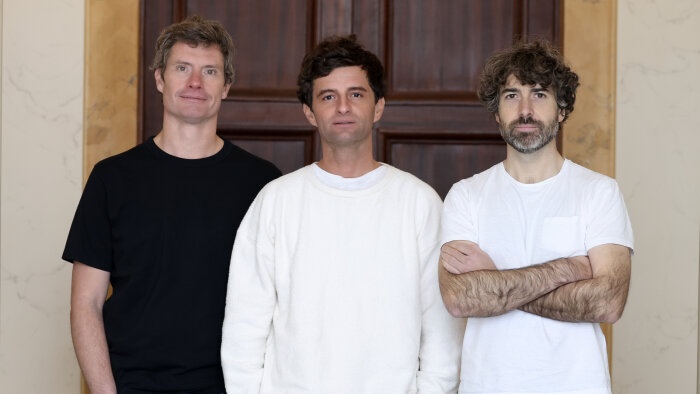
Maki started in 2021 with Legardez-Coquin as CEO, Caylar as COO and Chino leading product. The three had already worked together. Caylar brought consulting and operating experience; Chino brought product experience from Uber and the freight business. Their shared history supplied something a new founding team usually has to acquire while also trying to build its product: knowledge of one another at work.
The original proposition was straightforward. Give employers short assessments that reveal candidates’ skills. A CV tells a recruiter which institutions and companies appear in someone’s past. It offers a much less direct view of how that person reasons, communicates or performs a task. Maki wanted to put evidence of ability closer to the beginning of the process.
By November 2021, it had announced €6 million in seed financing. Its early library included tests that employers could customise and connect to their applicant-tracking systems. That detail matters. The founders were trying to change a decision inside an existing workflow. Recruiters already had systems, routines and queues of applications. A better assessment also had to fit into their working day.
The test becomes a conversation
The early Maki belonged to the world of skills assessments. Generative AI widened the possibilities. Instead of presenting only a fixed sequence of tests, the company could offer a conversation in voice, video or text. Its product began moving toward agents that could carry out parts of the recruitment process.
In January 2025, Maki announced a €26 million Series A led by Blossom Capital, with DST Global and existing investors participating. Legardez-Coquin described plans to develop the agents further and expand in the United States. He would move to New York to build an American hub; Paris would remain the technology hub.
His public profile now places him in New York. The move continues a career habit: go where the business needs building. In a public reflection on the relocation, he described the New York office growing from one person to fifteen. The account carried the excitement of starting in a new country, alongside an acknowledgement that it had taken work.
He also began hosting conversations about where AI might take the work of recruitment. In April 2025, he discussed the subject with OpenAI’s Olivier Godement. Later that year, he appeared on Josh Bersin’s podcast. These exchanges placed Maki’s changing product within a wider question: what happens to a people function when software can participate in the conversation?
the role→Evaluate
the skills→Support
the interview→Inform
the decision
An editorial diagram of the product’s scope, from role requirements to hiring recommendations. The employer makes the hiring decision.
A score still needs a decision
The current product makes that question concrete. Maki offers screening, deeper assessment, scheduling and interview support. Its Tomo interview co-pilot structures a live interview, captures the conversation and produces notes and evidence organised around skills. The interviewer has a plan to follow and a record to return to, rather than relying entirely on recollection.
There is a familiar management problem underneath those features. An interviewer must listen, think of a follow-up question, watch the time and remember what was said. Afterwards, another colleague may ask why a candidate seemed promising. A structured record gives that discussion something firmer than an impression formed between meetings.
Maki’s own guidance keeps responsibility with the recruiter. Scores support a hiring decision; they do not make it. The guidance advises employers to review detailed results and avoid rejecting an applicant solely on an automated score. That distinction has practical consequences. Making evidence easier to collect still leaves someone responsible for deciding what it means.
In April 2026, Maki announced assessments of AI proficiency within its screening products. In June, a partnership with Recruitics brought voice screening into the application flow, before applications reach an employer’s tracking system. Both developments return to the same difficulty: a fluent description of capability can be easier to produce than capability itself. Employers need ways to examine the work behind the words.
The AI proficiency assessment brings the argument back to a new category of applicant claims. Maki describes four areas: adapting to AI tools, working effectively with them, using them responsibly, and understanding data and algorithms. It announced situational exercises and structured questions about previous behaviour, with further conversational tasks planned. For Legardez-Coquin, whose business began by asking employers to look beyond credentials, this is a continuation of the original proposition. A new skill has acquired a fashionable vocabulary. The employer still needs a way to distinguish familiarity with that vocabulary from useful judgement on the job.
A lemur, and a longer view
For a company concerned with such consequential choices, the name has a light touch. Legardez-Coquin has explained that Maki refers to the maki catta, a lemur from Madagascar associated with agility and living in groups. The founders liked the image and the ease of using the word internationally. A small animal supplied a serviceable name for a business about people working together.
His criteria for the venture were more personal. He wanted work he would enjoy, a social or environmental purpose, and a product useful around the world. He also thought about the kinds of companies his children might one day work in. Recruitment offered a place where those interests met: an everyday business process with consequences well beyond the employer’s office.
“You are more than your cv”
His message to candidates, 2023
It is an appealing message from someone whose own CV contains a business-school education, international operating roles and an acquisition. His argument asks employers to look further than those familiar signals when judging someone else. Across his own career, the consequential choices have often involved seeing what people could contribute to a business still being built. Maki now puts that question in front of other employers, one candidate at a time.