Seven minutes into a job interview, Josh Millet had a problem. The candidate was a poor fit. The feeling appeared mutual. Yet the résumé had done its work: two people were now committed to a conversation whose purpose had begun to evaporate. Somewhere between reading the application and meeting its author, the hiring process had mistaken a promising document for a promising match.
For a first-time hiring manager, this might have become another weary office anecdote. Millet turned it into a question. Could employers learn something useful about a person’s abilities before everyone sat down and tried to look pleased? The question eventually became Criteria, the assessment company he co-founded in 2006 and still leads as CEO.
There is a pleasing complication in his biography. The entrepreneur who argues that a résumé cannot capture a person’s potential has a résumé that would have made his own future difficult to predict. Much of his twenties went into medieval French history. His intended audience was a college classroom.
A historian changes the subject
Millet was born in Toronto and has described himself as a dual Canadian and American citizen. He came to the United States for his education and earned a history Ph.D. at Harvard. His particular territory was France around the time of Joan of Arc. It was a serious preparation for an academic career, with a Fulbright scholarship and a Mellon fellowship along the way.
Then the plan changed. At the end of graduate school, around 2000, he started an online test preparation business with a friend. This became Number2.com, acquired by Xap in 2002. Millet went on to serve as president of the acquirer’s test prep division. He had found an appetite for building a business that his original career plan had left unexamined.
The transition also placed him on the employer’s side of the interview table. In that role, the practical shortcomings of hiring became difficult to ignore. Familiar credentials could secure a meeting without resolving whether the work and the person belonged together. For someone whose own professional life had just changed direction, the gap was especially interesting.
Years later, describing life in Los Angeles with his wife and two boys, Millet joked about the amount of adjudication and mediation parenting involved. The historian had become an entrepreneur, a hiring manager, and a household referee. Previous experience, evidently, could be interpreted rather broadly.
An investor, a co-founder, a tin of paint
In 2006, Millet met David Sherman at Kate Mantellini in Beverly Hills while seeking investment. The restaurant had appeared in Heat, providing a cinematic backdrop for a meeting about employment assessments. Sherman brought a psychology Ph.D. and business experience. The conversation produced a prospective co-founder.
A month later, they spent a weekend painting their office. Eric Loken, another psychologist, was also a co-founder. Millet’s interest in psychology and cognitive neuroscience now had colleagues who could help turn it into an assessment business.
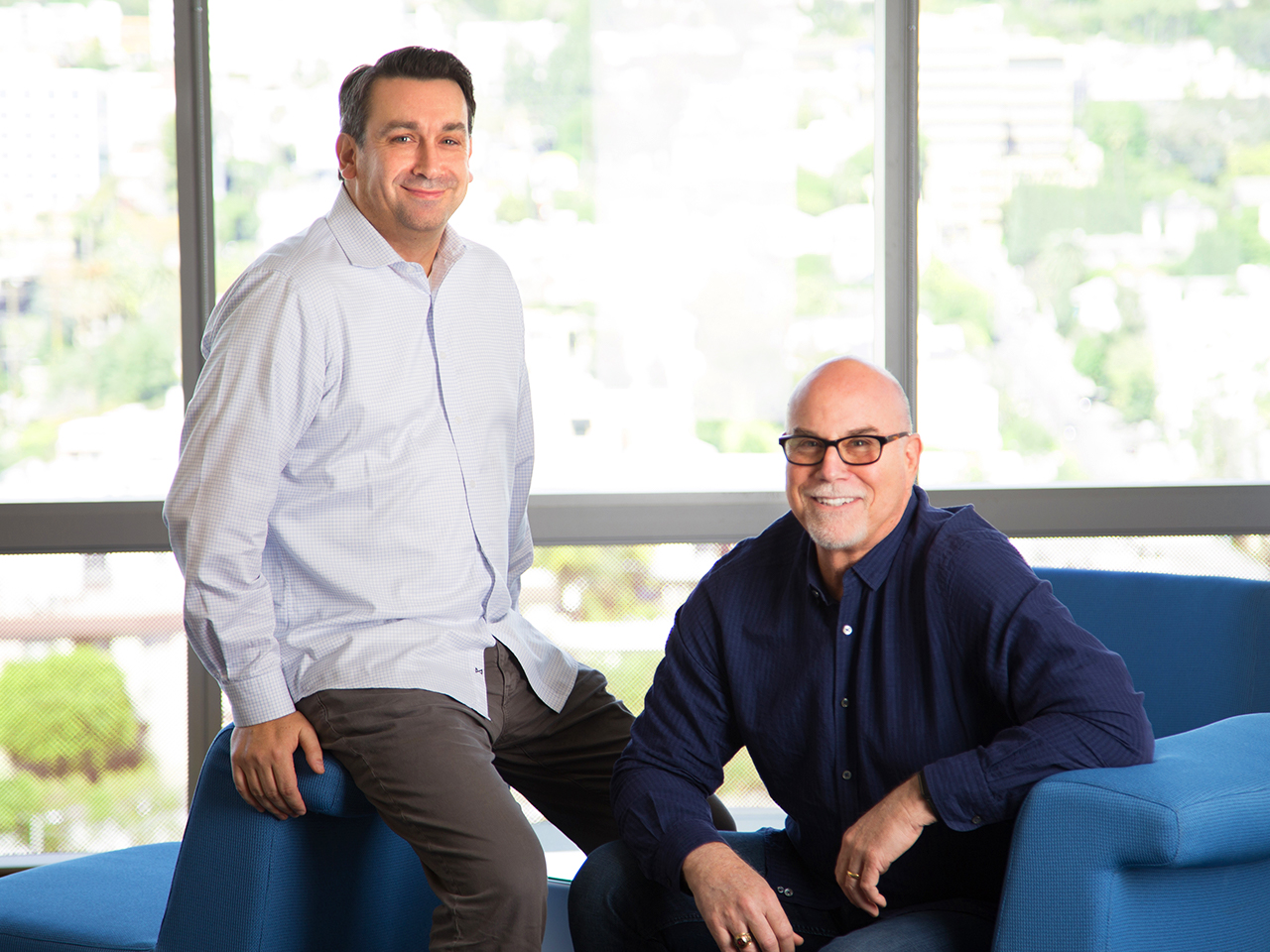
When Sherman moved toward a board and advisory role after 18 years, Millet’s tribute emphasized complementary abilities, shared ideas, and the friendships formed at work. He also credited Sherman’s example as a parent. In a business devoted to measuring talent, their partnership had accumulated a history that no scorecard could quite contain.
A company that had to wait
The timing offered little assistance. Criteria’s product launched with four employees in 2007, shortly before the financial crisis. The founders had raised a small amount of angel money, but institutional capital would come much later. Millet has described the intervening years as bootstrapping driven by necessity.
The proposition was to make employment assessment available through software to businesses that lacked the resources of a large employer. Small companies were an important early audience. Millet understood their difficulty: without dedicated HR staff or a consistent method, a handful of hiring decisions could consume considerable management time.
Criteria grew by selling its service, acquiring customers, and watching its cash. By the first institutional investment in 2015, Millet recalled a business with roughly 2,000 customers and revenue approaching $5 million. The numbers describe an extended apprenticeship in making a company work before asking it to grow faster.
Level Equity backed Criteria in 2015. In 2019, a $56 million strategic investment from Sumeru Equity Partners supplied another stage of expansion. The new investment created room for product development as well as sales and marketing. Millet was particularly interested in what the company could build next.
He spoke then about shortening the time candidates spent taking assessments while preserving useful information. A five- or ten-minute experience was easier to ask of someone than a 45-minute examination. Even in a business founded on testing, the candidate’s patience was a finite resource.
International expansion followed. Criteria acquired Australia’s Revelian in 2020, adding expertise in game-based assessments, then video interviewing company Alcami Interactive in 2021. The business was moving closer to the conversation that had bothered Millet in the first place.
How to interview the interviewer
Millet’s public advice often turns attention back toward the person asking the questions. An interview can feel informative because the conversation flows, even when different candidates receive different opportunities to impress. The interviewer leaves with a strong opinion. The evidence beneath it may be considerably weaker.
His answer is structure: questions related to the role, asked consistently, with a defined way to evaluate the responses. In his writing, he has pushed back against the assumption that this must make an interview cold. Employers can explain the process, talk about the work, and welcome a candidate without letting an improvised conversation determine the result.
One question he has favored concerns the interview itself: how did the applicant prepare? A candidate once remarked on the sample score reports available on Criteria’s website and explained why an employer considering the product would want them. That observation gave Millet something concrete to discuss. The applicant had examined the business closely enough to notice a practical product choice.
The appeal is easy to understand. Preparation leaves traces. A specific observation can open a conversation about how someone thinks, while a general assurance of enthusiasm asks the employer to accept enthusiasm on trust. Millet wants the discussion to give both sides something firmer to work with.
“The more complex the role is, the more important learning ability is.”
Josh Millet
He has also challenged the weight employers give years of experience, particularly for entry-level and mid-level positions. Requiring a history of opportunity can narrow the field before less established candidates have a chance to demonstrate their abilities. His alternative puts learning and problem-solving into the evaluation alongside relevant existing skills.
The résumé gets a better ghostwriter
Artificial intelligence has given this long-running argument a new setting. A candidate can now refine an application with software; employers can use software to process the applications. Both sides may become more efficient while the underlying question remains unresolved: what does the document establish about the person?
For Millet, the historian’s training offers a useful connection. A résumé is a self-authored account whose writer has an obvious interest in the reader’s conclusions. Historians learn to consider the position of the storyteller and look for corroboration. An attractive narrative can still require another kind of evidence.
His company is participating in this change. In May 2025, Criteria introduced Interview Intelligence, with AI features for question creation, transcripts, summaries, and scoring. The company describes its automated evaluation as based on interview transcripts, excluding audio and video from the scoring inputs. That choice puts the content of an answer at the center of the assessment.
Give every answer the same examination.
- Define the work.Choose the abilities the role requires.
- Ask consistently.Use comparable, job-related questions.
- Score with a rubric.Evaluate responses against defined criteria.
A visual outline of the structured approach Millet advocates.
As Criteria expanded its Predictive Interviewing suite in June 2026, the company linked assessments, interviewing, and development more closely. The original problem now sits inside a much larger product. Millet’s responsibility includes selling the technology and articulating the standards by which customers should judge it.
In public discussions, those standards include evidence of accuracy, scrutiny of bias, and an understandable explanation of the system. He has urged employers to train people to interpret outputs and keep humans responsible for consequential talent decisions. Automation still requires someone willing to ask what, exactly, has been automated.
Potential, in the future tense
By August 2026, Millet was describing a distinction between static and dynamic credentials. A degree records an accomplishment at a particular moment. An assessment of a developing ability can offer a different view as the person and the work change. His interest lies in how employers can recognize that movement.
This gives his academic detour a continuing role in the story. A history qualification did not specify that its holder would build hiring software. It supplied knowledge and habits that could travel. Millet’s life makes his argument tangible without settling every question about how an assessment should work.
The ambition is to give employers a more useful view of what someone can learn and contribute, including candidates whose earlier opportunities look unfamiliar. It asks something of managers, too: decide what matters, collect relevant evidence, and resist allowing a polished story to carry the whole decision.
The early interview remains a useful place to return. Two people had arrived expecting a possible match. Within minutes, both could see the mismatch. Millet has spent the years since trying to improve what happens before that moment. For a former medieval historian, the next chapter has proved a remarkably durable subject.