Would your doorbell sound any sweeter if Taylor Swift rang it? Max Yankelevich once put that question into an argument about financial data. It was an extravagant way to discuss corporate actions processing, a subject generally capable of keeping its own excitement under control. His point was straightforward: paying a specialist to perform a simple task wastes the very expertise you hired. Even a famous singer can press a button. The interesting question is what else she could be doing.
That little joke offers a useful entrance to Yankelevich’s career. As a co-founder, CEO and chief architect of WorkFusion, he helped build software around the less celebrated parts of office life: collecting information, checking it, moving it between systems. Today he is managing partner for the United States at MYVA Ventures, investing in business AI. Between those roles lies a long effort to make the routine parts of knowledge work teachable to machines.
A cloud architect enters the office
Yankelevich studied computer science and mathematics at MIT. Before WorkFusion, he was chief architect at Freedom OSS, helping enterprise customers adopt cloud computing. That background matters to the story because the cloud promised a practical change in how companies obtained computing capacity. Businesses could use infrastructure without having to build every piece of it themselves. Applying a similar spirit to office work would require a rather more complicated ingredient: human judgment.
In November 2010, an AWS announcement placed Yankelevich on the program for a Chicago event about cloud security, compliance and governance. Freedom OSS’s chief cloud architect would appear in person alongside its CEO, Joel Davne. Amazon’s Werner Vogels and Steve Riley would participate remotely. The agenda concerned secure applications, access and deployment. These were the awkward details between an appealing technological idea and an enterprise willing to use it.
It is an instructive early scene. His public career was already taking shape around the point where technical possibility meets organizational hesitation. A company can admire an invention and still decline to trust it with Tuesday’s work. The cloud architect’s audience needed workable arrangements for security and control. Later, the automation founder would face another version of that problem: how to let software do useful work inside institutions built around people, procedures and existing systems.
The employee becomes the teacher
WorkFusion’s beginnings involved research at MIT into using crowdsourcing and machine learning to detect fraud in online transactions. Yankelevich and fellow founder Andrew Volkov recognized a wider application. If people could supply the judgments that helped a system learn one task, perhaps the arrangement could serve other kinds of enterprise data work. The business was established in 2010; its first platform arrived in 2012. The progression was from a particular research problem toward a more general way of organizing work.
In its early form, the platform helped procure, train and check the quality of online workers performing information tasks. A subsequent stage watched for patterns in their work and used those patterns to automate repeatable activity. Consider dividend information gathered from different documents: the worker’s decisions supplied examples. When the information or its format changed, people could return to teach the system again. The person doing the job also became part of the machinery for improving it.
- 01People do the task
- 02Software learns patterns
- 03Routine work is automated
- 04People teach the changes
A recurring exchange between human judgment and machine learning. Conceptual diagram, not a performance measurement.
The name CrowdComputing Systems belonged to this early chapter. It captures something that later talk of autonomous agents can obscure: the starting material was work done by people. A machine needed examples, and an employer needed a result it could use. The commercial challenge included getting the right tasks to the right workers and checking the answers, as well as developing algorithms. Even the robot’s education involved administration.
The patent record preserves that practical interest. A 2013 application titled Managing crowdsourcing environments names Max Yankelevich and Andrii Volkov as inventors. Its subject is the organization of work, including tasks and workers within a crowdsourcing environment. Alongside the product story, it supplies a quieter view of the founder: someone concerned with how a system assigns, evaluates and coordinates activity. Those are the verbs of an architect trying to make an idea function repeatedly.
Making the first robot free
Yankelevich’s business increasingly confronted an unromantic obstacle: starting. An enterprise might understand the promise of automation yet hesitate over the first purchase, the first installation or the first process to attempt. In December 2016, WorkFusion announced RPA Express, a free robotic process automation product. An invited beta would precede a broader download in early 2017. The pricing decision gave the company a way to bring prospective users into its larger automation offering.
The work it addressed was familiar to anyone who has spent a day shuttling between business applications. Enter credentials. Navigate a screen. Move information. Repeat. WorkFusion described automating interactions with systems including Citrix, Oracle and SAP. There is a peculiar indignity in employing an intelligent person as the connective tissue between two pieces of software. RPA Express offered operations teams a practical place to begin reducing that burden.
“WorkFusion was created to help businesses born analog operate like businesses born digital.”
Max Yankelevich, December 2016
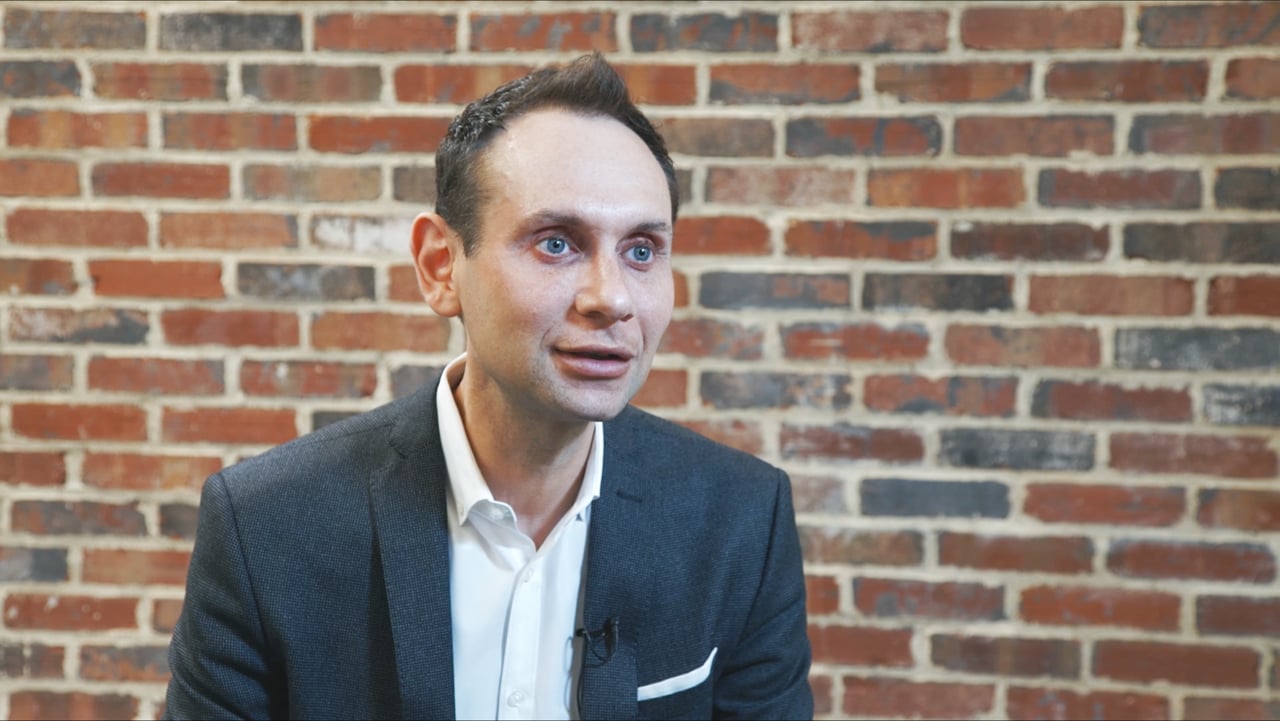
The product’s free entry point also clarified the commercial logic. A modest automation project could establish familiarity and make a broader deployment easier to contemplate. In an archival video, Yankelevich answers five common questions about RPA Express himself. The founder is there explaining the product, rather than leaving the whole matter to a diagram. For a business selling changes to daily routines, an explanation people can follow is part of the product’s work.
 PLAY THE ARCHIVE ↗
The customer arrives before the masterpiece
In a June 2017 product interview, Yankelevich discussed his desire to build products people actually use. His advice to entrepreneurs working in business software was to bring customers into the conversation early and improve the product through iteration. That is an undramatic prescription, which may be its virtue. An enterprise product can become impressively elaborate before anyone establishes whether the intended user wants to rearrange a working day around it.
There is a connection here between his product advice and the software’s method of learning. Both require exposure to real activity. The program learns from examples of a task; the business learns from the people expected to buy and use it. This is a reading of his approach, rather than a claim that he formulated a grand theory connecting the two. But the repeated emphasis on use gives his technical career a recognizable commercial center of gravity.
By January 2017, WorkFusion had raised a $35 million Series D led by Georgian Partners, bringing its reported funding to $71 million. Existing investors included Mohr Davidow Ventures, Inovia, NGP, Greycroft and RTP Ventures. The financing supported a company working across routine business processes and more ambitious machine-learning applications. The amount marks the scale of the undertaking at that moment; it belongs to the company’s financing history, rather than serving as a measure of its founder’s personal wealth.
What the people would do next
Yankelevich’s public argument for automation extended to the work left for employees. In a 2017 insurance discussion, he described the possibility of improving morale by freeing people for more valuable activity. He also warned that adding robots to a mixture of older systems would not, by itself, complete a transformation. The larger question concerned the experience of employees and customers. An efficient fragment of a bad process could leave the rest of the frustration intact.
“The human touch will become something of a premium.”
Max Yankelevich, June 2017
His forecast placed more weight on personal interaction as routine processing became automated. It was a proposition about how service could change, not a guarantee about every job. Its appeal is easy to understand: fewer hours spent moving fields around a screen, more room for judgment and conversation. The difficult part remains deciding how an institution will use the time it gets back. A software deployment can create capacity; managers still have to decide what deserves it.
The next desk: backing AI founders
By March 2019, Yankelevich was appearing as WorkFusion’s founder and chief strategy officer in a discussion with compensation committee leaders. The subjects included executive transitions and the effects of digitalization. His role in that setting placed the technology alongside questions that boards confront about organizations and people. The career had moved through architecture and company leadership into a conversation about what technological change asks of an institution.
Today MYVA Ventures lists Yankelevich as its US managing partner and Volkov as managing partner for Europe. Their collaboration continues in a fund focused on B2B AI agents. MYVA describes support with product development, commercialization and operational growth, including helping companies enter the US market. There is continuity in those priorities: the distance between a functioning model and a functioning business is full of customers, hiring decisions and sales conversations.
WorkFusion’s own story reached another stage in February 2026, when UiPath announced its acquisition. By then the company specialized in AI agents for financial crime compliance, including screening and investigation workflows. Adam Famularo was its CEO. The business Yankelevich helped start with a broad interest in enterprise knowledge work had developed a focused role inside banking operations. The acquisition places that work within a larger automation company.
For Yankelevich, the investor’s desk offers another place to pursue an old preoccupation: getting useful technology into the hands of business users. The vocabulary has traveled from crowdsourcing through intelligent automation to AI agents. The office still supplies the test. Somewhere, a capable person is doing a task that requires only a small fraction of that capability. His career has kept returning to what could happen if the rest of it were allowed into the room.
Watch, listen, follow
- MYVA Ventures
- Max on LinkedIn
- Watch: RPA Express questions
- Listen: the 2017 product interview
- Read: his 2017 automation discussion
- The 2016 RPA Express announcement
- UiPath’s acquisition announcement
- The early WorkFusion platform
- The Freedom OSS / AWS event
- Managing crowdsourcing environments
- The 2014 corporate actions discussion
- The 2017 financing
- WorkFusion company profile