The awkward thing about an audience is that it sends you a bill. Before iKala sold enterprise AI, it offered online karaoke and then livestreaming through LIVEhouse.in. People came. According to Startup Island Taiwan’s account, the streaming service reached more than three million active members within three years. The bandwidth expense became a problem. Popularity had arrived carrying an invoice.
- A consumer business turned its technical experience toward paying enterprise customers.
- Today, iKala connects internal company data and searches the noisy world of creators.
- The useful lesson: find a repeatable problem, then measure the economics of solving it.
Beginning in 2015, the team gradually moved from B2C to B2B. It is a revealing origin for a company now promising to help businesses make decisions with AI. Its own consequential decision concerned whom to serve, and which part of its work was worth keeping. The stage changed; the people who understood the wiring stayed in business.
The expensive applause
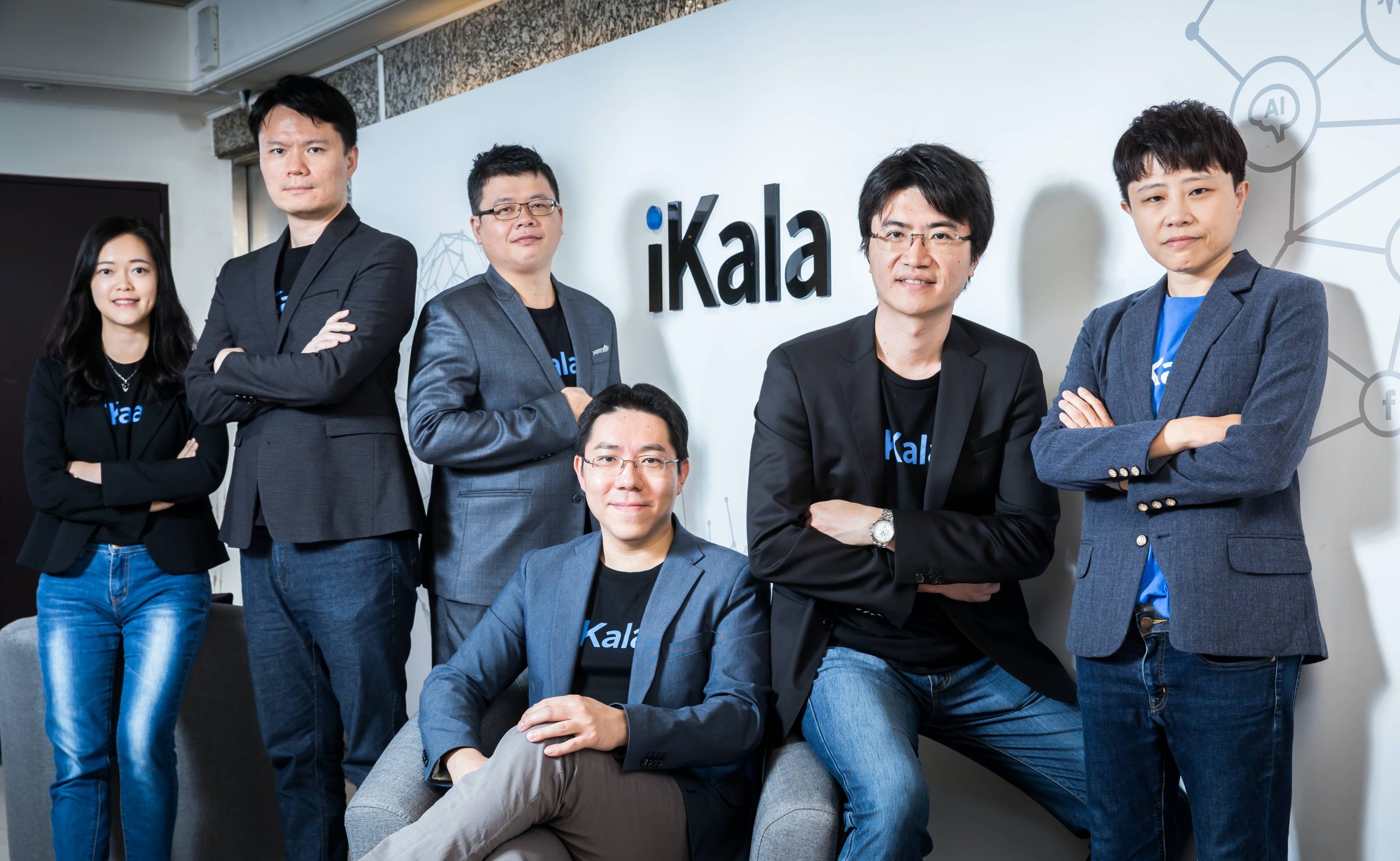
The corporate record begins in May 2011. The four-person cofounding team associated with today’s iKala assembled in 2012: Sega Cheng, Keynes Cheng, Frank Gong and Candy Hsu. Cheng brought experience as a Google engineer and a Stanford computer-science graduate. Online karaoke sounded rather more entertaining than database integration. Entertainment, however, came with online traffic and song-rights costs.
Livestreaming supplied another opportunity and another lesson. Taiwan’s 2014 Sunflower Movement and elections helped LIVEhouse.in gain momentum, according to Startup Island Taiwan. But distributing video is expensive. The company’s account of its later transformation reports a 78-fold increase in revenue between the 2015 B2B transition and 2020. That is a historical company claim, not a statement about its current growth rate.
“The primary consideration behind these decisions was simply to ‘survive.’”
Sega Cheng, in a 2024 founder interview
There is something refreshingly practical about that explanation. A pivot is often presented as a revelation. Here, the evidence points toward operating economics and the management team’s technical strengths. A reader running a business can copy the question: which capability, developed to support our original product, solves a problem that another customer will pay to remove?
Two kinds of information nobody can find
Today’s offering follows two information problems. Inside a business, useful knowledge disappears into documents and disconnected systems. Outside it, useful market signals disappear into the daily flood of social content. iKala’s enterprise and marketing products address those different kinds of clutter.
Nexus connects company information to AI applications. Its advertised functions include answering employee questions, reviewing documents, analyzing sales data and assembling industry reports. The company describes cloud or on-premises deployment, integration work, training and acceptance testing. Its roughly three-month implementation outline comes with a qualification: actual timing and budget depend on the customer.
The published cases are pleasingly specific. SET Tour needed help with customer inquiries and itinerary planning. OneAD needed real-time advertising data analysis with cost control. Leda Technology sought AI consulting for its industrial software. These are accounts of work supplied by iKala, rather than independently audited savings. They nevertheless show the tasks behind the phrase “AI transformation.”
Kolr, formerly KOL Radar, makes the external problem searchable. Launched in 2018, it offers creator discovery, audience analysis, campaign dashboards and competitor monitoring. A marketer can filter potential collaborators, inspect engagement and organize a shortlist. An agency can use the reports to explain a recommendation to a client who would quite reasonably like more than a fashionable name.
In a founder interview, Cheng offered a coffee example: searching only for coffee endorsements can overlook lifestyle creators whose audiences suit the product. That distinction gives the tool a useful purpose. The buyer needs a relationship between a product, a creator and an audience; a keyword match is merely the beginning of the investigation.
A subscription, and people who do the work
Kolr’s English pricing page lists Premium at $1,499 per quarter and Advanced at $2,999 per quarter, before tax. Premium includes 200 complete-profile views per month; Advanced includes 500. Report and collaboration allowances also differ. Those are software costs. Creator fees, campaign production and a custom enterprise engagement belong to separate budget conversations.
The business model combines subscriptions with implementation, consulting and managed work. Kolr also offers campaign services covering strategy, outreach, contracts and reporting. iKala Cloud supplies architecture planning, migration, operations, security and training. Its published customer examples include KKBOX, Dcard, CommonWealth and Rayark. The cloud practice provides a route into enterprises before the conversation reaches AI agents.
Alternatives depend on the job. Modash and Upfluence also offer creator discovery and campaign tools. A business deploying internal AI can turn to a systems integrator or its own engineers. iKala’s distinctive proposition is the combination of cloud delivery, data integration and a proprietary social-intelligence product. That combination matters most when a buyer needs technical help as well as software access.
The investor with its own network
Capital followed the enterprise turn. Wistron Digital Technology Holding led a $17 million Series B in 2020. Chunghwa Telecom led a $20.8 million Series B+ announced in March 2024, taking reported cumulative fundraising above $50 million. The latter partnership focused on AI, big data and cloud. A telecom investor brings an obvious interest in infrastructure and enterprise deployment.
In April 2025, iKala received Google Cloud’s Country Partner of the Year award for Taiwan. Its stated culture includes freedom and responsibility, peer review and peer bonuses. A published HR account describes regular one-to-ones and TGIF all-hands meetings. These are concrete practices behind the company’s preferred human-centered language.
Give the machine a local exam
iKala’s research work offers another clue to its priorities. TMMLU+, its open-source Traditional Chinese benchmark, contains 22,690 questions across 66 subjects in its original version. The research appeared at COLM 2024. In September 2026, the company announced v1.1 and a direction toward evaluating agents and multimodal tasks. A capable model still needs testing against the language and work it will actually encounter.
For a prospective customer, the practical starting point is one measurable workflow. Check the data, test the answers and count the time saved. Kolr’s feature coverage varies by market; enterprise AI requires connected information and employee adoption. A beautiful demonstration cannot settle those questions. iKala’s history offers a useful reason to ask them early: success becomes a business only when someone has worked out who pays the bill.