Matthieu Rouif had a product to promote and a background to remove. At GoPro, preparing images for a video-editing app, he found himself doing the sort of fiddly Photoshop work that makes an afternoon disappear without producing much of a story. Trace an edge. Adjust it. Repeat. Somewhere inside a company devoted to capturing action, the action had become clicking around an object.
There was a useful contradiction nearby. GoPro’s researchers were exploring artificial intelligence that could automate parts of image editing. Rouif could see a gap between what the technology might do and what an ordinary person could actually get done on a phone. He left GoPro in 2018. With machine-learning engineer Eliot Andres, he would build Photoroom, founded in 2019, around that gap.
The problem sounds small until you picture the customer. Someone has an item to sell, a phone camera and a room that refuses to resemble a photography studio. The image has to earn a stranger’s confidence. The washing in the background contributes very little to the pitch.
A postcard from the previous revolution
Rouif had already watched a new technology arrive with a tempting set of wrong answers. A graduate of École Polytechnique, he studied at Stanford in 2008-09 and took its early iPhone programming course. He helped create a smartphone postcard app in 2009. The phone could take the photograph and arrange for a physical postcard to reach somebody else.
It was a plausible bridge between a familiar habit and an unfamiliar device. Looking back, he contrasted it with Instagram: one transported an old format onto a new machine; the other helped establish a different social habit. That earlier experience gave him a reason to question the obvious application of a fresh invention. A working app could still be the wrong answer to the larger question.
His early career supplied plenty of chances to learn what people actually did with phones. Through As-App, he developed iPhone applications, including tourism and ski products. His public résumé records more than 30 apps and a million downloads during that period. Ski resorts were a practical proving ground: location, information and a small screen had to become useful together, away from a desk.
In 2011 he cofounded HeyCrowd, which brought surveys into a social app. Later he led product at Stupeflix’s Replay video editor. Replay received Apple’s App of the Year recognition; GoPro acquired Stupeflix in 2016. Rouif went on to lead image-editing products there. Across these jobs, the recurring subject was the distance between a complicated capability and an inviting button.
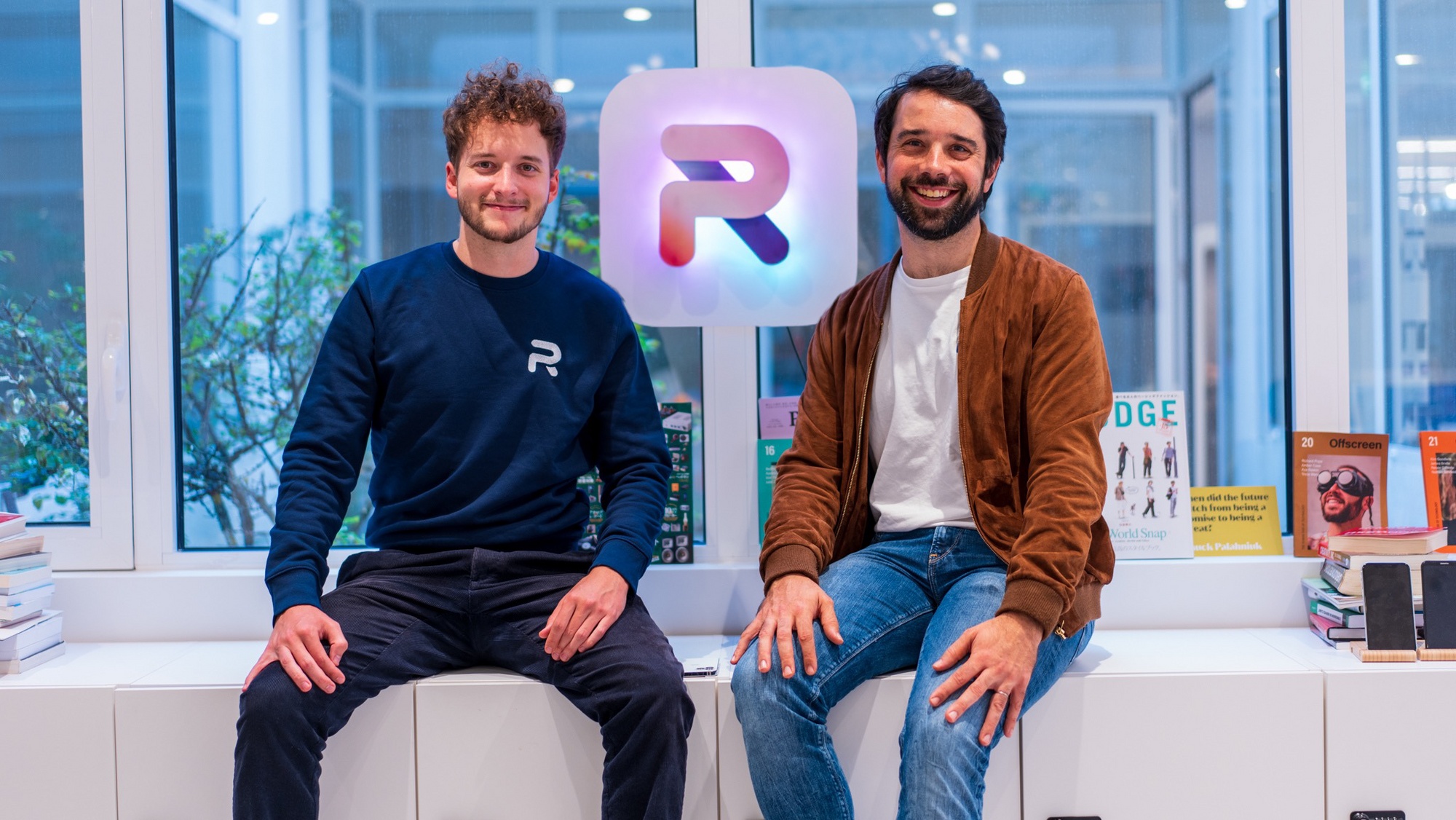
Two weeks to make the nuisance disappear
The GoPro frustration sent Rouif back to learning. He took an online machine-learning course and experimented with prototypes combining the technology with mobile apps. After meeting Andres, he had a partner with the technical depth to turn that interest into a product. Together they built a first version in two weeks.
That detail is easy to mistake for the whole story. The prototype was quick; the preparation had taken years. Rouif brought experience with app distribution, editing interfaces and the very ordinary irritation of waiting for software to cooperate. Andres brought expertise in computer vision and machine learning. Their first useful trick was removing the background from a photograph.
There is a certain modesty to the task. An algorithm capable of distinguishing an object from its surroundings can be introduced with considerable mathematical ceremony. A seller sees the kitchen table disappear. The second explanation is much better suited to an app store.
Photoroom joined Y Combinator’s summer 2020 batch. Its initial audience of people making product pictures gave the founders a specific job to improve. A clean cutout could lead to a better backdrop, a shadow, another format, a batch of images. Each adjacent task belonged to somebody already trying to finish a listing.
A pink detour with a practical engine
The same background-removal capability found an unusually conspicuous outing in 2023. Warner Bros. and its agency Bond needed to place fans inside the visual world of the Barbie film campaign. Bond tested ten platforms before choosing Photoroom. The resulting selfie generator let people put their own photograph into a recognisable promotional frame.
Rouif said the service took an hour to switch on once the companies had selected Photoroom. By August 2023, the generator had been used more than 14 million times. A feature built to separate an object from its surroundings was now separating people from theirs, in pink, at considerable volume.
The episode fits his account of creativity as something practised through play. He described weekly advertising sessions where the team reviewed earlier work and made new material, sometimes inviting colleagues outside marketing to join. Hackathons offered another way to try ideas under a short deadline. In his telling, curiosity benefits from having something concrete to make before the day ends.
The office conversation everyone can find
There is a less photogenic part of Rouif’s approach: where the messages go. In 2024 he described Photoroom’s preference for open Slack channels over private work conversations. He credited Stripe’s approach to email transparency as an influence. Project updates and discussions should be available to the colleagues who might need them, including people who were not present at the beginning.
The policy’s nickname, “No DMs,” invites a picture of a chief executive confiscating whispering privileges. His explanation was more forgiving. Personal or confidential matters could remain private. The point was to make ordinary work searchable, so joining a project did not require reconstructing its history through a series of individual interrogations.
He reported that 74 percent of Slack messages went to public channels, compared with 7 percent in direct messages. The nudge for someone reverting to a private discussion was a friendly reminder that the exchange could be public. The ambition was access to context. A distributed team cannot rely on overhearing the right conversation beside the right desk.
“Love ❤️ crafting innovative products with smart people.”
Matthieu Rouif
The international emphasis was there early. Photoroom launched in 15 languages and reached 28 within three months. Its first app-store feature came from Vietnam; its first press coverage came from Japan. In July 2023 the company said France accounted for only one percent of revenue. Paris was home base, while customers were already providing an education from elsewhere.
That makes the communication policy easier to understand as a product decision about the company itself. Information needs a usable interface too. A colleague in another country should be able to find the discussion without first knowing whom to ask. Rouif’s preference for reducing unnecessary steps extends beyond the image editor.
The interesting number is the work left over
Money supplied a more conventional milestone in February 2024: a $43 million Series B at a $500 million company valuation. Balderton Capital and Aglaé Ventures led the round, with Y Combinator participating. The financing placed a large figure beside an enterprise that had begun with an aggravating piece of editing.
A quieter measure of its direction arrived in May 2025. Photoroom bought GenerateBanners, its first acquisition, and introduced Visual Ads Automation. GenerateBanners added technology for precise text placement. Removing a background solved one production step; arranging an advertisement meant taking responsibility for more of the finished work.
That expansion has a practical logic. A merchant can admire an image and still need to put a price, a message and a brand around it. Every handoff is another opportunity to spend time or lose consistency. Rouif’s company was following the unfinished job further along the desk.
Images processed per year, according to Photoroom.
Its reported reach: more than 180 countries.
The picture has to survive the parcel
In a December 2025 interview, Rouif described a continuing interest in photography, drawing and design alongside his engineering background. His argument for AI left considerable room for the person with taste. Automating cleanup and repetitive preparation could give stylists and creative teams more time for composition, mood and narrative. The machine could accelerate a trial; someone still had to decide whether it was worth keeping.
His remarks about physical shops were similarly grounded. He expected digital discovery and visits to stores to work together. People still want to touch fabric and assess fit. Better online presentation can help bring them to that encounter, where the object must answer for its photograph.
By June 2026, Rouif was making that last obligation central to Photoroom’s refreshed identity. He reported that 300 million people had used the product and that it processed more than seven billion images a year. These were company-reported figures, and they described a much broader operation than the early cutout app. Yet his argument returned to a simple transaction: what is pictured should match what is delivered.
In July 2026, he and Andres appeared in a Y Combinator Startup School video about setting bigger goals. In another interview, Rouif described his ambition for Photoroom to become a verb, a routine part of transforming a product listing. It is an expansive wish with a very domestic test. The seller has a real object. The buyer will eventually open a real parcel. Between them sits a picture, carrying a promise. Rouif has spent much of his career trying to make that picture easier to create. The promise is the part he now insists must hold.