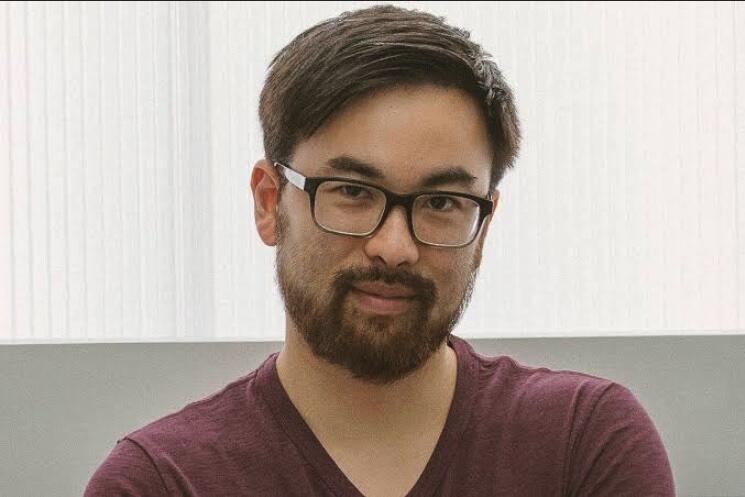
The quiet architect of a billion-dollar retail roll-up
Justin Yoshimura runs a company most shoppers have never heard of, and he built it by walking straight into the part of retail that everyone else was fleeing. CSC Generation, the holding company he founded in 2016, owns a portfolio of familiar American brands - Sur La Table, Z Gallerie, One Kings Lane, DirectBuy - and quietly generates more than a billion dollars a year. It is larger than several household names, yet Yoshimura has spent little energy trying to make himself one.
His current work is less about any single storefront than about a system. Yoshimura describes CSC Generation as an AI-native retail holding company: a machine for acquiring established but underperforming brands and rebuilding them on modern data, automation, and CSC's proprietary Genesis platform. The reference point he keeps returning to is not a fashion house or a big-box chain. It is Constellation Software, the Canadian firm that grew into a roughly $40 billion company by patiently buying hundreds of small, specialized software businesses and holding them for the long term. Yoshimura wants to do the same thing to consumer brands.
That ambition sounds abstract until you look at what he actually buys. These are companies with real customers, real catalogs, and decades of history, but often with technology stuck in another era. "A lot of these old-school furniture companies have a ton of customer data, but often it's on a physical server in their warehouse," he has said. "Sometimes the software they're using is 30 or 40 years old." Where a private-equity buyer might see a candidate for cost-cutting, Yoshimura sees dormant infrastructure - customer relationships and purchase histories waiting to be switched on.
Most companies say they're AI-first. Few can prove it on a Saturday.— Justin Yoshimura, CSC Generation
A million dollars before he could vote
The instinct to build commerce systems showed up early. Yoshimura was born in Torrance, California, in 1990 and raised in the coastal town of Palos Verdes Estates. While still a student at Palos Verdes High School, he launched CellsWholesale.com, an online marketplace for cell phones. In its first year the site generated roughly a million dollars in revenue. The business outgrew school, and in his junior year he dropped out to run it full time. He sold it in 2008, before most of his classmates had finished college applications.
What followed was a straight line into e-commerce infrastructure. In 2010 he founded 500friends, a cloud-based loyalty and incentive platform built for online retailers. It launched in 2011 through Y Combinator, the startup accelerator that has seeded a generation of technology companies. In March 2012, 500friends raised a $4.5 million Series A led by Crosslink Capital, with participation from Intel Capital. At the time, Yoshimura was among the youngest founders either firm had backed. That same era brought a place on the Forbes 30 Under 30 list in the Social and Mobile category - recognition that arrived while he was still in his early twenties.
500friends kept raising and growing, reaching around $12 million in total funding before the marketing services company Merkle acquired it in 2014. Yoshimura stayed on for a time as a senior vice president of loyalty. The exit gave him capital and, more importantly, a thesis: the tools that made digital-native brands efficient could be pointed at older companies that had never had them.
Buying what the market gave up on
CSC Generation grew out of that idea. Instead of building another software product to sell to retailers, Yoshimura decided to own the retailers themselves. Beginning in 2016 and 2017, CSC started acquiring distressed and out-of-favor businesses - the discount home-goods membership club DirectBuy, then a widening set of home and lifestyle brands. Z Gallerie, One Kings Lane, and the kitchenware chain Sur La Table all came under the CSC umbrella. In 2021 the company acquired Amerimark Holdings, adding the catalog businesses AmeriMark Direct, Dr. Leonard's, and LTD Commodities.
The portfolio is deliberately unglamorous. These are brands with loyal but aging customer bases, sprawling catalogs, and the kind of operational debt that scares off buyers looking for a quick flip. Yoshimura's pitch is that scale plus shared modern infrastructure changes the math. One data platform, one automation layer, and one logistics backbone can be spread across many brands, so each acquisition gets capabilities it could never have afforded alone.
Not every bet has paid off. The roll-up strategy has produced setbacks alongside wins, including bankruptcies within parts of the DirectBuy and Amerimark operations that led to store closures and layoffs. Yoshimura has been candid that revitalizing legacy retail is hard, uneven work. The Constellation model tolerates that: some holdings compound, some are restructured, and the portfolio is judged as a whole rather than by any single name.
We believe in growing digital, but that doesn't mean that we don't believe in the dealers, or that we don't believe in stores.— Justin Yoshimura
The 2022 offers that startled an industry
Yoshimura is usually described as a builder and a systems guy rather than a disruptive firebrand, but he is capable of bold public moves. In 2022 CSC made unsolicited buyout offers for two publicly traded furniture makers, Flexsteel and Bassett, at premiums to their share prices. The traditionally private, family-influenced furniture industry was not used to that kind of open approach. Both companies rejected the bids the same day, citing undervaluation. The offers did not close, but they announced that a new kind of buyer was circling a sleepy corner of American manufacturing.
That combination - patient operator most of the time, aggressive acquirer when the moment calls for it - captures how Yoshimura works. He is comfortable operating away from the spotlight, letting the numbers compound, and then acting decisively when he sees an asset the market has mispriced.
Toward "Commerce AGI"
Lately Yoshimura has framed CSC Generation's future in the language of artificial intelligence. The company positions itself as AI-native, using its Genesis platform to run merchandising, customer service, and operations across its brands, and he has floated the idea of building toward what he calls "Commerce AGI" - a system smart enough to run large parts of a retail business automatically. His quip that few companies can prove they are AI-first "on a Saturday" is a jab at competitors whose AI claims evaporate outside of a demo.
Whether that vision arrives on schedule is an open question, and Yoshimura tends to talk in decades rather than quarters. What is clear is the shape of the ambition. He is not trying to build the next hot direct-to-consumer label. He is trying to build the holding company that owns and modernizes the brands other people already know, and to make the boring middle of retail - the catalogs, the warehouses, the decades-old customer files - run on modern software. For a founder who started by selling cell phones out of a bedroom, it is a fittingly systematic goal: less about any one product, more about the machine that runs them all.
He also invests outside CSC, with early-stage bets that have included the media company MACRO and technology companies such as Hipmunk and Bounce Exchange. But the center of gravity remains the roll-up. Headquartered in Chicago's Loop, CSC Generation keeps buying, keeps rebuilding, and keeps its founder mostly out of view - which, for a company this size hiding in plain sight, may be the most Yoshimura detail of all.
From $150M to a billion-dollar platform
Figures reflect publicly reported and company-stated revenue milestones; exact annual totals are not independently audited here.