Matthew Wright had an unusual attitude toward losing employees. At a young Specright, packaging engineers could learn the business, move to a consumer goods company, and take their knowledge with them. For a founder trying to establish a new way of working, this was a useful form of circulation. A departing employee might become a future customer. The farewell cake could, in theory, belong in the marketing budget.
“Yes, poaching is very much encouraged,” he said in 2015. It is a wonderfully economical introduction to Wright. He was building software, but he understood the people who would have to use it. A system for managing packaging specifications would travel farther if trained engineers carried the habit into other companies. The knowledge needed legs as well as a login.
Specright had opened an office in San Luis Obispo to be near Cal Poly’s packaging program. Graduates and interns helped move customers’ information from older formats into the cloud. Before the company had a decade of results to point to, its relationship with education was already part of how the business worked.
There is something revealing about that choice. Packaging is physical, exacting work; software adoption involves people changing their routines. Wright’s early company put the two together through young engineers doing a practical job. The humble specification, an object with little natural glamour, was acquiring a travelling fan club.
An education on the factory floor
Wright came to software after more than 25 years in packaging. His career included leadership positions at International Paper and Temple-Inland, and he co-founded the packaging business rightPAQ. He had worked on both the customer side and the operating side of manufacturing. He understood what a customer wanted and what a factory needed to deliver it.
That distinction matters. A box arrives looking inevitable: folded, printed, ready to carry something. Behind it sits a collection of decisions about materials, dimensions and construction. The object is simple to recognise. The agreement required to produce it consistently can be considerably less tidy.
Wright’s own account of his career includes running an $800 million division and working at floor level on operational improvements. He also describes acquiring a packaging company with $15 million in annual business, growing it to $30 million in two years, and subsequently merging and exiting the business above $70 million within five years. Those are his published career figures, rather than a measure of personal wealth.
The repeated problem he encountered was poor specification information. Customers, suppliers and retailers needed dependable details, yet the information could be incomplete or difficult to share. By 2014, his frustration had become the basis for Specright. A supplier’s recurring irritation had become a software founder’s business plan.
The details were doing all the work
In 2017, Wright made a plain argument for paying attention to packaging: global trade depends on it. Goods need to move from the people making them to the people buying them. Packaging does that job while being customised for countless applications. The buyer relies on the result without necessarily controlling every step that produces it.
He described an industry full of manual processes, paperwork, phone calls and confusing rules. His proposed remedy was a shared technological language. It was an operational ambition with a social requirement: different organisations had to understand the same thing when they looked at a specification.
At PACK EXPO International in 2018, he explained the idea through three requirements: information had to be easy to use, accurate and actionable. A specification should be linked wherever it was needed, with changes made to the shared record. Repeated copies gave a detail too many opportunities to develop a separate career.
“When you get the details right, every other system and process becomes more efficient,” he said. The appeal is its order of operations. Before improving a process, establish what everyone is actually trying to make. Drawings, raw materials, finished goods and bills of materials belong in that conversation. A polished dashboard cannot settle an argument about which dimensions are correct.
“When you get the details right, every other system and process becomes more efficient.”
Matthew Wright · PACK EXPO International, 2018
A carrot has quite a paper trail
One early customer brought the problem into focus. Grimmway Farms, the produce business, had hundreds of specifications to manage across corrugated shippers and flexible films. Store brands multiplied the variations. Similar-looking products could require different packaging information depending on whose name would appear on the shelf.
The attraction of Specright was control over that information. Grimmway could put the packaging details somewhere suppliers could use them, while retaining ownership of the specifications. Wright’s business was helping a customer turn scattered manufacturing knowledge into something it could reliably direct.
By May 2019, Specright had closed an $8.8 million Series A led by Pritzker Group Venture Capital. Okapi Venture Capital, Fika Ventures and Mucker Capital also participated. The financing was intended to support product development and global expansion. It gave a company founded around packaging frustrations resources to keep extending its software.
The customer list then included Grimmway Farms and Beyond Meat. Wright was describing information at the level of ingredients, dimensions, branding and design. The subject might have sounded narrow in an elevator pitch. On a factory floor, those particulars determine what happens next. A specification earns its keep by saving other people from having to ask the same question again.
The classroom was always part of the plan
Wright kept returning to universities. At Michigan State, packaging student Xingguang Pan described hearing him present Specright’s approach to cloud management and analytics. The idea prompted Pan to seek an internship. It is a small, concrete example of a founder’s campus visit turning into someone else’s career decision.
In 2023, Specright’s university activity included Cal Poly’s Poly Pack Symposium and a visit from Cal Poly students to its Tustin headquarters. Wright spoke about sustainability and profitability through a spec-first approach. Students also heard from a product manager about less conventional routes for a packaging degree.
His university connections extend to the Michigan State University School of Packaging Industry Advisory Board. He previously served on the packaging advisory board at Cal Poly San Luis Obispo. These relationships sit naturally beside the early hiring story: teach the method, let people practise it, then let the knowledge move.
Wright also put his argument into a book, The Evolution of Products & Packaging: How a Spec-First Approach Is Revolutionizing the Way Companies Make Things. His 2023 appearance on The Sourcing Hero podcast took the discussion into procurement, where packaging choices involve competing business objectives. A specification has to survive those conversations too. It needs to make sense to the person buying the package as well as the person making it.
A change of chair, with customers still on the calendar
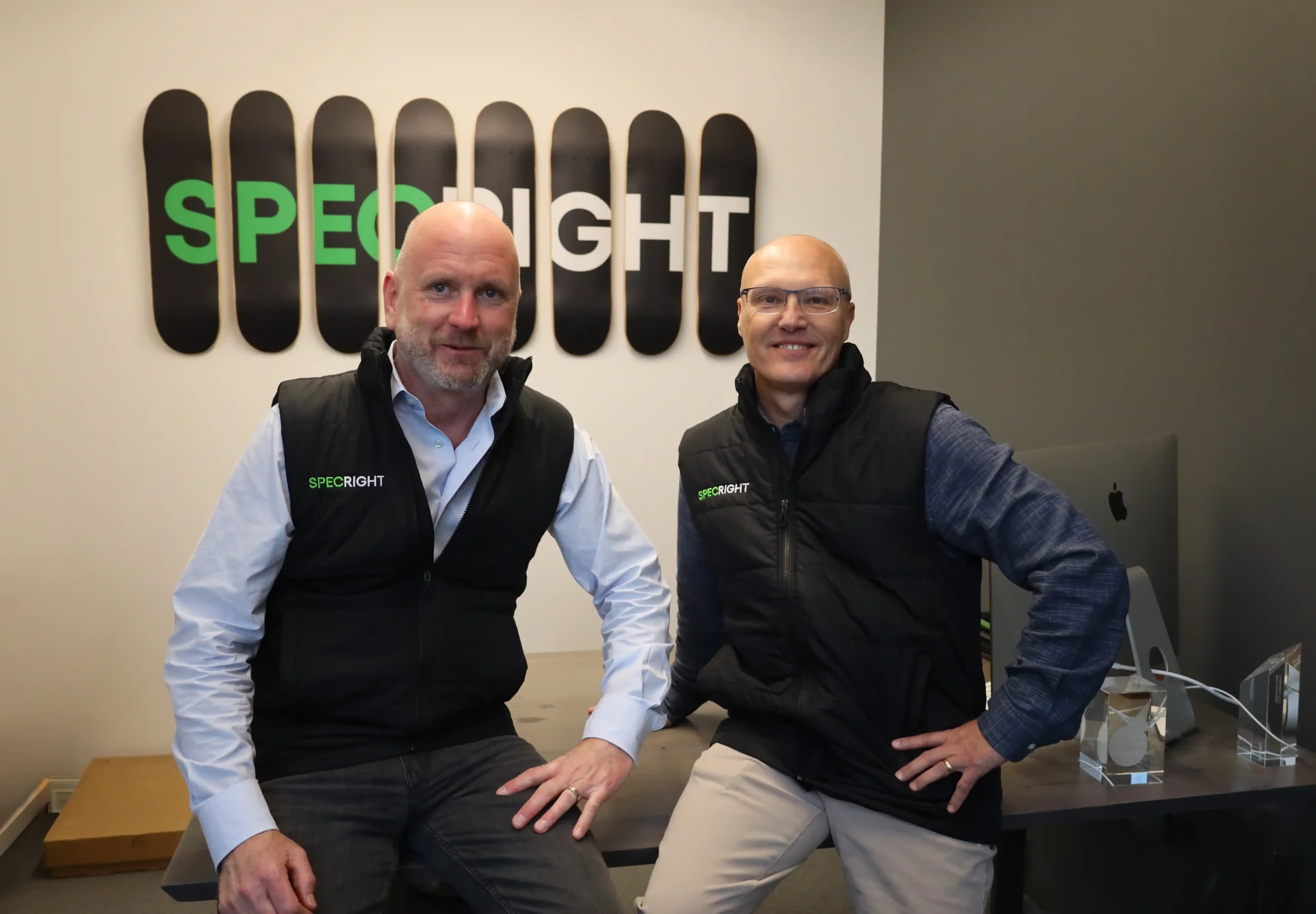
On April 2, 2025, Mike Boese became Specright’s CEO and Wright moved to executive chairman. His continuing responsibilities included industry councils, university relationships, advising the leadership team and working with key customers. The work retained several of the connections that had mattered at the beginning.
At the transition, Specright reported more than five million products on its platform and four of the ten largest US retailers among its customers. Those figures describe the company at that date. They also show how far Wright’s concern with incomplete packaging information had travelled since the company’s founding.
Recognition had accumulated along the way: Specright appeared on Fast Company’s 2023 Most Innovative Companies list and the 2024 Deloitte Technology Fast 500. In 2020, Wright was a finalist for Octane’s Best Small Technology Company CEO award. His response to that nomination credited the team and the culture it had built.
When employee feedback brought another workplace recognition in 2022, Wright again pointed to the people behind the company’s progress. It is a consistent public emphasis. Engineers help information move; students bring methods into new workplaces; colleagues make the software business function. For a founder so concerned with data, his working model leaves plenty of room for humans.
Another clearing in the forest
By March 2026, Wright was publicly discussing another venture: Forest, now presented as FOREST-PKG. He remains Specright’s executive chairman and is founder and CEO of the newer business. The focus has widened from organising specifications to helping the packaging industry find knowledge, suppliers and one another.
The name refers to an interdependent ecosystem. Wright’s vision brings together buyers, converters, raw-material providers, researchers and other participants. In its early public description, the platform would help people discover products, compare vendors and manage conversations. He also wanted smaller businesses with useful capabilities to have a better chance of being found.
FOREST-PKG’s current site presents structured material and supplier profiles, with evidence attached to claims. It describes tools for comparing options and contacting suppliers. These are the platform’s stated functions and approach. For Wright, they extend a familiar concern into a different part of the working day: first make the information usable, then help somebody act on it.
He is still talking with the next generation, too. In April 2026, Wright and Beyond Packaging co-host Laura Foti welcomed Clemson packaging science director Greg Batt to discuss students, AI and design. The conversation had moved on from the early cloud migrations, while the interest in teaching remained.
In July 2026, he joined Foti and New Earth Ventures managing partner Matt Saunders on Cory Connors’s Sustainable Packaging podcast to discuss a new partnership. Wright spoke about culture, innovators and the need for the industry to work together. The old concern with information moving between people was still there, now in a conversation spanning software, packaging and investment.
Wright’s personal website expresses an aspiration for a world without waste. His career gives that large wish a specific scale: a material correctly identified, a supplier easier to find, an engineer spared another search for the approved version. The ordinary box is still there. He keeps working on the many agreements required to get it right.
Keep following the details
Writing, conversations and the next venture.
- Matthew Wright’s personal website
- Connect with Matthew on LinkedIn
- Specright: the company and its people
- FOREST-PKG: packaging knowledge and suppliers
- Watch: unlocking cost and sustainability through unified data
- Listen: The Sourcing Hero conversation
- Listen: the next generation of packaging
- Listen: Wright, Foti and Saunders on packaging investment
- Read: the early Specright and Cal Poly story
- Read: Wright’s Forest venture
- Read: the 2025 leadership transition