Person / Executive / Climate Operator
Scott Raskin
He spent thirty-five years selling enterprise software to the Fortune 100. Now he is selling the Fortune 100 a way to keep score on the planet.
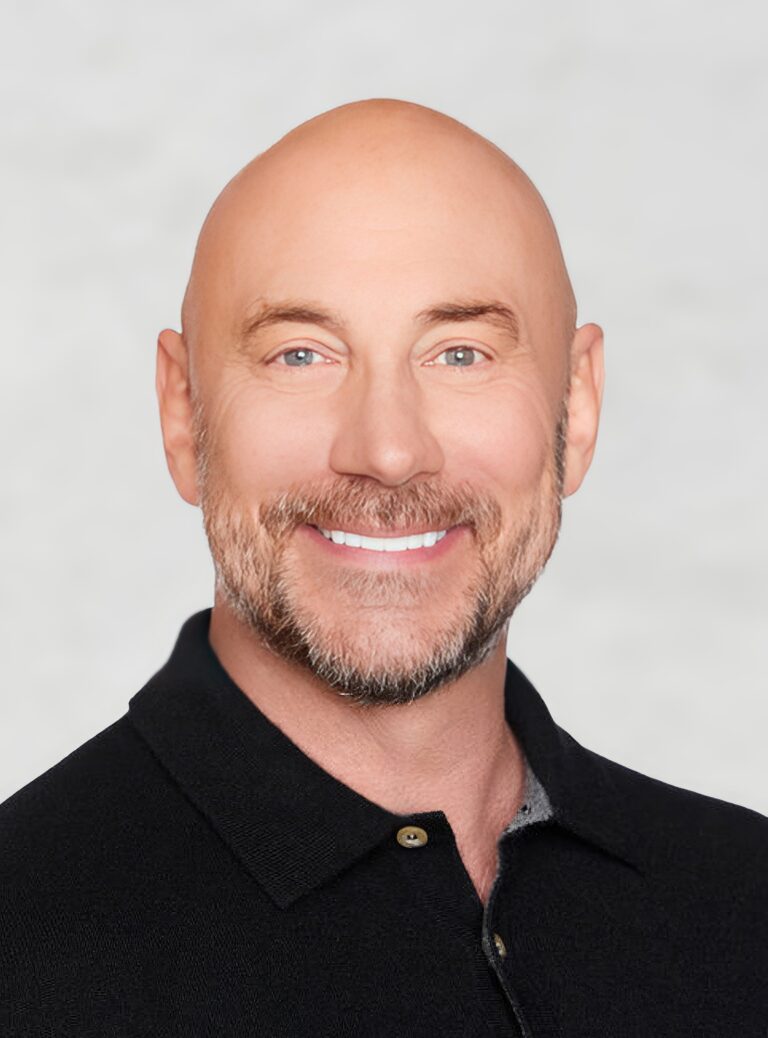
Scott Raskin / Worldly
He spent thirty-five years selling enterprise software to the Fortune 100. Now he is selling the Fortune 100 a way to keep score on the planet.
Most CEOs of climate-software companies arrive from one of two places: NGO work or a college dorm room. Scott Raskin arrived from neither. He arrived from Mindjet, then from Spigit, then from Quotient Technology - a coupon-and-retail-media business that processes the digital plumbing of consumer goods. When the Worldly board went hunting for a new chief executive in 2023, they did not pick a sustainability evangelist. They picked an operator who has spent his career turning unloved software categories into recurring revenue streams. That is the bet. Sustainability, the bet goes, is now an enterprise software category.
Worldly sits behind a number that almost no one in apparel pretends not to know about: the Higg Index. If you have read a press release in the last decade about a brand cleaning up its factories or measuring its scope 3 emissions, the data probably flowed through software Raskin's company makes. Forty thousand brands, retailers, suppliers and manufacturers run on it. More than 150,000 factory assessments have been logged. The platform holds something north of 75 million sustainability data points - the kind of number that sounds like marketing until you remember every row is a factory, a fabric, a worker shift, a kilogram of cotton.
The job, as Raskin describes it, is to make sustainability data look more like financial data. Standardized. Auditable. Comparable. Decision-grade. Forecastable. Boring, in the best possible sense. Nobody calls quarterly earnings reports "passionate" and nobody should. They should be true, on time, and useful. Raskin would like the same to be said about your supplier's water-use disclosure.
Joining the Worldly team at this pivotal time for both the company and our planet is genuinely exciting for me.- Scott Raskin, on his appointment, July 2023
The Raskin pattern shows up if you stack his last three jobs side by side. Each one was a company with a beloved but cramped product (a mind-mapping desktop tool, a coupon engine, a sustainability index). Each one needed someone to talk to procurement officers, sales leaders and CFOs in their own language. Each one came out the other side bigger, more enterprise, more recurring.
Mindjet was the first big swing. Raskin took the chief executive seat in 2006, succeeding the founders Mike and Bettina Jetter. The product at the time was MindManager, a single-seat desktop app loved by consultants and engineers who needed to draw boxes and arrows in a hurry. Raskin's contribution was to recognize that a tool used by 83 percent of the Fortune 100 ought to be sold as something other than a one-off perpetual license. He pushed the company toward subscriptions, toward a self-service buy flow, toward the cloud. By 2012, Mindjet had reached roughly two million users.
Then came 2013, and the move that turned the company into something else: the acquisition of Spigit, a Pleasanton startup that was, at the time, the fourth-fastest-growing software company in America according to the Inc. 500. Spigit ran innovation programs at scale - the software equivalent of a corporate suggestion box, but with crowdsourcing, voting and pipeline tracking grafted on. Together, Mindjet and Spigit pitched what Raskin called the "Vision-to-Action" lifecycle: a way to take an idea from sticky-note to shipped product without losing the trail. The deal made the combined company the largest software vendor in innovation management, a category that had not previously existed in tidy industry-analyst form.
Spigit eventually exited to Planview in 2019. Raskin wrote about that journey himself on LinkedIn - the long arc from acquiring a startup to handing it to a strategic acquirer - and then quietly resurfaced as president of Quotient Technology, the consumer-goods digital marketing platform behind a meaningful share of America's digital coupons. The Quotient stint added a layer to the resume that mattered more than anyone realized at the time: deep, granular fluency with how consumer brands actually market, source, sell and report.
Which is to say: by the time the Worldly board called, Raskin had spent his entire career building software for the same buyers Worldly needed to win. He knew the procurement cycles. He knew how to package a category. He knew how to look a sourcing executive in the eye and explain unit economics. And he had done the harder thing - he had taken a beloved product and made it indispensable.
Worldly used to be called Higg, and before that it lived inside the Sustainable Apparel Coalition. The rebrand to Worldly arrived in 2022, a quiet acknowledgment that the company had outgrown apparel. The platform is the exclusive software for the Higg Index, the de facto measurement framework for the social and environmental impact of global supply chains. If a brand wants to tell its customer base what its denim costs the planet, the math usually originates here.
The technology stack underneath is the kind of thing that makes engineers nod. Apache Iceberg. ClickHouse. dbt. Airflow. Dagster. Langchain and MLflow for the AI work. Kubernetes for the infrastructure. Anthropic Claude and ChatGPT for the natural-language layer. A polyglot warehouse that increasingly answers questions like "where in this factory's process is the embodied carbon hiding" and "if we swap this supplier for that one, does the worker-safety risk score get better or worse." It is, in practical terms, a data warehouse with a conscience.
The 2024 acquisition of Bendi Software, an AI-powered supply chain mapping and risk-intelligence startup, slotted right into the strategy. Worldly under Raskin is no longer just a measurement tool. It is moving toward an intelligence platform: mapping, scoring, predicting, recommending. The kind of thing brands buy because their general counsel is suddenly very interested in scope 3 emissions and forced-labor disclosure.
Raskin has a Bachelor of Business Administration from the University of Texas at Austin. From there it was tech, more tech and then more tech: SaaS, enterprise software, mid-market growth stories. He has been a member of YPO - the Young Presidents' Organization, the closed-room peer network for people running companies - for nearly two decades, now at Gold Level. He has also served as an executive mentor for UC Berkeley's Lean LaunchPad course, the Steve Blank-designed program that trained much of a generation of founders to talk to customers first and write code second.
The geography of his current life is one of the more interesting facts in the file. Worldly is headquartered in Concord, California. Raskin lives and works in Park City, Utah. The company runs on remote-first infrastructure, which is unusual for an enterprise SaaS of its scale, and which the Park Record gleefully noted in its 2024 profile titled, with deserved bravado, "Scott Raskin and Worldly are fighting to save the planet, one brand at a time." A CEO running a climate-software company from a ski town has a certain symmetry to it.
The personality, by accounts of those who have worked with him and by his own written record, leans operator. Results-oriented. Customer-focused. Allergic to vibes-based management. He talks about "management discipline" and "operational efficiency" the way some CEOs talk about culture decks - meaning, he treats them as load-bearing and not optional. When he writes about innovation, the verb he uses most often is not "imagine" but "deliver."
Chief Innovation Officers must go beyond the 'idea' and deliver innovation.- Scott Raskin, on running innovation programs
For a long time, sustainability reporting was a press-release exercise. Brands would publish a glossy PDF every spring, environmental NGOs would publish a less glossy PDF every fall, and almost nothing in between had real consequence. That is changing. The European Union's Corporate Sustainability Reporting Directive is now in force. California passed its own climate disclosure laws. Customers, especially the institutional ones - Walmart, Target, Inditex - have started asking suppliers for data that used to be optional. The auditor is at the door.
This is the macro tailwind Worldly is built to ride. The argument Raskin makes, in interview after interview, is that the industry has moved faster than people realize toward common measurement tools. The Higg Index is one of them. The Higg FEM (environmental) and Higg FSLM (social and labor) modules are now standard line items in supplier conversations. The next step, the harder step, is turning standardization into improvement: not just measuring the factory, but using the data to reduce its impact.
That is what makes the operator playbook so fitting. Standardization, recurring usage, integration with how a company already runs - these are the conditions under which enterprise software wins. Raskin's career has been a long lesson in those conditions. Whether sustainability survives as a category, or gets absorbed into the boring monthly reporting cadence of the modern enterprise, will tell us something about how much of the planet's pricing eventually gets brought onto a balance sheet.
The near-term reading is straightforward. Worldly raised a $50 million Series B in 2022, bringing total funding to $61 million. Headcount is around 150. The product surface is widening from measurement into intelligence, with AI scaffolding now baked into the stack. The Bendi acquisition was a signal about direction. Expect more of those - tuck-ins that round out risk, mapping and prediction. Expect deeper integration with the ERP and PLM systems brands already buy from SAP, Centric and the like. Expect a heavier focus on scope 3 carbon, which is where the regulatory pressure is currently densest.
The longer read is about category. If Worldly becomes a system of record for supplier sustainability data the way Salesforce is a system of record for customers, the prize is enormous. If it stays a niche tool for apparel brands, the prize is smaller but real. Raskin's job is to push hard on the first option without overspending the second. That is the kind of trade-off he has spent his career navigating - quietly, in spreadsheets, while the rest of the room argues about wording.
Ask him what success looks like and he will not, by all available evidence, give you a soundbite about saving the planet. He will give you a number: brands on the platform, factories assessed, scope 3 reductions delivered. That is not a failure of imagination. That is the imagination.
He writes about "management discipline" and "operational efficiency." When others say imagine, he says deliver.
Company HQ is in Concord, California. He is not. Worldly is remote-first; the only commute is to a kitchen table.
Mindjet, Spigit, Quotient and now Worldly: each was a strong product looking for a larger commercial story. He has shipped that story four times.
Almost twenty years inside the Young Presidents' Organization. A long-game peer network most of his customers also belong to.
Has served as an executive mentor for UC Berkeley's Lean LaunchPad course, teaching founders to talk to customers before writing code.
He treats ESG the way other CEOs treat CRM: as a category that wins by being standardized, integrated, and reported on monthly.