Matt Pauker has a useful name for the part of entrepreneurship that tends to disappear from the souvenir edition. He calls it Phase Two. The inspiration is a South Park joke: start a company, insert a mysterious middle step, collect the profit. Pauker has spent enough time in that middle step to suspect it deserves rather more attention. The announcement is easy to frame. The years of making something work require a larger wall.
His own sequence includes cryptography at Stanford, a security company acquired by HP, an early Bitcoin business that eventually became Earn.com, and a return to building with Ivy Invest. Those names make a tidy biography. His writing supplies the untidy, more interesting details: the founder who must learn to sell, the spreadsheet he once dismissed, the investor update that should have been shorter.
Today, the San Francisco founder is CEO and co-founder of Ivy Invest, working with investment chief Wendy Li and technology chief Arash Ghodoosi. Their project brings an endowment-style investment approach to individual investors. It is another attempt to turn specialist knowledge into something a wider audience can use. That thread reaches back to the days when Pauker and a fellow undergraduate were trying to make encrypted email less of an administrative ceremony.
A basement, a business plan, and a better way to send secrets
At Stanford, Pauker worked with Rishi Kacker on security research. The university's identity-based encryption project lists both among its staff, alongside Dan Boneh, Matt Franklin and other researchers. The idea had an appealing simplicity: an ordinary string, such as an email address, could serve as a public key. Sending a protected message could become less dependent on the recipient having already arranged the necessary certificate.
The mathematical work belonged to a research community; the commercial question was how to make it useful outside that community. Pauker, Kacker and Guido Appenzeller took their proposal into Stanford's BASES Entrepreneurs Challenge in 2002 and won. In June, the business incorporated. For a few months it operated from a Stanford basement before acquiring more conventional accommodation. Every company needs infrastructure, even when the first piece is simply somewhere to put the computers.
A study of Stanford entrepreneurship records a second competition win in Singapore that June, the same month Pauker and Kacker received their undergraduate degrees. It also describes how Tim Choi, the student president of BASES, joined the venture. Introductions made through the competitions helped connect the founders to venture investors. The company initially used the name IdentiCrypt before becoming Voltage Security. The move from a research project to an employer involved people and introductions as well as code.
Pauker graduated with a BS in computer science. Voltage went on to commercialize encryption for business customers, and HP announced its acquisition in February 2015. The appeal was practical: encryption and tokenization that could join HP's enterprise security offerings. A student project had traveled through the less picturesque business of product development, customer adoption and corporate procurement. The basement made a good beginning; the customers made a company.
at Stanford
company 21E6
Earn.com
Bitcoin, before the household name
In early 2013, Pauker co-founded a Bitcoin company with Balaji Srinivasan and a group of engineers. It began as 21E6, a name referring to Bitcoin's eventual limit of 21 million coins. Here the technical challenge involved specialized mining chips and the economics of running them. Cryptography had led Pauker into another business in which an elegant underlying system still needed a workable route to customers.
The company attracted substantial attention when it emerged publicly in March 2015 with $116 million in backing. Pauker was its CEO at that stage. His stated ambition reached beyond the already converted: “It can’t just be for Silicon Valley.” An audience of enthusiasts could explain a technology to one another indefinitely. A business hoping for broad adoption had to offer everyone else a reason to care.
The chronology matters. Srinivasan replaced Pauker as CEO in spring 2015. The business subsequently moved through a consumer Bitcoin computer and, later, paid messaging and tasks under the Earn.com name. On April 16, 2018, Coinbase announced it had acquired Earn.com and that Srinivasan, then its CEO, would become Coinbase's first chief technology officer. Pauker's place in the story is as co-founder and earlier CEO of its predecessor.
A familiar acquisition can make everything before it appear inevitable. This history contains changes in product, leadership and name. For a reader following Pauker's career, those changes are useful texture: the company at the finish had a different proposition from the mining business at the start. The corporate family tree is easy to draw. Living through its branches was the work.
The founder still has to make the sale
By 2021, Pauker was publishing Phase Two, a newsletter about early company building. Its subjects were refreshingly close to the office floor. In “Your First Sales Rep,” he warned technical founders against assuming a sales hire could immediately take over the uncomfortable job of convincing the first customers. The founder should close the first two or three accounts, he argued, and learn directly from those conversations.
His hiring prescription was specific. Look for someone who has already been among the earliest salespeople at another company, who can close business and tolerate a product still changing around them. A successful employee in an established sales organization might have a very different appetite for uncertainty. Even a good recruit needs time to become independent. Experience does not arrive with the company's pitch preinstalled.
There is a dry sense of proportion in the advice. Founders have lived with their product for months or years; the new employee has just found the meeting room. Pauker's expectation is gradual progress, followed by a repeatable process, followed by more hiring. He ends with the obligation that survives every promotion: “you will always be salesperson #1.”
“you will always be salesperson #1.”
Matt Pauker, “Your First Sales Rep,” 2021
The spreadsheet gets its revenge
One of Pauker's more revealing admissions concerns financial models. As a child, he disliked busywork. Later, asked to model a startup that had yet to generate revenue, he saw a similarly tedious assignment. With so many unknowns, why manufacture a future full of numbers that would inevitably be wrong? It is an understandable objection from someone accustomed to asking whether a system actually works.
He changed his mind. In his 2022 essay “Model Behavior,” he describes the value of having to connect a business's assumptions: customer growth, acquisition spending, staffing and operating costs. The exercise exposes what has to happen for the company to survive. As an investor, he writes, he looks for the depth of thought behind the model. A spreadsheet cannot promise success, but it can make wishful thinking rather more conspicuous.
His suggested approach includes both an ambitious case and a case for weak adoption, with cash and runway kept in view. The interesting biographical detail is his willingness to print the reversal. Here is a founder with acquisitions behind him explaining an exercise he initially misunderstood. It gives his advice a useful human scale.
Good news travels. Bad news needs an invitation.
Pauker's essay on investor communication applies a similar preference for useful information. He wants brief updates with meaningful metrics, operational highlights and specific requests. A company update should not demand the reading commitment of a doctoral thesis. Attention, like runway, is a finite resource; founders can spend it surprisingly freely when designing a document about themselves.
His sharper point concerns trouble. When a major problem appears, he urges founders to tell their principal investors early enough for them to help. Waiting until every attempted solution has failed leaves backers with less time and less context. The argument places trust inside the ordinary mechanics of running a business: a relationship becomes useful when someone can bring the unpleasant facts into the room.
In January 2023, “Conquering Constraints” returned to those mechanics through growth. Pauker separated bottlenecks into sales, implementation and ongoing support. More orders may require more onboarding work; that work may divert engineers; supporting customers may constrain margins. The sequence is recognizably written for someone who must deliver after the contract is signed. A growing sales chart can create quite a queue downstairs.
Another difficult middle, this time at Ivy
Ivy Invest brings Pauker back to a problem of access. In announcing its website and waitlist, he described wanting the kinds of investments available to wealthy institutions and families to be available more broadly. The ambition covers a portfolio spanning traditional and alternative assets, including private equity, venture capital, private credit and real estate. His language was personal: the team was building an investment solution it wanted for itself and its families.
Li brings the institutional investment experience, and Ghodoosi leads technology. Pauker's role is CEO. Their fund began operations on March 5, 2024. By October 2026, Ivy's website advertised a $1,000 minimum. The vehicle is an interval fund, with limited liquidity and quarterly repurchase offers. Those details belong in the story because access is partly a matter of structure: the practical terms determine what a prospective customer is actually being offered.
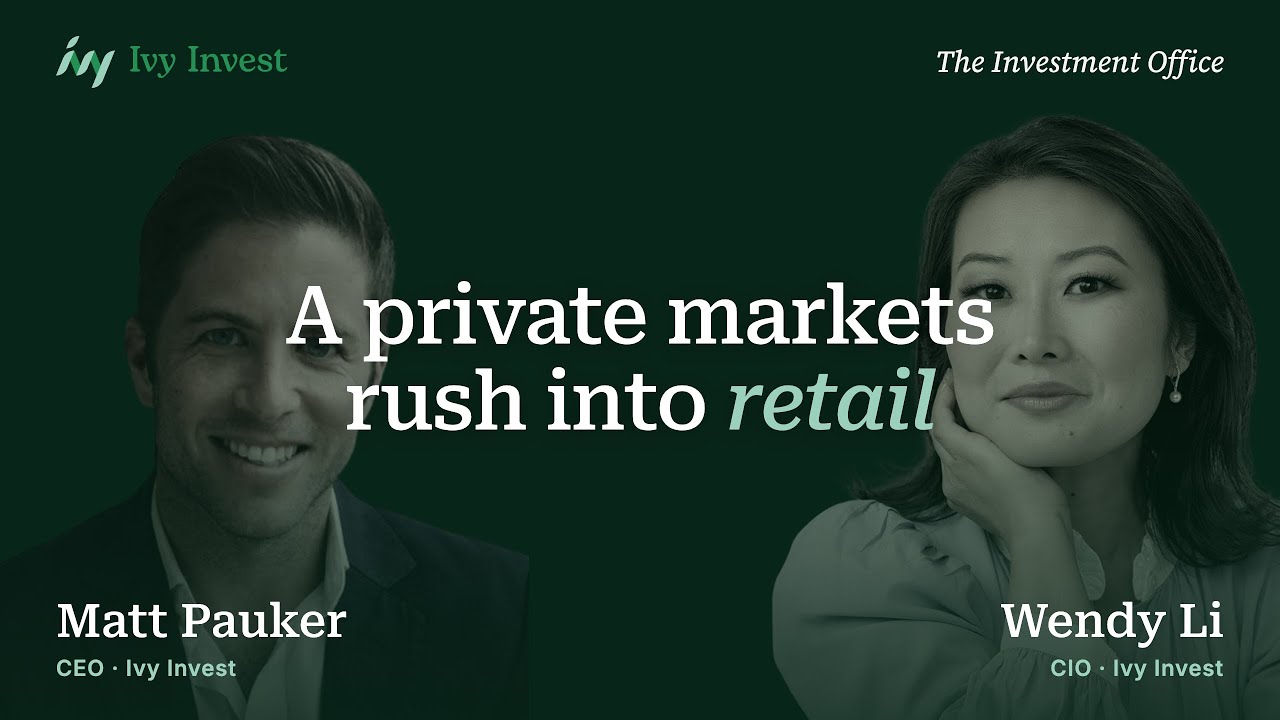
Pauker and Li also appear together on The Investment Office, discussing the business of investing. In one episode, he asks whether the flood of alternative offerings for retail customers expands opportunity or primarily gathers capital for asset managers. It is a useful question for the CEO of a company working in that market to put on the table. An open door still leaves the visitor with decisions to make.
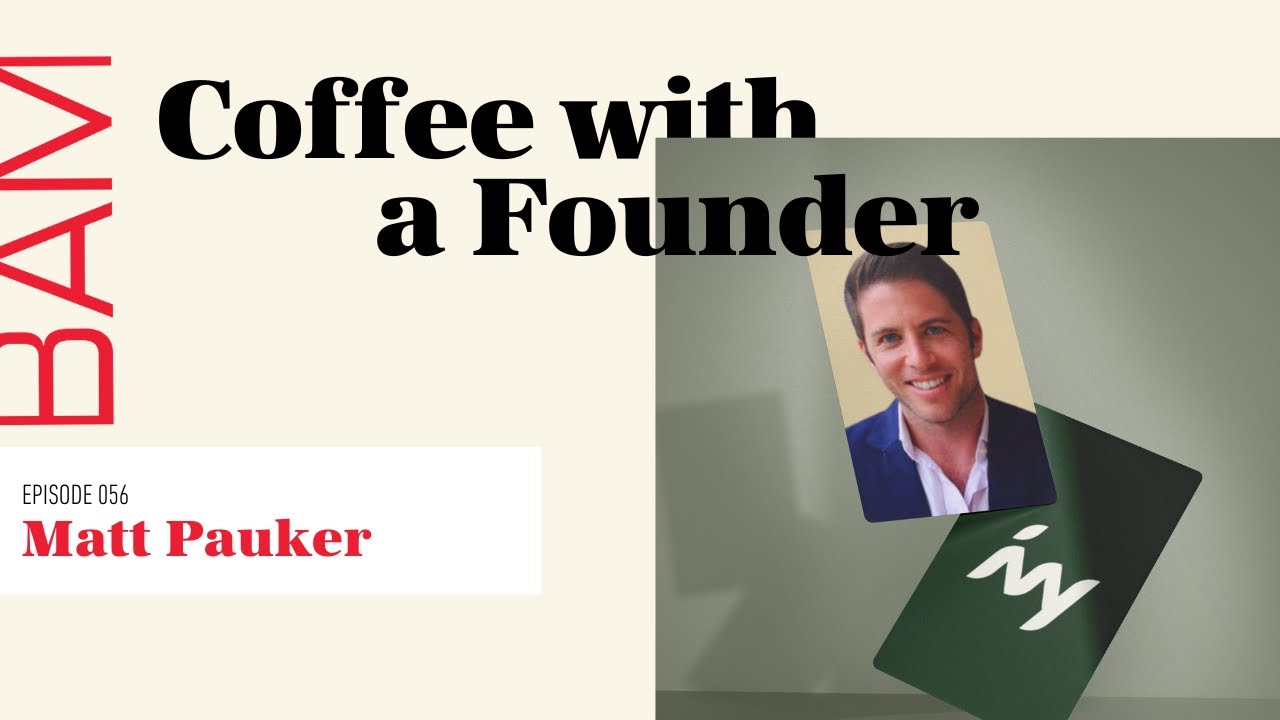
His December 2025 appearance on Coffee with a Founder returned to recurring themes: finding the right colleagues, recognizing gaps in one's knowledge, and working through regulatory obstacles. His personal website describes his enthusiasm for “day-zero startups.” Yet the writing makes clear how much of his attention goes to the days afterward. The thrill of beginning has been followed, repeatedly, by the obligation to explain, sell, hire and deliver.
The most revealing title on Pauker's résumé may therefore be the one he gave his newsletter. Phase Two allows room for an early judgment to be revised, a technical invention to find customers, and a new venture to confront the details of its promise. He has helped build companies that found buyers. At Ivy, he is once again working through the middle, where the punctuation becomes a to-do list.
More from the middle
Continue with Pauker’s writing, conversations and company history.