Before Tango had hundreds of millions of registrations, Eric Setton had a problem that would fit comfortably around a dinner table. His wife was expecting their first child. Their family was back in France. He wanted the people on one side of that distance to see the new person on the other. The ambition was domestic, even if the eventual distribution plan was rather less so.
When he became Tango’s chief executive in January 2016, Setton returned to that beginning. He described wanting a product that would connect his future baby with relatives abroad. By then, the company was announcing more than 350 million registered members. The contrast is useful: a very large number had grown from a very particular absence.
It also helps explain his choice of medium. A voice call can carry a conversation. Video carries the interruption, the expression, the child who refuses to remain where the camera has been pointed. Making that work on a phone meant the family did not have to arrange itself around a computer. The device could come along.
A doctorate in things going missing
Setton arrived in California in 2001 after studying at École Polytechnique in France. Stanford awarded him a master’s in electrical engineering in 2003 and a doctorate in 2006. His subject was video encoding and streaming, a field in which a beautiful image is only the beginning of the trouble.
The network still has to deliver it. Data can arrive late, disappear or encounter congestion. A picture intended for a live conversation loses much of its charm if it turns up after the conversation has moved on. Setton’s research dealt with the practical consequences of those unreliable journeys.
In a research paper with Pierpaolo Baccichet and Bernd Girod, he examined live video distributed through networks of participating computers. Each viewer could help relay the stream. The attraction was that more viewers could also contribute more resources. The difficulty was that any one of those helpful participants could disconnect.
That work required attention to both image quality and delay. Those two concerns would remain recognizable in the consumer product that followed. A call needs to look tolerable, but it also needs to keep moving. An exquisitely delivered pause is still a pause.
Stanford arrival. Electrical engineering Ph.D. Publication of Peer-to-Peer Video Streaming, co-authored with Bernd Girod.
After Stanford came a research position at Hewlett-Packard Laboratories. In 2007, Setton co-founded Dyyno, a video-streaming and distribution company, where he served as chief technology officer. That year also brought the publication of the book he wrote with Girod. Its chapters addressed constrained network paths, control protocols and streaming over peer-to-peer networks.
It was an unusually direct apprenticeship for a mobile communications founder: study what breaks, describe ways to handle it, then take responsibility for a product people will complain about when it breaks. Research had supplied a vocabulary. Customers would supply considerably shorter reviews.
The other person’s phone
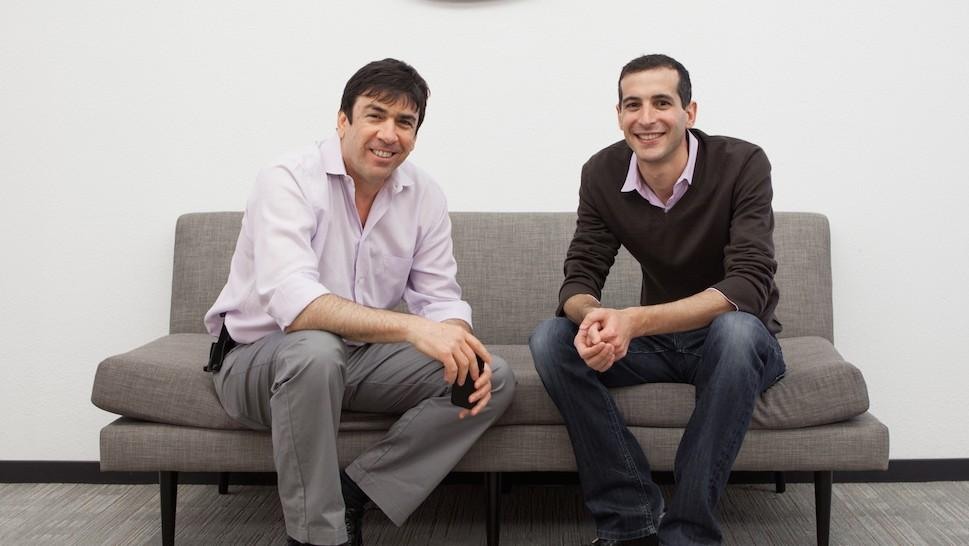
Setton and Uri Raz founded Tango in 2009. The app launched in September 2010, entering a world in which mobile video was becoming easier to imagine. Front-facing cameras were making the telephone a more plausible place to look someone in the eye.
Tango’s proposition included a consequential detail: people using different kinds of phones could call one another. An iPhone owner and an Android owner did not need to settle the operating-system question before having a conversation. For a family spread across countries, that was a practical advantage.
In 2011, Tango was adapting call quality as network conditions changed. It monitored the flow of data and adjusted the picture so a changing connection would be less likely to end the experience. Setton’s old research problem had acquired a familiar face at the other end.
The supported-device list kept expanding. Every additional handset made the promise more useful and the engineering work more complicated. A communications product has a peculiar sales problem: the customer’s satisfaction depends on whether somebody else can use it too. Compatibility reaches beyond the person who downloaded the app.
By December 2012, Tango was offering voice, video, text, photographs and push-to-talk messages. Setton saw mobile messaging becoming more social, with different forms of communication sharing the same application. A quick recorded voice message could suit a moment when typing was awkward and a live call was unnecessary.
That range also reflected something ordinary about conversation. People change pace. They send a picture, ask a question, leave a message and call back. The product was expanding around those habits, even as each added feature introduced another decision about what Tango should become.
A million arrivals, and the questions afterward
The early launch brought a million users within ten days. For a small company, that meant opportunity accompanied by a much less photogenic visitor: the support queue. A successful download could become a question about a device, an account or a call that would not connect.
Setton turned to oDesk, the freelance marketplace later known as Upwork, for customer-service help. He described a tiny team receiving thousands of questions daily. The attraction was practical. Freelancers could take on repetitive work while the permanent team concentrated on other responsibilities.
Tango also used Zendesk to organize support. Internal notes helped questions move between people without losing their history. The combination allowed existing staff to train and manage a wider group of freelance agents. Growth had created a people-and-process problem alongside the software problem.
“We were a tiny team, getting thousands of questions every day.”
Eric Setton, on Tango’s early support demands
This is a revealing corner of his career because it lacks the glamour of a funding announcement. A founder can talk elegantly about global communication; someone still has to answer the customer who cannot get through. The service behind the service needed its own design.
Upwork later featured Setton in a video about that approach. Tango’s use of freelance help had expanded beyond support to include design, writing and lead generation. His account of building the company includes this quieter kind of assembly: finding people who could make the organization work as demand changed.
When the audience became a business question
In March 2014, Alibaba invested $215 million in Tango as part of a $280 million round. The company was reporting 200 million registered users and 70 million monthly active users. Those are two different measures: one records accounts accumulated; the other describes use within a particular month.
Setton and Raz had met Jack Ma in China during the discussions. Early Tango investor Jerry Yang helped the relationship along. The network around the company now extended from its founders and engineers to people who had built some of the businesses shaping the internet.
Tango was also broadening into a social platform. Games, advertising and content offered ways to earn revenue around communication. The attraction was clear enough: if people were already gathered inside an app, perhaps they would do more there. Finding the right additional activity was a harder question.
By early 2016, the limits of expansion were visible. A commerce experiment involving Alibaba and Walmart had been abandoned. Tango separated messaging from social features, putting the latter into an app called Fiesta. It then announced a reduction of 20 percent in its workforce.
Setton had taken over as CEO that January, succeeding Raz, who became executive chairman. The new title brought responsibility for the economics as well as the technology. Explaining the restructuring, he said the company needed to align expenses more closely with revenue. Even a free call has a bill somewhere.
The episode complicates the easy version of a founder’s story. A useful invention can find an audience and still require painful business decisions. The technical achievement remains; the obligations multiply. For Setton, the move from CTO to CEO placed those obligations at the center of the job.
Connections that need no camera
By December 2018, Setton described his role at Tango as a board position and said he was investing privately. Another commitment had become more prominent: helping the institution where his own training began. He had taken the chair of Friends of École Polytechnique in April that year.
The organization mobilizes support in the United States for the French school, including scholarships and research. Setton backed the X-Grant Silicon Valley program, which he had helped establish with fellow alumni in 2013. Its purpose was to support entrepreneurial talent emerging from the school’s ecosystem.
His explanation was personal. He felt indebted to the education he had received and wanted to help younger French people arriving in America. Having made that move himself, he understood that an international connection can involve introductions, encouragement and opportunity as well as a working video link.
In January 2024, Michel Combes succeeded him as chairman. The handoff gave that chapter a clear span: nearly six years in a role devoted to keeping an overseas alumni community engaged with its school.
There are more playful connections in Setton’s story, too. He met his wife through tango dancing, an encounter linked to the company’s name. Kitesurfing helped him meet Bill Tai, an early Tango investor. The engineer’s life allowed room for meetings that required neither a conference room nor a slide deck.
Across the research, the app and the alumni work runs a recurring practical question: how do people reach one another? Sometimes the answer involves compression and a changing mobile connection. Sometimes it involves helping someone newly arrived in California. Tango began with a future child and relatives in France. The scale changed; the reason to make contact remained easy to recognize.