Ryan Noon was in Berlin when somebody else’s inbox became everybody’s reading material. It was 2016. He had left Dropbox and taken a break from company building. Back in America, leaked political emails were turning private correspondence into public spectacle. For an engineer interested in security, the unsettling detail was how much a single account could surrender.
An inbox remembers almost everything. Contracts linger beside travel plans. Old attachments survive long after their owners remember sending them. A message can help reset the password to another service. Getting into email can mean acquiring both an archive and a collection of keys. The ordinary little envelope icon is carrying rather a lot of responsibility.
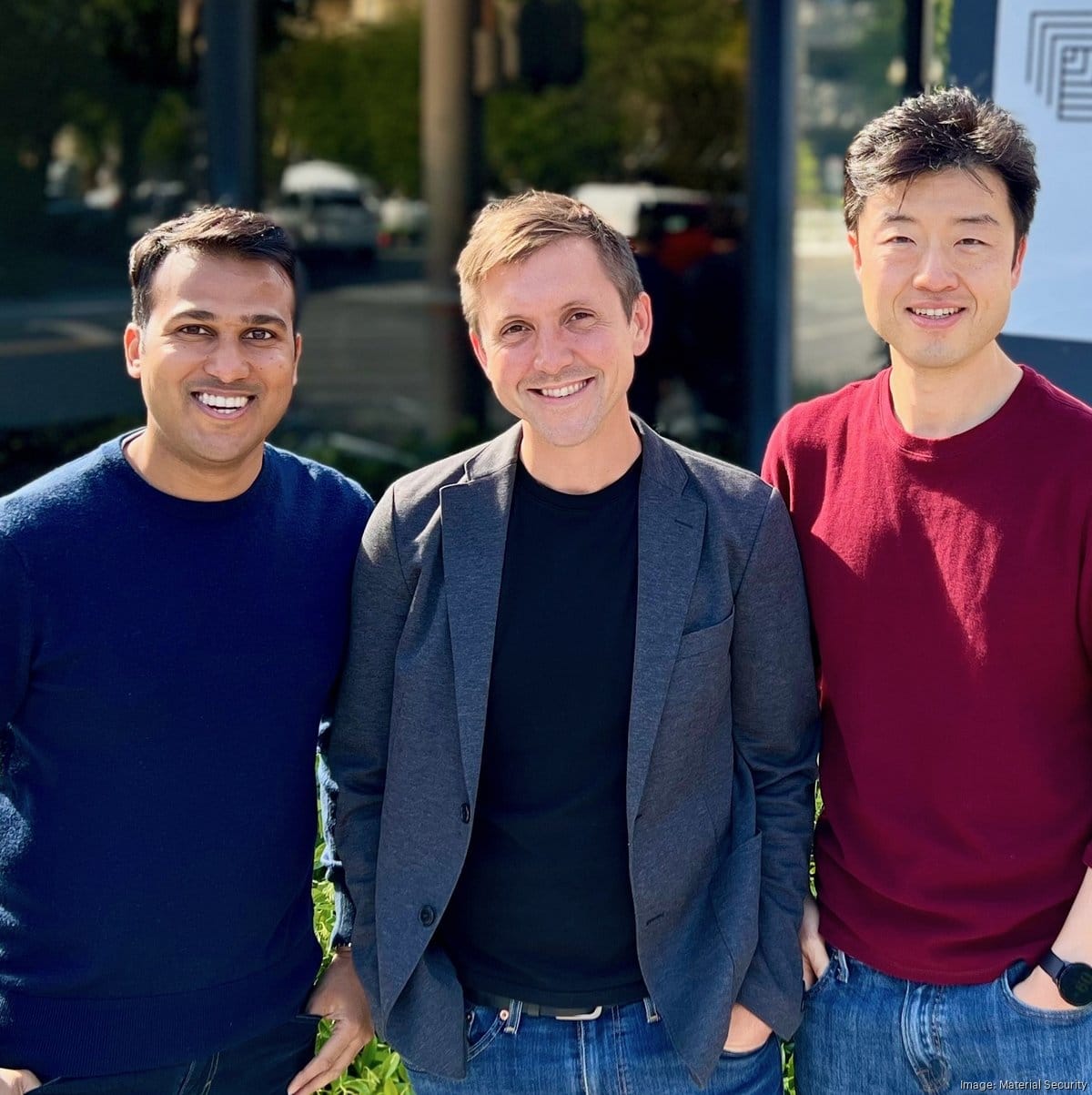
Noon’s response eventually became Material Security, founded in 2017 with Abhishek Agrawal and Chris Park. Its premise was practical: protection should continue after an account is compromised. The story of how he reached that premise involves data visualization, a company sold to Dropbox, trusted colleagues and a willingness to test several answers before choosing one.
Before the inbox, the data
Noon’s earlier professional interests were already concerned with making complicated information understandable. In an old academic-era biography, he described an appetite for large datasets, analysis and visualization. He had taught computer science classes ranging from introductory programming to architecture and systems. His Stanford education combined computer science with a concentration in networks and security.
There is a useful tension in those interests. Analysis wants information accessible, connected and available to explore. Security has to ask who gets that access and what they can do with it. A system can be excellent at revealing patterns while being far too generous about revealing its contents. Both disciplines begin by taking the structure of information seriously.
He worked as a lead engineer at Ayasdi, then co-founded Parastructure. Dropbox acquired the analytics startup in 2014, bringing Noon into the company where he would lead analytics work. By the time he left in 2016, his experience included building a startup and working inside a larger organization. The next venture would draw on both.
His portfolio includes graph visualization and a project mapping Wikipedia’s revision history. These are tangible engineering problems: how do you represent relationships, handle scale and make an intimidating body of information navigable? They offer a more useful introduction to his career than a succession of titles. Long before the security company, he was building ways to inspect complicated systems.
The archive behind the door
The Berlin episode gave those interests a different urgency. Watching the email leaks, Noon became interested in the disproportion between gaining access to an account and gaining access to everything inside it. A successful login ought to be the beginning of several security questions. Treating it as the answer to all of them makes an old inbox an accommodating host.
In a public discussion of Material’s approach, he separated two ideas: the route an attacker uses and the thing the attacker wants. Email occupies both positions. It can deliver a malicious message, and its accumulated contents can be the prize. Filtering incoming mail addresses one part of that problem. Protecting stored information requires attention to the other.
Conceptual illustration of the distinction Noon makes between attack vectors and targets.
Material’s early product identified sensitive email and placed additional checks around access. A legitimate user could confirm identity to retrieve protected information; someone who had merely obtained the account would face another obstacle. The design accepted that an initial defense could fail and tried to limit what followed. It gave the account’s contents their own protection.
That also changed the conversation about users. Material’s launch essay argued that security which prevents people doing their jobs invites workarounds. Block a useful channel and people find another one, potentially beyond the organization’s defenses. A workable product must account for that behavior. The employee with a deadline is part of the design problem, however inconvenient the deadline may be.
In a 2020 conversation with the Hacker Valley hosts, Noon linked his ability to build security products to years spent engineering software. His account of the work stayed close to consequences: what could a burglar do once inside? In that telling, reliability and practical design belong beside threat detection. A promise of protection still has to survive contact with ordinary use.
Four ideas, three people
The founding story had more uncertainty than the finished product might suggest. Noon, Agrawal and Park considered 25 opportunities, narrowed them to four and tried selling the candidates. Their commitment to one another came before certainty about what they would make. That order gave the business room to be discovered rather than defended from the outset.
They tested demand before committing to a full product, using pitches and customer conversations to see where interest became buying intent. A plausible idea can collect compliments indefinitely. A request for pricing, integration details or an early-access agreement asks more of the listener. Selling made the differences among the ideas harder to overlook.
The distinction matters when looking backward. Once a company has a recognizable product, its origin can look wonderfully inevitable. The competing possibilities disappear from view. Noon’s account keeps them in the picture. Email security emerged from a process with alternatives. The insight from Berlin mattered, but so did the work of finding out whether others would pay to address it.
A business before a number
Material operated privately for roughly three years before its public unveiling on June 30, 2020. The founders’ launch statement introduced a company already shaped by collaboration with customers. It also located security within a broader problem: useful technologies spread, accumulate trust and acquire consequences that their original designs may struggle to contain.
On May 11, 2022, Material announced a $100 million Series C led by Founders Fund’s Trae Stephens, with participation from existing backers including Andreessen Horowitz and Elad Gil. The round valued the company at $1.1 billion. Those were financing terms at a particular moment, attached to an operating business with customers and a product to maintain.
At the time of that round, Material had fewer than 40 employees. Noon spoke about having hired cautiously and about how much a well-chosen team could accomplish. The appeal of that detail is its concreteness. Headcount offers a visible measure of company size. It says considerably less about whether a product is useful or a customer is satisfied.
His advice about venture funding is similarly grounded in the business underneath it. He compares capital to fuel and asks founders to concentrate on building something people will buy. Money can support the work. It also brings expectations about the company being built. His career includes an acquisition and a venture-backed security company, giving those choices practical weight.
“VC is gasoline.”RYAN NOON · ON FINANCING A COMPANY
The introvert keeps meeting people
There is an appealing complication in Noon’s founder advice. “I am a huge introvert,” he has said. Yet he urges people starting companies to spend time meeting others, seeking guidance and finding customers. The public-facing work is a skill he has deliberately practiced. Being comfortable doing something and being willing to learn it are separate matters.
His interviews give that work a collaborative shape. He has discussed entrepreneurship alongside Thinkst’s Haroon Meer and Signal Sciences co-founder Zane Lackey, and explored security leadership with technologist Gordon Chaffee. These conversations put him among people comparing experience, questioning assumptions and examining how organizations work. Company building, in this view, leaves plenty of room for borrowing somebody else’s hard-earned lesson.
A 2023 conversation with Tines emphasized his outlook as a builder and optimist. That description fits the constructive side of his security work: spotting a failure creates an opportunity to make a system more dependable. It also helps explain why an engineering career could move from analytics into defending information without abandoning its original interest in building useful software.
Outside the corporate biographies, Noon lists crosswords, history and science fiction among his interests. They provide a modest counterweight to the funding announcements. A crossword has the courtesy to tell you how many letters the answer requires. A company supplies no such accommodation. The pleasure, presumably, depends on being willing to keep working with incomplete clues.
Another company, another question
Noon became Material’s chairman in 2023, with Agrawal serving as CEO. The company now describes its work across cloud email and file security for Microsoft 365 and Google Workspace. Its founding concern with valuable information inside everyday software has continued beyond the narrow image of a filter stationed at the entrance to an inbox.
By 2026, Noon was publicly discussing another startup in security and IT. His LinkedIn update described early customers already using it in production, investors who had backed the effort early, and a wish to combine ambitious company building with fatherhood. The public outline is familiar: a period away, trusted people and another reason to start making software.
The question connecting these chapters is what happens to useful technology after people depend on it. Noon has approached that question as an engineer, founder, colleague and chairman. Email made communication easy enough to become ordinary. Its contents deserved a second look. That second look gave him a company to build, and the rest of us a reason to reconsider what we leave in the inbox.
Continue the conversation
Writing, interviews and profiles connected to Ryan Noon.
- Personal website and engineering projects
- LinkedIn · Twitter / X · GitHub
- Material Security leadership
- Why Security Is Hard
- The early experiments behind Material Security
- Watch: Starting a security company with Haroon Meer, Zane Lackey and Ryan Noon
- Listen: Ryan Noon on The Future of Security Operations
- The 2022 financing and early product