In October 2017, a dollar could buy you a reply from Patrick Carleton, a participant on Earn.com. Five dollars could buy one from domain broker Andrew Rosener. Josh Metnick’s listed price was $100. Here was a tiny market in something usually distributed through luck, persistence and mutual acquaintances: another person’s attention.
- People earned bitcoin by answering messages and doing small tasks.
- Senders bought responses; recipients chose what their time cost.
- Coinbase bought the company in 2018 and announced its closure in 2019.
The appealing part was the reversal. Most inboxes let strangers impose a cost on you for free. Earn.com asked the stranger to acknowledge that cost. It offered a modest bargain: answer this question, receive this payment. The company’s history, however, began with an entirely different kind of work.
Before the inbox, the machines
The predecessor, 21E6, started in 2013 around bitcoin mining. Its investors included figures who helped make cryptocurrency a Silicon Valley business proposition. By March 2015, the company had disclosed $116 million raised across multiple rounds. That was cumulative funding, a distinction easily lost when a large number becomes a headline.
The first failure was economic. Mining difficulty rose while bitcoin’s price fell, leaving expensive infrastructure harder to support. Balaji Srinivasan’s subsequent account described over $80 million in obligations and less than twelve months of cash when he became CEO in 2015. He and incoming CFO Lily Liu negotiated their way out of contracts and debt.
There was also a hardware detour. The 21 Bitcoin Computer paired mining technology with developer software, inviting programmers to build services that could charge in bitcoin. A device could earn currency, then spend it on another device’s service. It was an ambitious route to an everyday cryptocurrency economy, with equipment standing between the newcomer and the first transaction.
The company eventually abandoned support for that computer. What survived was software for small payments. The change in direction amounted to a simpler question: why require a machine to do the earning when a person could answer an email?
Mine itChips + data centers
Reply for itMessages + tasks
Learn for itCoinbase Earn lessons
A little tollbooth for your time
Under the Earn.com name, adopted in October 2017, users created profiles and could set a price for responding. Businesses could send compensated surveys and tasks. A recruiter had a reason to pay for contact; a researcher had a reason to pay for an answer. Individuals gained a way to obtain bitcoin without buying it or operating mining hardware.
The customer was therefore on both sides of the exchange. Recipients wanted compensation and control. Senders wanted someone to engage. Crypto projects also used rewards to attract participation. This placed Earn.com somewhere between professional outreach and a task marketplace, rather than alongside exchanges whose central business was buying and selling assets.
Investor Fred Wilson compared it to the crypto version of Mechanical Turk or TaskRabbit. The distinction was useful: Earn.com sold small acts of participation. Its paid inbox added something more personal, allowing a particular individual to attach a price to access. Ordinary email remained the obvious competitor, with an unbeatable sticker price and uncertain results.
“Replace your public email address with an inbox that pays you.”The company’s historical GitHub profile
There was no single price of admission for a reply. Historical listings ranged from a dollar to a hundred dollars, and senders paid when the recipient responded. That structure made the transaction easier to understand. It also exposed the limitation: a response is an observable event. An insightful response is a judgment.
The reply was only the beginning
The product had a natural use in targeted research, recruiting and short questions where the recipient’s participation mattered. It was less persuasive when a normal email would already get an answer. A serious buyer approaching a domain broker, for example, might bring enough commercial interest to make a separate reply payment unnecessary.
For workers, the appeal depended on available tasks, suitable qualifications and the value of the reward. This was a mechanism for occasional earnings, not evidence of a dependable wage. For senders, payment could encourage participation without ensuring candor, expertise or lasting interest. Those are limits of the incentive itself, even when the payment system works perfectly.
Coinbase bought the next chapter
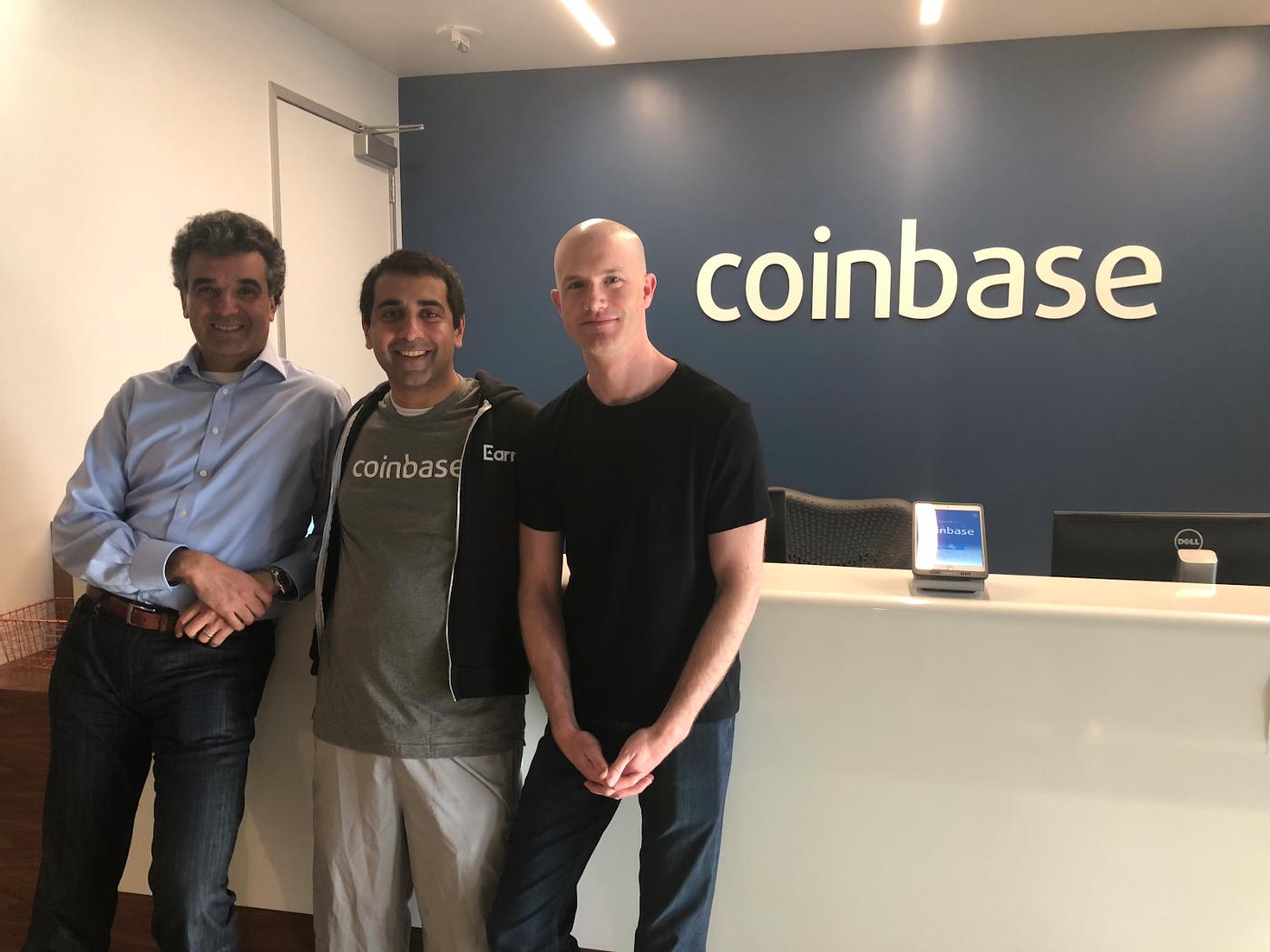
Coinbase announced the acquisition on April 16, 2018. Srinivasan became its first chief technology officer, and Earn’s team joined too. The official announcement promised to expand the business. Exact deal terms were not disclosed; contemporary reports placed the transaction around $100 million or more. A reported purchase price should not be mistaken for another financing round.
In December, Coinbase introduced a related proposition: earn tokens by learning about them. Coinbase Earn initially offered invited users lessons and quizzes about ZRX. Its launch post said customer research had identified unfamiliarity as an obstacle to trying new assets. Paying people to learn addressed a problem closely tied to the exchange’s own market.
The shift changed the unit being purchased. A sender once wanted a particular person’s reply. An asset project now wanted potential users to understand its technology. In December 2019, Coinbase announced it would retire Earn.com and concentrate on Coinbase Earn. The withdrawal deadline was February 20, 2020. The original paid inbox had reached its end.
Copy the bargain, then test the answer
The transferable idea is wonderfully practical: identify who bears the cost of an interaction, then let the other party help pay it. A paid interview, a tightly scoped survey or an expert question can use that bargain without copying the rest of Earn.com. Make the requested action small, its price clear and its completion easy to verify.
But measure what comes after the response. Did the research improve? Did the candidate fit? Did the learner understand? Earn.com made attention tradable. Its story leaves the buyer with the more interesting job of deciding what that attention was worth.