In 2014, Éric Larchevêque and Thomas France opened a place in Paris where people could talk about Bitcoin. This was a rather physical answer to a digital question. The Maison du Bitcoin occupied 220 square metres, enough room for the curious, the committed and the people still trying to understand what everybody else was talking about. Before there was a settled business model, there was somewhere to go.
Larchevêque had already built internet businesses, lived abroad and played poker professionally. He had recently worked on a price-comparison app. Now he wanted to be near a technology whose possibilities interested him before its commercial shape was clear. Opening the Maison was a way of putting himself within conversational distance of the answer.
People arrived with different kinds of knowledge. Some understood secure chips. Others understood how to make Bitcoin easier to buy. Those encounters helped produce Ledger, founded later that year by eight entrepreneurs. A business associated with locking things away began with an open door.
The engineer who kept changing the assignment
Larchevêque grew up in Vierzon, in central France, in a family with a porcelain-making history. His own working life would move through considerably less breakable materials. He graduated from ESIEE Paris in 1996, taking an engineering education into the early commercial internet.
There was technical writing before there was a familiar television face. With fellow student Laurent Lellu, he contributed to Électronique Pratique. The pair also worked on a website for the magazine. Explaining electronics and building something useful were already intertwined. His early company, France Cybermédia, made websites, a service with plenty of demand and the inconvenient need to keep recruiting as it grew.
He went on to Montorgueil, founded in 1998 and active in online dating and adult entertainment. It was sold to Rentabiliweb in 2007. A polished founder biography might hurry past that business on its way to the hardware wallets. It belongs in the story. His route into technology was commercial and experimental, with little attachment to a single respectable-sounding sector.
A seat at a different table
His years abroad included Romania and Latvia. In Riga, he opened a hotel. For a time, he also made professional poker part of his working life. The itinerary makes a conventional career ladder look rather underused.
He reached the final table at the European Poker Tour in Copenhagen, finishing seventh. His exit involved king-queen against a pair of twos; his opponent made four of a kind on the flop. There are limits to what determination can accomplish against that particular arrangement of cards.
Larchevêque has since compared poker with entrepreneurship through the idea of calculated risk. The comparison has an obvious appeal: incomplete information, other people making decisions, money attached to the outcome. It also allows for an unfashionable possibility. You can think carefully and still lose.
Back in France, he launched Prixing in 2011. The app helped shoppers compare prices. He eventually sold the business and moved on. The sequence matters more than a tidy retrospective claim that everything was leading to Bitcoin. At each stage, he was choosing another problem. Price comparison had been one of them. It did not have to be the last.
Eight founders, one practical problem
Bitcoin presented an unusually inviting problem to someone with an interest in computer architecture. In a 2014 conversation, Larchevêque and France described an ecosystem in France with few companies and much still to build. They wanted a place where startups could work and people could discuss the technology. The Maison opened in May.
The eventual Ledger team brought together the Maison du Bitcoin, BTChip and Chronocoin. Larchevêque and France were part of the combination; Nicolas Bacca brought expertise in security. The founding story is an assembly of complementary people, which is less convenient for a solitary-genius poster and more useful for understanding how the company happened.
Ledger worked on a concrete need: securing crypto assets. Its hardware wallets and operating system gave the business a product to sell while the surrounding market argued about what cryptocurrencies might become. Larchevêque became the founding CEO. The company’s future would depend on engineering, customers and the difficulty of building an organisation fast enough to serve them.
When the orders outran the organisation
In January 2018, Ledger announced a $75 million Series B. It said it had sold more than one million hardware wallets across 165 countries and employed 82 people in Paris, Vierzon and San Francisco. These were substantial numbers for a company founded in 2014. The geographic spread also made clear that a French starting point had become an international business.
Historical figures, recorded while Larchevêque was CEO.
Growth changed the job. A small group can organise itself through conversation; a business spread across sites needs something more durable. There are more decisions, more people waiting for them and more consequences when the answer arrives late. The founder who wants time to think can find that the calendar has other ambitions.
On April 24, 2019, Ledger announced that Pascal Gauthier would become CEO and Larchevêque executive chairman. Gauthier had been a seed investor and board member before becoming president. The transition gave operating responsibility to someone already closely involved with the business.
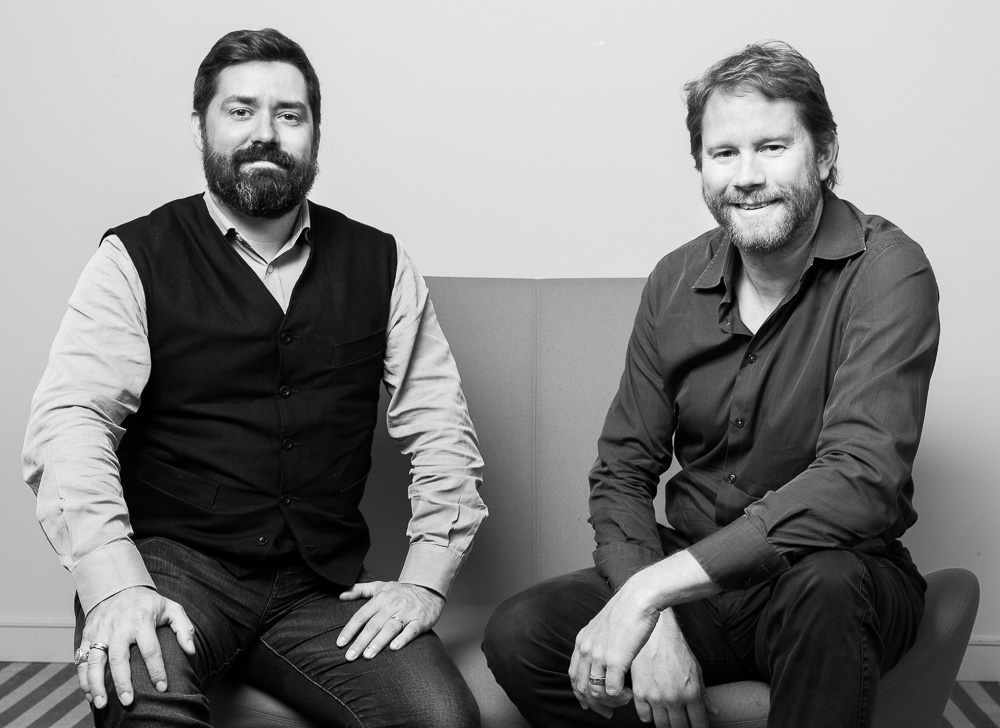
In his public letter, Larchevêque described a company with 180 colleagues across five sites and the competing demands of daily execution and strategic thinking. His new remit included strategy, partnerships and outreach. The handover marks an essential distinction in his biography: Ledger’s co-founder and founding CEO became a different kind of participant in the company he had helped create.
The pleasure of somebody else’s problem
French television supplied another kind of chair. Since the first season in 2020, Larchevêque has been an investor on M6’s Qui veut être mon associé ?, listening as entrepreneurs ask for capital in return for a share of their business. A pitch turns a long, untidy undertaking into a short conversation. The investor’s task is to ask what the compression has left out.
He has spoken about how much he enjoys hearing new projects and watching them develop. His advice includes listening, seeking counsel and allowing an idea to evolve through contact with the market. He also argues that humility matters because no founder has every answer. It is a useful qualification from somebody whose public job involves being asked for answers.
By September 2024, he was describing his preference for accompanying entrepreneurs rather than organising his life around the professional investment business. He spoke about smaller French companies and self-financing, while recognising that deeply technical ventures could need a different funding route. The emphasis was on the work of building, beyond the ceremony of raising money.
« Ma véritable richesse réside dans le pouvoir de dire non. »
Éric Larchevêque, February 2025
“My real wealth lies in the power to say no.”
His 2024 book, Entreprendre pour être libre, gives that outlook a title. Published on January 17, it combines his own route with advice about starting and acting. Its account includes changes of direction and failures alongside the Ledger years. The title makes freedom sound like a destination. The career underneath it involves repeated decisions about what kind of work to do next.
The town stays in the story
Larchevêque’s later work has a geographical centre in Sologne, where his Domaine hosts gatherings and mentoring for entrepreneurs. A February 2025 profile placed his home in Neuvy-sur-Barangeon, near Vierzon. After years abroad and a company reaching customers internationally, his working map still includes the area where he grew up.
There was also ALGOSUP, the computing school he co-founded in Vierzon. It offered a five-year software-development course. The school closed in 2025; reporting described enrolment below expectations and shareholders unwilling to continue financing it. That ending belongs beside the launches. A founder’s experience, connections and capital can support a project without making its economics work.
The local thread does not need a fairy-tale ending to matter. It connects the engineering graduate, the business with operations in Vierzon and the later efforts to bring other people into technology. It also gives the setbacks a place on the same map.
Another door opens
By 2026, Larchevêque was again discussing an operating commitment, this time at TBSO, a company listed on Euronext Paris. Its work centres on tools and services for entrepreneurs and investors. SKL brings together entrepreneurial knowledge, experts and AI assistance. NVST focuses on financial education and investment opportunities. The ambitions are stated publicly; delivering them remains the company’s work.
In May, he described being listed as a longstanding personal objective. TBSO announced the success of its public offering in June, then published half-year results on September 30. This is the current chapter of a career that has already contained several apparent stopping points.
His changing roles make a single label inadequate. Engineer fits part of the route. Founder fits more. Investor explains the television chair but leaves out the pleasure he describes in helping people work through their businesses. The connecting habit is his willingness to organise a setting in which the next problem, and the people needed to tackle it, can appear.
The Maison du Bitcoin made that habit visible. Put people in a room. Let them bring what they know. See whether something worth building emerges. For a career so closely associated with security, Larchevêque’s story keeps coming back to the usefulness of letting somebody in.
Keep the conversation going
Interviews, writing and public profiles.