A sponsor can buy a place on a shirt. Buying a place in someone’s affections is a trickier transaction. Matt Manning has spent much of his career working in that gap, where a contract promises access to an audience and the audience reserves the right to be thoroughly unimpressed.
He is the chief executive of MKTG and global president of Dentsu Sports International, based in New York. His business brings brands into sport and entertainment, and helps the organizations that own sporting rights find commercial partners. The work involves negotiations, creative ideas, events and measurement. It also involves people whose loyalties were established long before a marketing department arrived.
That makes belonging a useful way to read his career. There is the belonging of fans to teams, the belonging of brands within those communities, and the belonging of employees within an agency. Manning’s public comments keep returning to the practical conditions that make those relationships work. How do you recognize a leader? What does a partnership achieve? What gives a team a home?
A passport before the corner office
Manning studied French and Spanish at the University of Exeter. His public professional profile lists working proficiency in both languages. It is a fitting detail for someone whose career would cross markets, although speaking a language and understanding a football crowd are separate accomplishments. One can conjugate perfectly and still wear the wrong scarf.
His early work included communications and media marketing at the London Stock Exchange and Bloomberg. He later led Taylor Strategy’s European client services team and became managing partner at Radar Sport & Entertainment. Radar’s client work included programs for Diageo, Pepsi and Yahoo around the FIFA World Cup, Formula One and the ICC Cricket World Cups.
Those assignments put him at the intersection of international brands and international competitions. The attraction is obvious: a sporting event offers shared attention across borders. The complication is equally useful to remember. A shared broadcast does not mean a shared culture. People can watch the same match and bring entirely different histories to it.
In November 2012, MKTG announced his appointment as senior vice president of corporate development. He would work from New York alongside chairman and CEO Charlie Horsey and the senior team, developing opportunities in Europe, Asia, Latin America and the Middle East. The brief was geographic, commercial and unusually broad. His experience moving among companies and sporting properties had become the job description.
- 2012Joins MKTG in corporate development
- 2020Becomes chief executive
- 2023Dentsu Sports Analytics launches
- 2024MKTG receives workplace recognition
The jigsaw on the desk
By 2020, Manning had become CEO. The title gave him responsibility for a business in which commercial promises ultimately depend on teams doing the work. Years later, discussing leadership with Kristine Shine, he used the image of a jigsaw. Operators, managers and leaders each have a place; the executive’s task is to fit them together.
He distinguishes the ability to run an operation from the ability to anticipate its future. A company needs both. His concern is the alignment between them: people watching changes across markets while other people maintain the standard clients expect today. In an agency, an interesting forecast still has to coexist with the next deadline.
“You’re only as good as your last gig.”Matt Manning, on agency standards
It is a suitably unromantic warning for an industry fond of romance. A beautifully articulated ambition cannot rescue a badly delivered assignment. Manning also places weight on emotional intelligence and judgment when selecting leaders. Asked about a reliable test for vision, he joked that he would try to patent one. Even the hiring process, it seems, could use a commercially valuable invention.
The people behind the promise
The leadership appointments during his tenure show how the pieces have been arranged. In January 2021, Matt Connell’s remit expanded from Australia to the Asia-Pacific region. Jarrad Provis became general manager of marketing strategy, and Jeremy Francis concentrated on the chief operating officer role. Stephanie Rudnick returned to lead global communications and the new hospitality and events offering.
These are distinct kinds of work. Marketing strategy helps decide what a client should attempt. Operations make the attempt deliverable. Hospitality and events turn a partnership into something people experience. Read together, the appointments describe an agency trying to connect advice with execution across territories.
Later in 2021, Dominic Curran joined as managing director for the Americas, a newly created position reporting to Manning. Curran brought experience from brand, agency, property and technology roles. Manning singled out that range when explaining the appointment. The attraction was someone who could understand a deal from several seats around the table.
In June 2023, Echo Li became chief commercial officer at Dentsu Sports International, based in Singapore and reporting to Manning. Her responsibilities connected international sports properties with sales opportunities across Asia-Pacific, while developing brand consulting with Connell. A global organization becomes more tangible when described through those links: Singapore, regional teams, commercial rights and the clients who need them.
There is a more personal glimpse of that network in Rudnick’s account of her career. She recalled Manning as a sounding board during a period of professional decisions, with conversations outdoors over rosé. It is a small anecdote, and useful precisely because of its scale. Leadership sometimes arrives as a title on an announcement; sometimes it is someone willing to sit and talk.
A silver medal, with something to work on
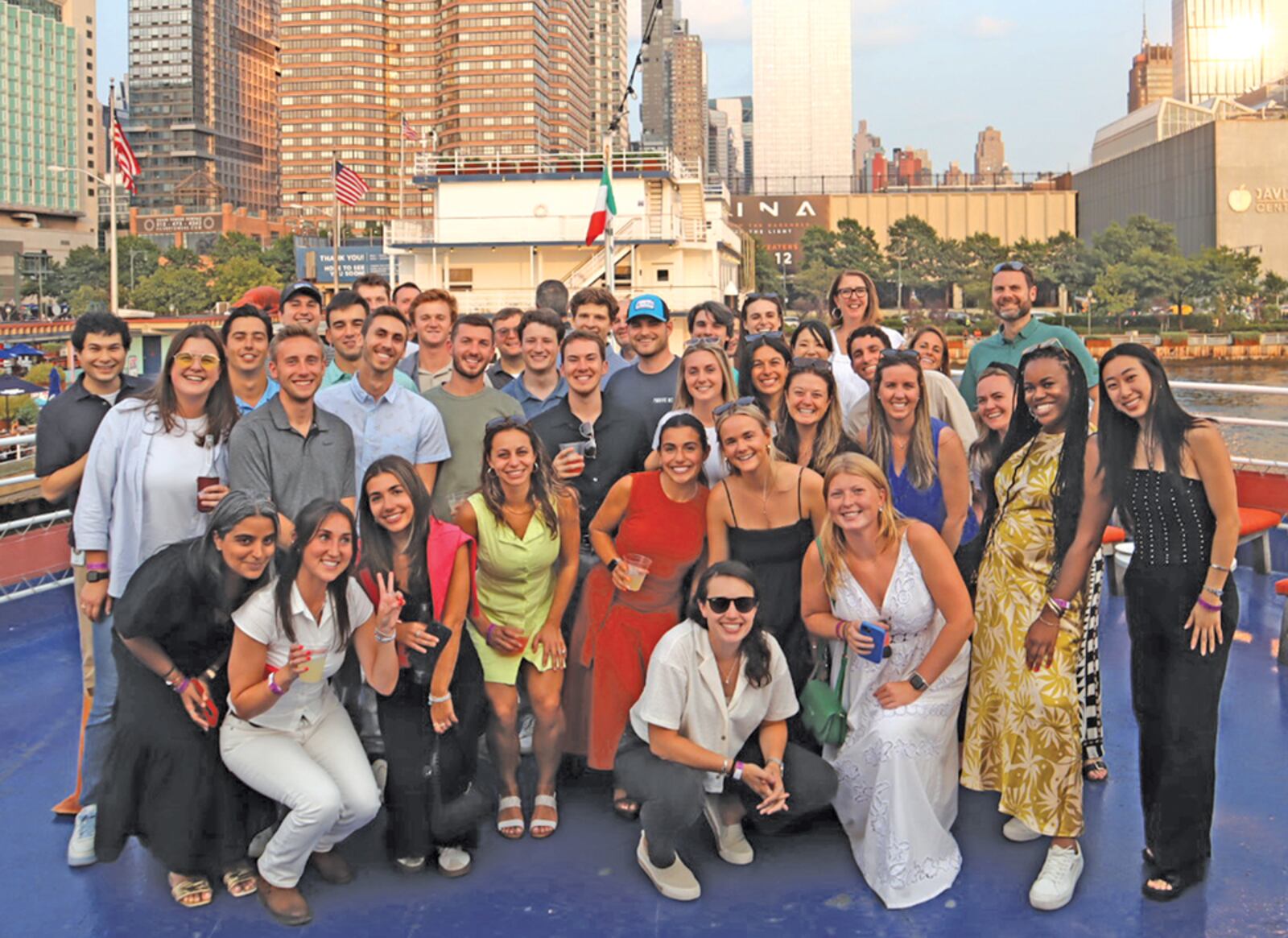
In 2024, MKTG Sports + Entertainment received silver recognition in the agency category for organizations with at least 50 employees in the Best Places to Work in Sports program. The entry listed Manning as CEO and described employee appreciation for flexibility, collaboration and colleagues who wanted one another to succeed.
The same entry included an opportunity for improvement: whether senior leaders valued people as their most important resource. That detail makes the recognition more interesting than a trophy photograph. A workplace can earn praise and still have something to answer for. Employees experience the difference between a statement about culture and the decisions that make it credible.
Manning publicly celebrated the people behind the award. In his subsequent Field Notes discussions, he linked compensation and workplace flexibility to business performance. Flexibility, in his account, should be earned through delivery. The arrangement asks for trust and evidence together, with results carrying weight in the conversation about where work happens.
The fan needs a home
Manning’s thinking about sport has a similarly practical edge. Discussing LIV Golf’s team model, he raised the difficulty of building franchises without a geographic base. Established teams can represent cities; that identity gives supporters somewhere to locate their allegiance. A new team concept has to solve the problem of attachment as well as the problem of distribution.
The observation cuts through the temptation to assume that assembling talent automatically assembles a community. A team’s name, colors and fixtures can be designed. The habits that make people care require another kind of work. Manning’s question was whether a franchise could establish the same pull without the familiar anchor of place.
That concern sits comfortably beside MKTG’s emphasis on understanding fan subcultures. Its consulting includes sponsorship investment strategy and property and talent negotiation; its wider services include content, experiences and measurement. The range reflects the distance between agreeing a partnership and making it meaningful to somebody watching, attending or joining the conversation.
A schematic of MKTG’s services, not a financial or organizational chart.
Put a number beside the feeling
In April 2023, Dentsu Sports International launched Dentsu Sports Analytics, bringing together capabilities from MKTG, Sponsorship Research International and Merkle. Glenn Lovett was appointed global managing director. The combination connected sponsorship research with broader customer data and analytics resources.
Manning described the launch in terms of demand for accurate measurement of a partnership’s commercial benefits. It is the question that follows the celebration: what did the investment produce? A relationship can feel promising while still requiring a defensible account of its value.
The initiative also offered a way to analyze partnerships across borders. That matters in a career that began with international marketing and grew into international agency leadership. The ambition has become more precise: connect the work across markets, then understand its effects. Geography remains part of the assignment, but now measurement travels with it.
The view from the next fixture
In October 2025, Manning described brands as more careful amid tariffs, interest-rate questions and geopolitical tensions. He nevertheless saw continuing appetite for sport and content, looking ahead to the 2026 World Cup and the 2028 Summer Olympics. His outlook held commercial caution and demand for sport in the same frame.
Earlier that year, he was announced as moderator of a Cannes Lions conversation with Michael Johnson about athletics and Grand Slam Track. The subject brought a familiar issue back into view: how a sporting format finds its audience, and what a recognizable athlete can contribute to a new venture.
For a less formal glimpse of Manning, there is his 2016 summer drink choice: Zacapa rum, tonic and lime, introduced to him while working with Diageo. It is a modest souvenir of the client business. Some people take home a lanyard. Manning apparently took home a recipe.
His career has accumulated titles, territories and specialist teams. The recurring questions remain human in scale. What makes someone follow? What makes a colleague deliver? What makes a partnership worth renewing? Manning’s work takes place where those questions meet a budget, a deadline and a crowd with its own opinions. The crowd, inconveniently and usefully, always gets a vote.