Steph Lund announced the end of a seven-year run with the kind of sentence executives rarely volunteer: it had been the professional highlight of her life. She had helped build M&C Saatchi Sport & Entertainment in North America, led its New York operation, unified the East and West Coast businesses and eventually served as CEO. Her farewell was gracious, direct and specific about the people who mattered. Then came the twist. Her next chapter would be written with many of the same characters.
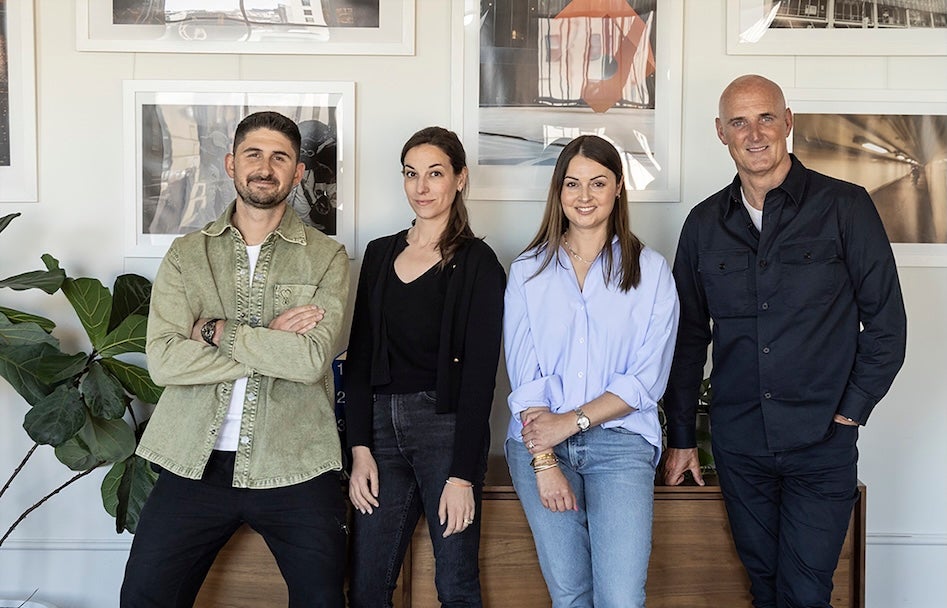
In spring 2025, Lund joined MSQ Sport + Entertainment as chief executive of its newly launched North American practice. Waiting there were Paul Anastasiadis and Andrea Nirsimloo, the two partners who had shared the previous agency's leadership table with her. The founders, Steve Martin and Jamie Wynne-Morgan, also knew Lund from that earlier chapter. For all the advertising world's appetite for novelty, this was a decidedly grown-up wager on something unfashionable: accumulated trust.
It was not nostalgia. The new shop arrived with a precise argument about the market. Sport and entertainment had become less a pair of tidy sectors than the arena where culture, creators, sponsorship, live experience and social conversation collided. A generalist agency could buy reach there. A specialist might understand why the crowd cared in the first place.
A career built on the fan's side of the rope
Lund's route to the chief executive's chair ran through public relations rather than a business-school case study. She worked at 5WPR, then became senior vice president of public relations for The FADER and its sister agency, Cornerstone. The setting mattered. The FADER lived close to music and emerging culture; Cornerstone connected brands to that world. Lund expanded the public-relations offer beyond niche music and talent assignments into broader consumer communications, with work spanning New York, Los Angeles and London.
Her public project list includes Converse Rubber Tracks Worldwide, the recording-studio program that gave artists access to professional spaces. It is a neat early emblem of the work that followed: a brand entering culture by supplying something useful, then letting the people with credibility make the noise.
That phrase, “authentic connections,” has been rubbed smooth by marketing decks. Lund's record gives it harder edges. She pairs it with trend forecasting, measurement and the practical mechanics of an agency. The point is not to admire culture from a tasteful distance. It is to build a business capable of serving it, without confusing a dashboard for an audience.
The numbers behind the taste
Lund joined M&C Saatchi Sport & Entertainment in spring 2018 as managing director of New York. The business she and her partners inherited had a solid roster and roughly 20 employees. In under three years, it reached 70 people. During one of its sharpest periods of change, the agency maintained salaries, continued hiring and retained 80 percent of its client roster. The growth was not presented as a license to say yes to everything. The leadership team spoke openly about choosing clients and requests for proposals carefully, so the staff and the work could absorb the expansion.
A five-year agency build
The operation moved from boutique scale into the upper profit tier of its global network.
A later account of Lund's operating record puts the commercial transformation in starker terms: revenue grew from under $500,000 to nearly $15 million in under five years. The agency moved into the upper profit tier of its international network. Campaign teams worked for names including Converse, Discord, Sonos, Casio and Bowers & Wilkins, combining product stories, partnerships, events and platform-specific content.
Those figures explain why Lund is better described as an operator than merely a communications executive. The creative product and the company producing it are the same puzzle. Hiring affects taste. Client selection affects morale. A new capability must earn its keep. Even geography becomes a management tool: when remote work broke the old assumption that talent needed to sit in New York or Los Angeles, Lund's team recruited across North Carolina, San Francisco, Florida and Hawaii.
Her description of the leadership required was refreshingly plain: flexible, adaptable and compassionate. None of those words appears on a balance sheet. All three influence whether the people responsible for the balance sheet can do good work.
When the creator became the newsroom
In 2023, Lund launched the agency's first creator-marketing arm. Within a year it had become one of the business's leading revenue drivers, serving clients such as Jaguar Land Rover, Samsonite and William Grant. The timing caught a change that Lund articulated in a 2024 industry forecast: the line between content creators and media would continue to blur.
Her distinction was editorial. Brands had learned to hire influencers, but many still treated them as glossy delivery vehicles. Lund argued that communicators needed to approach creators as storytellers, much as they approached journalists, and to build plans around the places people increasingly went for news and narrative: TikTok, Instagram and YouTube. It was less about borrowing somebody's audience than respecting how that audience had been assembled.
That idea also reveals the discipline inside her enthusiasm for specialist agencies. Specialism is not a decorative claim to insider status. It is an obligation to know the difference between a community and an inventory. Fans can spot the tourist. Creators can spot the overworked brief. The brand that insists on controlling every syllable may achieve perfect consistency and perfect forgettability.
Three colleagues walk into a second act
The anecdote that best captures Lund's professional temperament comes from Wynne-Morgan. Recalling their first meeting in New York, he wrote that he was supposed to be interviewing her. Instead, she grilled him. He called it the best interview meeting he had ever had. The exchange is funny because it offers a glimpse of the bargain Lund appears to want from work: she will be evaluated, certainly, but she will evaluate the evaluator too.
That habit helps explain the reunion at MSQ. Lund said the attraction was not only the group's investment in North America, but also her trusted relationship with Martin and Wynne-Morgan. Anastasiadis and Nirsimloo had already joined as managing partners. Rather than spend a year discovering how a new leadership team handled pressure, the practice began with a trio that had already navigated growth, a coast-to-coast merger and exacting client work together.
The second launch. Lund leaves a seven-year agency chapter and joins MSQ's new North American practice, reuniting with Anastasiadis and Nirsimloo. The move preserves the working chemistry while giving the trio a fresh structure to build.
The ambition was explicit. Lund wanted a destination for specialist creativity, joining social, content, experiential and digital expertise around the contemporary ways people engage with what they love. She also talked about organic growth and selective acquisitions. This was a startup brief with an operator's vocabulary: build, buy when useful, protect the proposition.
Within its first stretch, the North American practice won work across sport, fitness, beverages, nutrition and youth athletics. The wider MSQ Sport + Entertainment network, founded in London in 2024 and extended to Amsterdam and New York, passed 60 people by its second anniversary and collected two Agency of the Year awards. Its work ranged from a New York Times family subscription campaign with the Manning family to projects around football, Formula 1, golf and a FIFA World Cup trophy tour.
Growth without becoming generic
Lund's career contains a useful tension. She believes in scale, and she has the figures to prove it. She also keeps returning to the value of narrow expertise. Most companies resolve that tension by quietly choosing scale. Her approach is to turn specialism into the engine of scale: deepen the knowledge, connect the disciplines, and grow because the work travels.
The industry's recognition has followed. She has appeared in multiple PRNEWS Top Women programs, was honored among Ragan's 2026 Top Women in Communications and regularly serves as a juror for major public-relations awards. Yet the more revealing endorsements come from people who have shared the work. Former colleagues describe encouragement, high standards and an unusual willingness to remain an advocate after the reporting line ends.
When Lund left M&C Saatchi, she promised the staff that advocacy would continue wherever their careers took them. Weeks later, her own career took her back to familiar people and an unfamiliar agency. There is a tidy lesson in that circle. Networks are easy to display and difficult to deserve. A trusted professional relationship is built during the unphotographed days: the difficult hire, the declined pitch, the candid disagreement, the client call that goes long.
Sport and entertainment marketing trades in moments when a crowd suddenly becomes one body. Lund's work is quieter and more structural. She builds the team behind the moment, then asks it to understand the crowd before interrupting. In a business that sells attention, that restraint may be the sharpest form of ambition.