In March 2022, a British public-relations agency arrived in New York with two people and a Roman name. One of those people was Katherine Espinosa. There was no inherited American department to rearrange, no deep bench waiting behind a glass door, no institutional habit disguised as strategy. The Romans' Brooklyn office was a beginning in the most literal sense: Espinosa, Sarah Jenkins and the unnerving freedom of an empty page.
New York is not famously short of publicists. The city has an agency for every subculture, a launch party for every adjective and enough people promising to “own the conversation” to make the conversation consider private property. Entering that market required more than a clever pitch deck. The Romans had to prove that its British taste for cheek and spectacle could travel, then acquire enough local instinct to avoid feeling imported.
Espinosa came prepared for translation. Before The Romans, she had moved through Creative Civilization, Ogilvy & Mather, Trent & Company, DKC and BCW. Her client experience crossed music, politics, consumer technology, gaming, packaged goods, spirits, food and drink. These categories do not agree on much. Their audiences do not gather in the same rooms or use the same slang. What they share is the problem at the center of public relations: why should anyone care?
Culture is currency.Sarah Jenkins on Espinosa's instinct for relevance
I. The Brooklyn beginningBuild the plane, then invite people aboard
The early New York story reads like a startup wearing an agency's clothes. Espinosa was serving clients while helping establish the operation that would serve them. Amazon, Pernod Ricard and Candy Crush joined the roster. StockX came into the orbit. The office assembled talent, habits and a point of view at once. It is difficult to separate the client work from the company building because, in a new office, every good campaign is also an argument for the office itself.
Two years after arriving, Espinosa looked back on that original pair and the team growing around them. She called The Romans Brooklyn her “Roman Empire,” borrowing the internet's favorite phrase for a subject one thinks about constantly. The joke carried a small confession. She had not merely taken a job in an established machine. She had accepted an invitation to help determine what the machine would become.
That distinction mattered to her. Espinosa described the move as career-defining because it gave her room to shape her role and the career attached to it. The agency gained an operator who could lead media work; she gained latitude. Promotions followed quickly: vice president at the 2022 opening, senior vice president for culture and media in 2023, then managing director in 2025 as The Romans installed co-leads for North America.
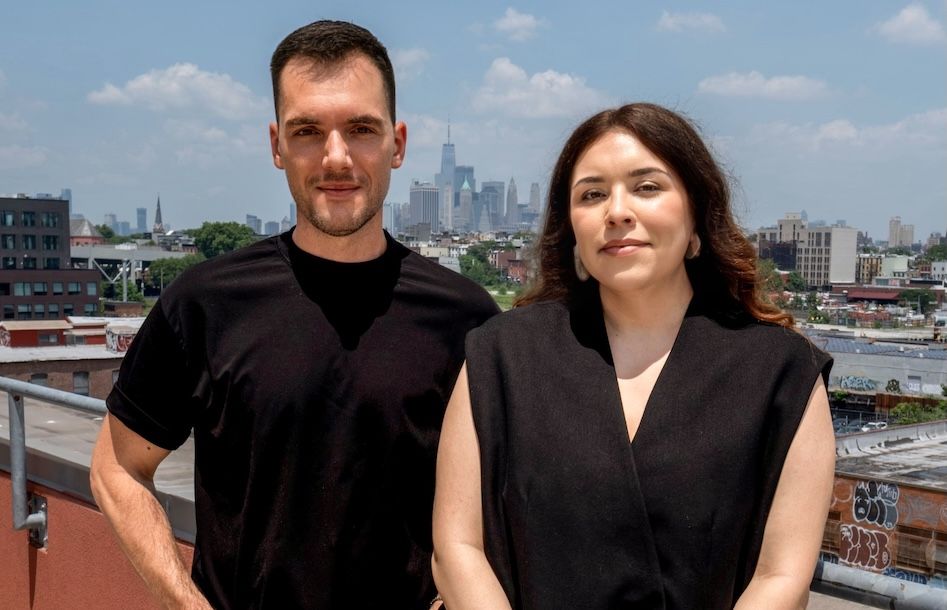
A small office acquires a skyline
The office opened in 2022. By its third year, industry reporting put the Brooklyn team at 23 people and 2024 revenue at $8 million.
II. The craftEarned media should earn its name
Espinosa's specialty is the hinge between cultural strategy and media relations. One decides what a brand can credibly do; the other persuades people that the result deserves attention. Weak work treats the second half as a distribution problem. Strong work makes the story difficult to ignore before a subject line is written.
Consider Ring Pet Portraits. The 2024 campaign asked people to submit videos of their pets to help generate donations to the ASPCA, with Drew Barrymore participating in the launch. Its components were familiar - pets, celebrity, charity, social sharing - but their arrangement created a story that traveled. Espinosa celebrated coverage from the Associated Press, CNN, Entertainment Weekly, People, Us Weekly and others, plus a mention on Jimmy Fallon's television show. She described the thrill of creating a campaign and then watching the press amplify it as the thing that motivates her in PR.
Another activation turned the Hotel Chelsea into a “Golden Hour” setting for Chivas Regal during New York Fashion Week. Matching tracksuits came from Falguni Shane Peacock; Ashlee Simpson and Evan Ross supplied the human wattage. The details sound delightfully unserious until one notices how precisely they interlock: place, fashion calendar, product color, designers, talent and a cocktail. Whimsy does not absolve a campaign from structure. It makes structure more important.
Curiosity comes first. Trends matter only when they reveal a real connection between a brand and the people it hopes to reach.
An idea needs an object, moment or action. A press release cannot rescue a campaign that gives nobody anything to talk about.
Coverage is the result, not the premise. The story has to survive outside the room where the campaign was approved.
III. Consistency over costumeA community can tell when a brand is visiting
Espinosa is most direct when the subject turns to cultural participation. Asked how brands should approach Hispanic Heritage Month, she rejected the flash-pan campaign: arrive for the commemorative window, post brightly, vanish for eleven months. Her preferred standard is consistency. Brands should be able to show what they have done, explain what they will continue to do and create reasons for ongoing engagement.
“The most important tactic is to authentically show up for the Hispanic community,” she said. The much-abused word in that sentence is authentically. Espinosa gives it a practical definition: history, action and continuity. Authenticity is not a tone of voice. It is the evidence left behind when the content calendar moves on.
The view clarifies her larger idea of cultural relevance. Relevance cannot be bolted onto a campaign during the last round of revisions. Nor is it permission to chase whatever the internet noticed before lunch. The brand needs a reason to participate, and the audience needs a reason to believe it. A useful communications leader is partly a creator and partly the person willing to ask whether the invitation is genuine.
Be fearless once you're in the door.Espinosa's advice to aspiring communicators
IV. The apprenticeshipCareers are built in the doing
Espinosa majored in public relations, but she credits internships with deepening what the classroom began. Her advice to students and people entering PR without a college route is unusually specific: choose internships in the discipline that interests you, then ask to draft materials, pitch journalists and help execute events. Do not confuse proximity to the work with doing the work.
Internship and account-coordination work at Creative Civilization.
Assistant account executive at Ogilvy Public Relations.
Agency roles at Trent & Company, DKC and BCW broaden the category mix.
Joins The Romans and helps open the two-person New York office.
Promoted to senior vice president for culture and media.
Named managing director in The Romans' North American leadership team.
The sequence explains the range that colleagues later called relentless curiosity. She did not specialize by remaining in one narrow lane. She learned the durable craft - how to find, frame and move a story - across lanes. By the time she was asked to help open an office, she could draw from several versions of the communications business without mistaking any one version for the whole.
Her operating style includes one pleasingly modest ritual. In 2022, she lived a mile from The Romans' Gowanus office and decided to walk to and from work without turning the journey into a meeting. No texts, no calls, no multitasking. The internet had packaged ordinary walking as a trend; Espinosa borrowed the habit and removed the performance. For someone paid to attend to culture, a quiet mile is less an escape from work than maintenance of the instrument.
V. The wider assignmentFrom media leader to agency operator
The managing-director title expands the problem. A media specialist can focus on whether a story lands. An operator must also consider whether the team grows well, clients stay, the economics work and an office maintains its character as headcount rises. By 2025, The Romans' American operation had 23 people and reported $8 million in revenue after 60 percent growth in 2024. Numbers are blunt instruments, but these ones make the original two-person photograph feel almost architectural.
Espinosa now shares North American leadership with Adam Pietrala. The arrangement places her early experience inside the office alongside an external hire with his own agency background. She carries the memory of the blank page: what the place felt like before it had systems, scale or proof. That memory can be useful. Institutions often gain process and lose the reason people wanted to join them.
There is an amusing symmetry here. Public relations is the business of making others visible, while its best practitioners usually work just outside the frame. Espinosa's promotion brought her closer to the front, including a place on the 2025 New York Festivals executive jury for reputation and impact. Yet her public comments still return to teams, clients, mentors and collaborators. The instinct is not false modesty. Campaigns this complicated cannot be solo performances, however eagerly award photographs try to arrange them that way.
The strongest line through her career is not an award or title. It is the widening of the assignment. First, learn to make the materials. Then pitch the story. Then shape the campaign. Then build the team capable of repeating the work. Then help run the office without letting repetition become routine. Each promotion contains more ambiguity than the last.
And so the two-person Brooklyn outpost became an American operation, while the vice president who helped open it became one of its managing directors. The neatness belongs to hindsight. Up close, it was made of client calls, press lists, strange ideas, long flights, good colleagues and at least one quiet mile through Gowanus. Culture may be currency. Espinosa's career suggests curiosity is the work required to keep earning it.