The most revealing thing about Hayworth is not that it works in public relations. It is that the firm once exhibited at an art fair. In 2021, three years after Ellie Hayworth founded the company, her consultancy took a booth in the Nest section of Untitled Art Miami Beach. The publicist crossed the velvet rope and became the exhibitor, presenting work by artists and designers rather than merely composing the announcement about them.
That move explains the company better than a menu of services. Hayworth is a Miami-based communications consultancy for art and design, with work stretching into New York and beyond. Its clients include artists, galleries, fairs, advisers, nonprofits and creative businesses. It handles the familiar things - messaging, press strategy, media training and pitching - then keeps going. Websites. Newsletters. Social direction. Guest lists. Exhibition text. Curatorial support. Event production. Even the person escorting a photographer through a crowded opening.

The job before the job
Hayworth did not begin with a grand theory about fractional executives. It began with a career nudge. While studying art business, Ellie imagined gallery sales or advisory work. A thesis adviser noticed that her appetite for communicating might be more useful in public relations. She followed that cue through New York art PR firms, then founded Hayworth in 2018.
Two years later, the pandemic sent her back to her native Miami. On a run through Coral Gables, she saw an apartment building under construction, toured a unit virtually and signed a lease without seeing it in person. The space became home and office. The relocation stuck. So did the useful double perspective: New York’s professional art machinery on one side, Miami’s fast-changing cultural landscape and her Cuban-American roots on the other.
“Consider Hayworth your extended communications director, your storyteller, your project manager, your public liaison.”Hayworth’s description of the assignment
The phrase “extended communications director” matters. Conventional agency work often starts when a client believes it has news. Hayworth’s model can start earlier, when the organization has several interesting facts, a confused website, an approaching event and no settled answer to the question: why should anyone care? The firm’s work is to connect those pieces before pitching them.
The power station test
Powerhouse Arts is the cleanest demonstration. The Brooklyn nonprofit was converting a derelict former power station into a vast fabrication center for ceramics, print and public art, with education and community programs layered in. Hayworth was engaged in 2020 as the organization evolved from a satellite network of workshops into an institution under one roof.
A smaller PR brief might have waited for opening day and pitched the architecture. Hayworth worked through three stages of the web presence, helped implement a new brand package, developed a monthly newsletter and supported launches for the Community Ceramic Studio and virtual ShopTalks. For the May 2023 opening, the remit included media strategy, VIP relations, RSVP management, photography, guest relations and logistics. The building was spectacular, but spectacle alone was not the story. Artists and fabricators using it were.
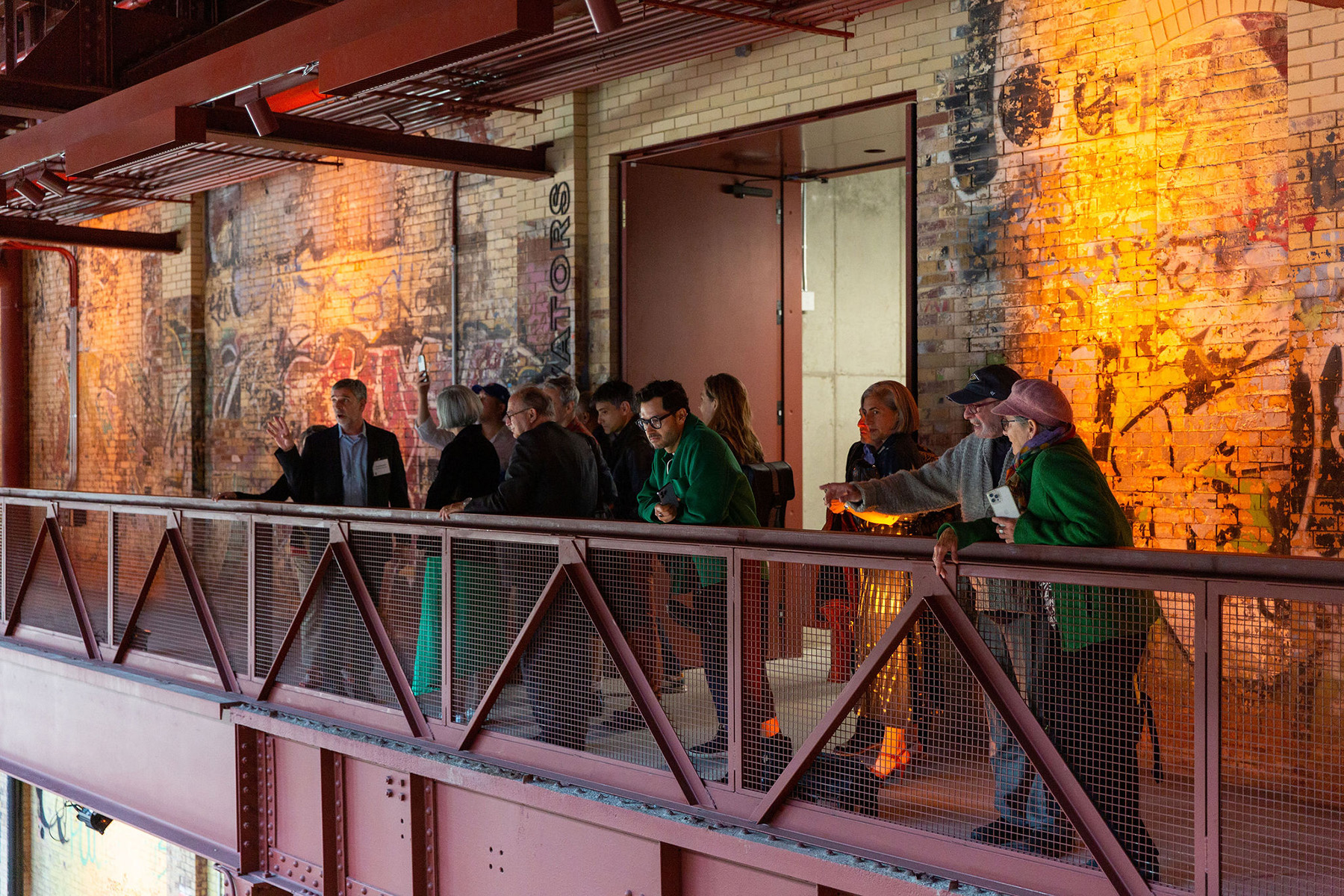
By 2025, that relationship had produced another proof point: the inaugural Brooklyn Fine Art Print Fair at Powerhouse Arts. Its roster brought together 41 international printers and galleries, 28 self-representing artists and book-arts makers, and six academic print departments. The surrounding campaign did not treat “print” as a dusty category. Demonstrations, talks, tours and neighborhood events turned a trade into a public occasion. The newsroom then had a sequence of things to say instead of one announcement to repeat.
A narrow niche with wide elbows
Hayworth sits between several familiar alternatives. A freelance publicist can be nimble but may not cover production. A large agency can supply departments but may bring a generalist’s vocabulary to specialist work. An in-house communications chief understands the institution but is a costly permanent hire. Hayworth borrows from all three: a small senior-led relationship, a network of designers and creators, and a remit broad enough to behave like an internal lead.
The differentiation is also personal. Ellie is a collector. She has spoken about the “gut-punch” feeling of discovering an artist and about supporting smaller galleries and fairs. That does not magically guarantee good publicity. It does mean she encounters the client’s world as an audience member with money, taste and questions - not only as a vendor with a media list. For an art adviser like Electra Projects, Hayworth placed educational stories and arranged speaking opportunities that made the founder’s expertise legible. For Art Frankly, it co-hosted professional-practice conversations. For Code/Art in Miami, Ellie moderated panels and emceed conferences. The deliverable changes; the translator’s job does not.
The firm says it limits its portfolio to a few key partners. This is both culture and economics. More attention per client permits the elastic scope. It also makes the model a poor fit for a buyer seeking a cheap burst of press, dozens of interchangeable launches or instant volume. Specialist fluency only compounds when the client gives the consultancy access to the unfinished work, the awkward internal debates and the people actually making the thing.
What another company can steal
The copyable part is not “hire a curator.” It is the order of operations. Hayworth’s work suggests four practical rules for any organization whose product needs explanation.
- 01Choose the audience before the channel. A collector, a critic, a neighbor and a donor can attend the same event for different reasons.
- 02Find the person inside the institution. Buildings and programs become memorable when the artist, fabricator or participant supplies the stakes.
- 03Make owned media earn its keep. A newsletter, website and social account should develop a narrative over time, not paste the press release into three boxes.
- 04Design the moment being publicized. Programming, signage, photography and guest flow affect the story long before an editor files it.
In 2024, Hayworth made that last lesson literal by launching The Haywire, a South Florida-focused podcast, newsletter, magazine and community platform. It gave the company an owned stage for conversations about how people sustain lives through artistry. It also put the consultancy on the other side of its own advice: choosing subjects, publishing consistently and building an audience without waiting for a client announcement.
There is an amusing symmetry here. Ellie Hayworth was once steered away from the gallery track and toward communications. Her company then spent years widening communications until it contained pieces of the gallery track: curation, exhibition production, public programs and finally a booth. Hayworth’s business is not that it can do everything. It is that, in culture, the boundaries between making the event and explaining the event were never as solid as the job titles suggested.