Derek Jeter had spent twenty seasons becoming difficult to quote. Playing shortstop for the Yankees meant answering questions in a city that could turn a stray sentence into a week’s entertainment. Then, in October 2014, he helped launch a company whose success depended on other athletes saying considerably more. It was a curious second career for a man who understood the commercial value of keeping his mouth shut.
- Athletes supply the perspective; a media company helps turn it into stories.
- Fans read and watch for free. Brands buy advertising and sponsored work.
- Trust opened the door. Minute Media supplied infrastructure for expansion.
The Players’ Tribune occupies an unusual patch of sports publishing. Its subject is often the part of the game that a broadcast cannot show: what happens inside a person while everyone else watches the performance. A score provides an outcome. These stories offer an explanation, sometimes an apology, occasionally a farewell. The interesting question is why an athlete would choose this particular room in which to speak.
The man who wouldn’t talk built a place to talk
Jeter’s co-founder, Jaymee Messler, had been chief marketing officer at Excel Sports Management. She knew the people, the agents and the reasons a player might hesitate. In her account of the company’s origins, athletes had grown wary of coverage driven by headlines. The founders saw a gap between having something to say and trusting someone to help say it.
Messler recalled investors questioning a business dependent on athlete contributions. Thomas Tull, then chairman of Legendary Entertainment, understood the premise and became its first investor. Her experience mattered alongside Jeter’s name: credibility might get a meeting, but a publishing operation still needed relationships, production and someone to run it.
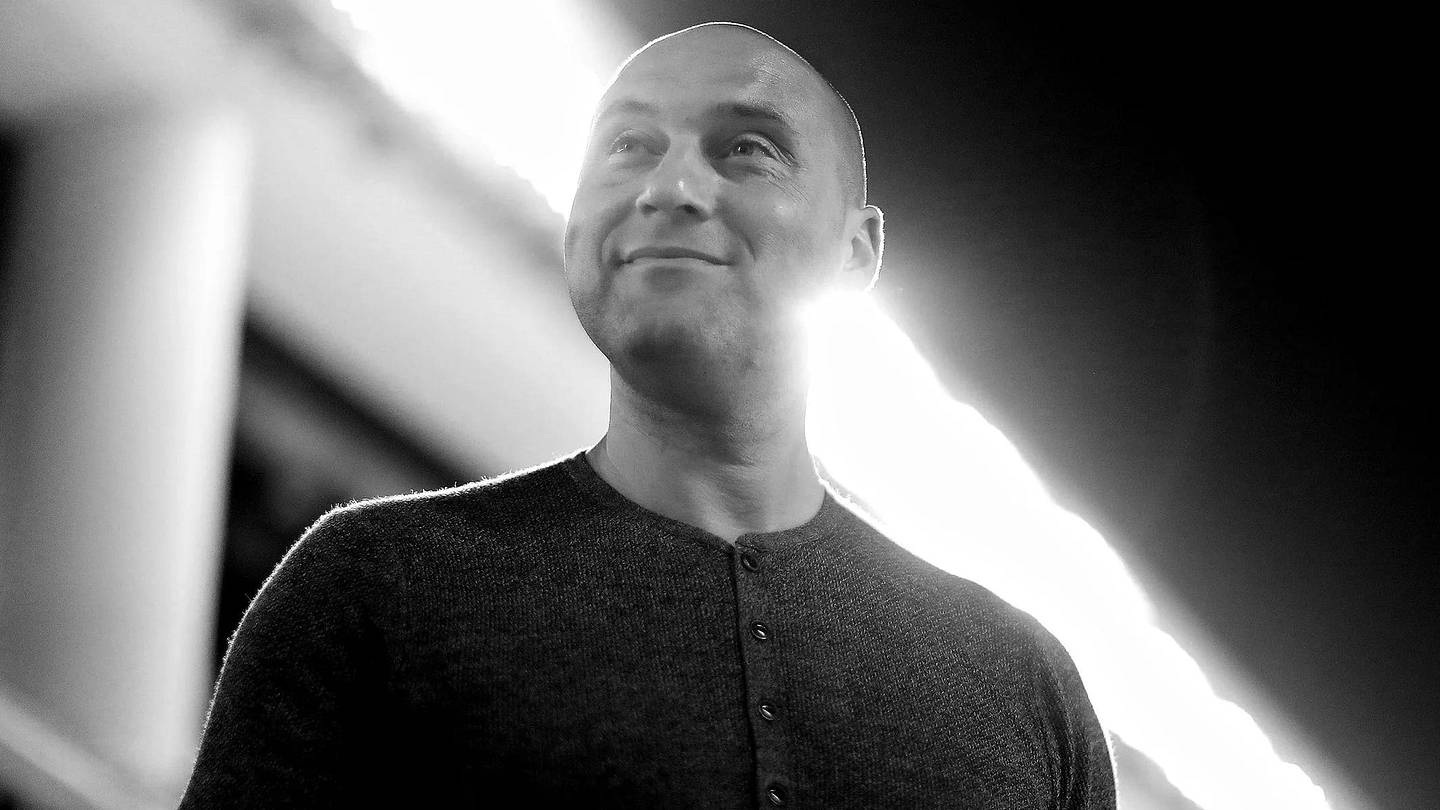
The early evidence surprised Jeter. Blake Griffin’s account of playing for Donald Sterling’s Clippers and Andrew McCutchen’s discussion of the cost of youth baseball suggested the platform could influence conversations beyond the clubhouse. This was a more consequential proposition than access to famous people. Access was already abundant. A story someone felt safe enough to tell was harder to obtain.
What a basketball game left out
On March 6, 2018, Kevin Love published “Everyone Is Going Through Something.” He described a panic attack during a game against Atlanta the previous November. The essay connected that experience to years of keeping personal troubles private and to the expectation that men should endure without discussing their feelings.
Love also explained that DeMar DeRozan’s public comments about depression had encouraged him. That sequence is revealing. One person speaks; another recognizes something familiar; the permission to speak spreads. For a reader far from professional basketball, the useful part is the recognition. Celebrity supplies the initial attention, but the experience supplies the reason to forward the article.
“Everyone is going through something that we can’t see.”
Kevin Love, 2018
Figures reported by Jeter in his November 2019 retrospective. Readership measures attention; the emails suggest what readers did with it.
The microphone has teammates
The company’s products now extend beyond the essay. Knuckleheads pairs former NBA players Quentin Richardson and Darius Miles with guests from sports and entertainment. Sometimes I Hoop puts Haley Jones in conversation with women’s basketball players. Blindsided, launched in 2021, brings former NHL goaltender Corey Hirsch together with psychiatrist Dr. Diane McIntosh to discuss athletes’ mental-health experiences.
The expertise here combines athlete relationships with editorial and audiovisual production. A familiar interviewer can make a conversation feel less ceremonial. Photography, illustration and short videos give the material other shapes. Fans can read a long account, listen to a peer conversation or encounter a short visual story on a social feed.
There are obvious alternatives: ESPN or The Athletic for reporting; an athlete’s own account for direct updates; other athlete-focused media for interviews and entertainment. The Tribune’s distinction is its consistent emphasis on the player’s point of view. That also defines its limit. A first-person account offers perspective; readers still need independent reporting when facts or responsibility are disputed.
For a newcomer, the easiest entry is a familiar athlete or a familiar problem. The site groups stories around mental health, women in sports and racial injustice, alongside individual sports. Those collections let a fan follow a subject beyond one star. A young player can encounter accounts of setbacks that highlight reels leave out; a coach can use a personal narrative to begin a conversation about expectations. The value depends on what the reader brings to it. A story can invite discussion without pretending to settle every question.
A moving story still needs a business
Fans are one audience. Advertisers, sponsors and organizations are another. The website offers advertising and licensing contacts, while selected Sometimes I Hoop episodes carry Wendy’s sponsorship. The commercial proposition is proximity to athletes and the people who care about them, delivered through stories and produced formats. Brand participation requires care: a sponsor’s desired message and a storyteller’s experience may pull in different directions.
Capital financed the ambition. The company raised a reported $58 million, including a $40 million Series C in January 2017. IVP led that round; GV and NEA participated. Approximately $9 million came from athlete investors. The money supported video production, sales, editorial operations and new distribution opportunities. Those figures describe funding, rather than the price of producing an individual story.
Attention did not automatically become habit. At the 2019 sale, trade reporting described difficulty building a consistent audience in a crowded market. Minute Media acquired the company that November. Jeter presented the partnership as a way to reach more countries. The parent supplied publishing technology, distribution and commercial teams; Japan and Brazil followed in 2021.
The format changes. The person remains.
By 2024, Minute Media said the brand had worked with more than 3,000 athletes worldwide. Its tenth anniversary produced an Assouline book, I’ve Got a Story to Tell. In September 2025, the NFLPA announced animated shorts featuring Travis Hunter, Ashton Jeanty and Cam Ward, using interviews from its Rookie Premiere.
For anyone building a publication or interviewing customers, the copyable lesson is practical: make participation worthwhile, earn trust and choose a format that fits the experience. Distribution then needs its own resources. Without access or willing contributors, the premise has little to publish. Jeter’s company found a subject the scoreboard kept overlooking: the person expected to live with the result.