The easiest way to misunderstand MKTG is to look at the photographs. There is Scottie Barnes at a Subway pop-up, grinning in a green varsity jacket. There are families trying Olympic sports beneath a Toyota canopy. The pictures suggest a business of celebrities, wristbands and good lighting. But an event is only the visible end of a much longer machine. Before the doors open, someone has valued the rights, studied the audience, negotiated the talent, designed the idea, built the set, prepared the guest list and decided what success will mean. MKTG sells that entire chain.
The New York-headquartered agency calls itself a global sports and entertainment specialist. It belongs to Dentsu and works for brands, rights holders and properties that want more from a sponsorship than their name on a perimeter board. Its service map is unusually broad: consulting, fan analytics, creative and content, social and influencer work, hospitality, meetings, incentives, guest management and live production. In plainer language, MKTG helps decide what to buy, what to make and how to know whether anybody cared.
“People think of fandom as a destination, but fandom is a journey. Unending.”MKTG's description of the market it follows
A fan is a verb
That sentence contains the company's useful idea. Old sponsorship logic treated “sports fan” as a stable noun, the sort of person one could find in a demographic table and reach during a broadcast. Actual fans are less obedient. They move from a stadium to a highlights feed, from a creator's channel to a group chat, from a star athlete to a niche community that speaks in jokes no brand manager should use without supervision.
MKTG's pitch is that this movement can be mapped. Its analytics teams study fan data, market behavior, the value of intellectual property and the likely return on sponsorship. Its consultants negotiate properties and talent. Creative teams turn the analysis into content. Event people make the promise physical. The handoffs are the product. A spreadsheet without an experience is inert; an experience without a reason is expensive theater.
The first plan disappeared
Toyota Sports Fest is the neatest example because it began with a failure of circumstance. Toyota was an Olympic partner. Then Beijing barred foreign spectators from the 2022 Winter Games, removing the obvious place for an American sponsor to meet American fans. The first route to the audience had vanished.
The response was not a substitute broadcast or a sadder version of the original activation. Toyota, MKTG and their partners created an open-to-the-public festival in Park City, Utah, where people could try able-bodied and adaptive sports, meet athletes and learn about the Olympic and Paralympic movements. The event shifted the audience from spectator to participant. That distinction changed the result.
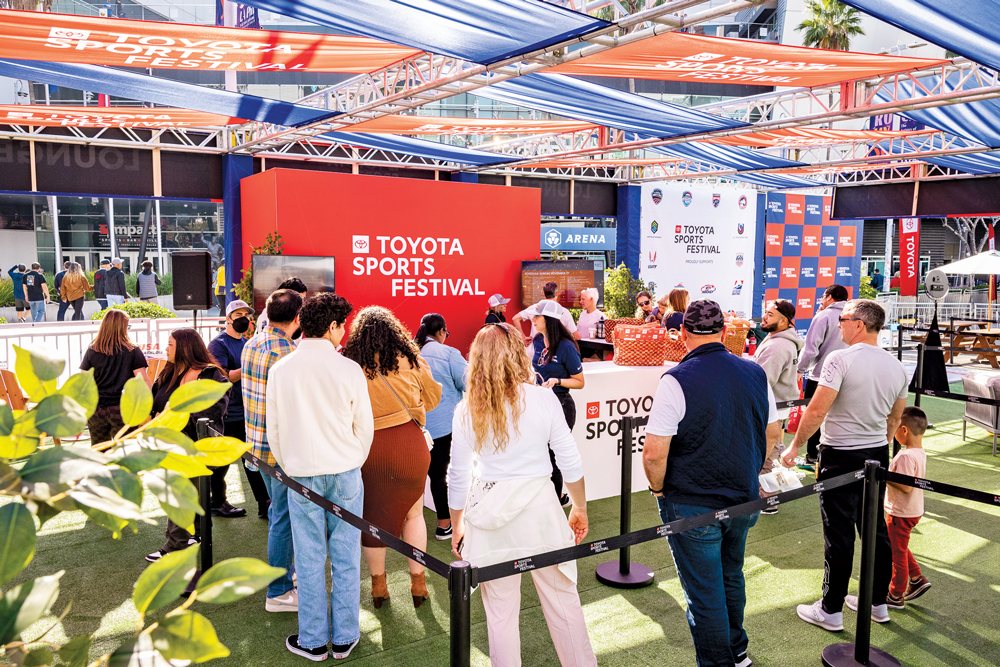
Park City worked well enough to change Toyota's mind about scale. Rather than waiting for fans to arrive at the “correct” sporting venue, the festival traveled to places with ready-made crowds: major auto shows in Los Angeles, Chicago and New York. Toyota's sponsorship leader, Dedra DeLilli, put the lesson plainly: go where new and bigger audiences already are.
Those numbers also reveal the business model. MKTG is not selling tickets to consumers. It earns agency and consulting revenue from organizations that need sponsorship planning, creative development, production or ongoing partnership management. The customer may be a brand such as Toyota or Subway, or a rights holder that needs commercial strategy and fan presentation. The outputs vary; the invoice remains business-to-business.
When a rice bowl became a house party
The Subway Canada assignment was smaller and sillier in the best way. The chain had a new line of rice bowls and the usual problem of new menu items: a product can be perfectly edible and culturally invisible. MKTG recruited Toronto Raptors forward Scottie Barnes, whose affection for bowling supplied the pun and the plot. “Bowlway” became a house-party-style pop-up hosted at Scottie's place - or, more accurately, a carefully designed space that felt like it.
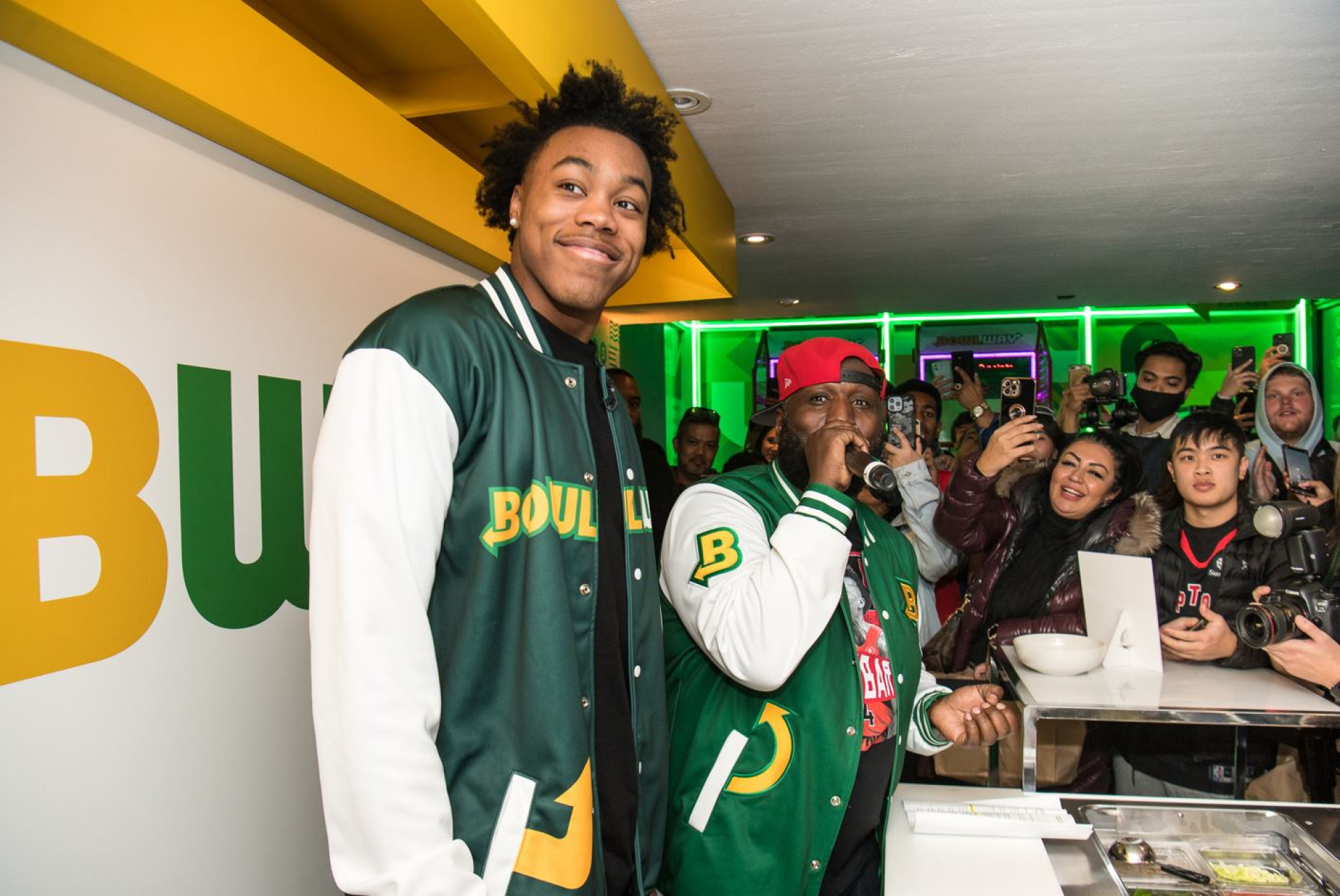
Guests ate samples while Barnes and Subway's chef demonstrated a signature bowl. There was a basketball bar, games and a photo booth. The campaign stretched from a commercial to influencer coverage and the event itself. MKTG reported 9.2 million media impressions, more than 15.9 million social impressions and sales above target. No public budget was disclosed, so the useful comparison is not cost per balloon or varsity jacket. It is the efficiency of one native detail - Barnes likes bowling - carrying the product name, the creative premise and the guest experience at once.
A sponsorship logo is a receipt. The real work is giving fans something they would have chosen to do anyway.
The $52 million wager
MKTG's history is more corporate than mythical. Public filings say the Delaware company was formed in 1992 and succeeded a sales-promotion business dating to 1972. A 1995 merger brought Inmark Services inside. By 2014, MKTG had 340 full-time staff across New York, San Francisco, Los Angeles, Chicago, Cincinnati and London. Dentsu said it executed roughly 70,000 experience-focused events a year.
The acquisition was a wager that direct, face-to-face connection would matter more as media became more fragmented. Dentsu folded MKTG into a wider global network, eventually positioning it around sports and entertainment. The advantage is reach: strategy and analytics can travel, while regional teams and partners handle the local texture. The danger is the familiar holding-company one - a wide network can create capability, or merely a crowded organization chart. MKTG's best evidence is work where the disciplines are visibly connected.
MKTG is incorporated in Delaware, succeeding an older sales-promotion business.
Dentsu completes the $52 million cash acquisition.
Toyota Sports Fest and Subway's Bowlway show two very different forms of participation.
MKTG enters New Zealand and adds PR and talent marketing in APAC.
Partnerships and fan research expand across cricket, tennis and the World Cup.
The part worth stealing
A company does not need an Olympic contract to copy the method. Begin with a behavior rather than a channel. Find the thing the audience already wants to try, discuss, collect or teach one another. Build the smallest credible version in one place. Measure behavior that sits between vague awareness and immediate purchase: dwell time, participation, willingness to share, consideration and return visits. Then move the format to places where the audience already gathers.
This is less useful when the brand has no believable relationship to the community, when operations cannot support the promise, or when the only objective is a cheap immediate conversion. Fan culture notices tourists. A glossy activation will not repair a poor sponsorship fit, and an underfunded live experience can make the mismatch painfully public.
The people who use MKTG are therefore buying judgment as much as production: consumer brands choosing properties, rights holders improving their commercial offer, and teams or talent trying to turn affinity into a durable partnership. Alternatives include global specialists such as Octagon, Wasserman, Momentum, Jack Morton, CSM and 160over90, plus the increasingly capable in-house sponsorship team. MKTG's difference is not that it can stage a party. Many agencies can. It is the attempt to connect the party back to the valuation model, the fan research and the rights contract that made it possible.
That returns us to the photographs. The bright set and famous face are not superficial; they are simply incomplete. Look again and the image becomes a diagram. Every guest, sign, activity and camera is the final expression of a decision made months earlier. MKTG's business lives in the distance between those decisions and that one crowded frame - the distance between acquiring attention and earning it.
Continue exploring