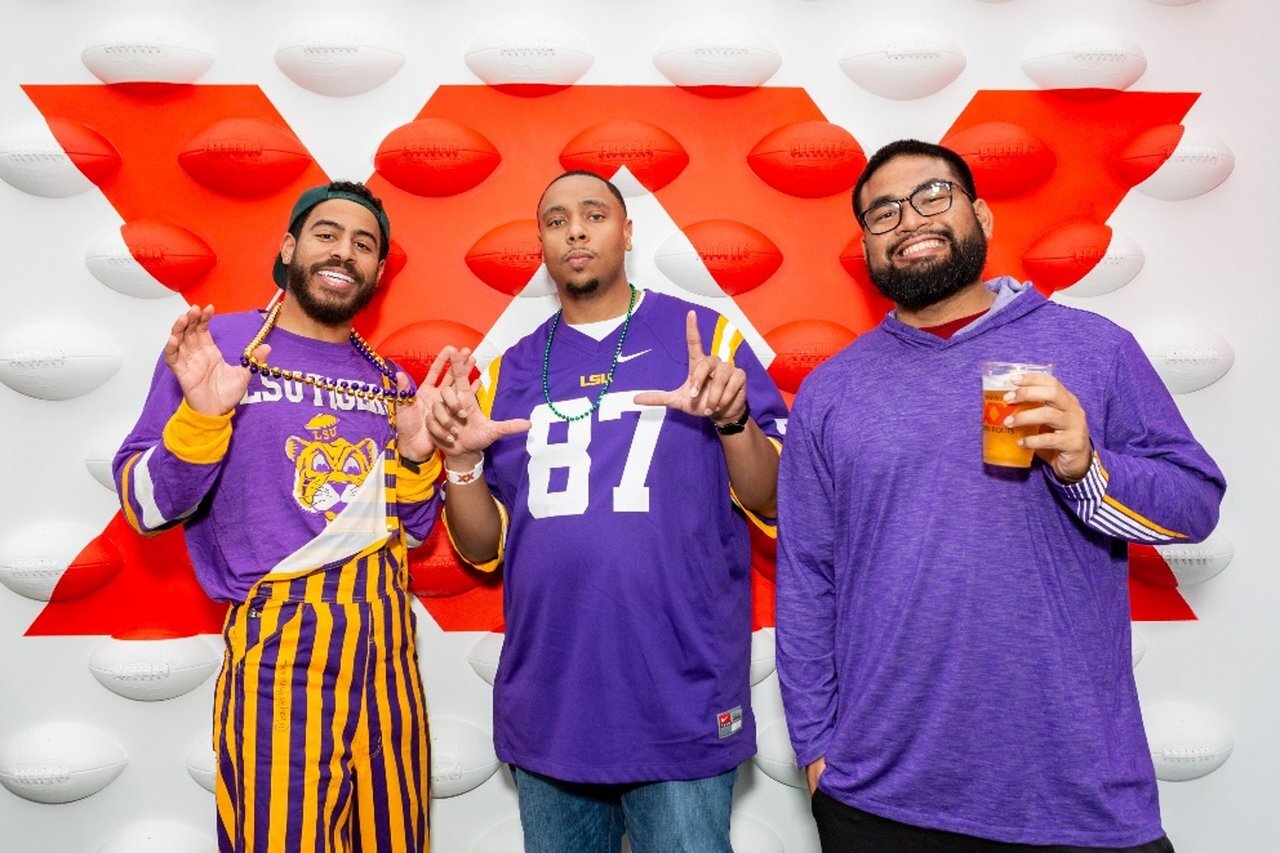
The most interesting thing about a two-point conversion is its audacity. A football team has scored a touchdown and may take the safe extra point, or it can wager the easier reward for a harder one. For Dos Equis, whose slogan has long traded in choosing the interesting route, this tiny fork in the rules became the foundation of a large campaign. The two-second play was stretched across a season: ESPN segments, SportsCenter features, influencers, a million-beer sweepstakes, and live experiences at college games. Amplified Marketing led the experiential part - the place where the television idea had to survive contact with actual fans.
This is the agency's peculiar trade. Advertising usually asks what a brand should say. Experiential marketing must also ask where the truck parks, whether the power draw works, how fast the line moves, what the bartender has been told, and what a person will do after entering the footprint. The audience sees the last ten yards. The agency lives through the whole drive.
The business of making a brand tangible
Ashley Pulman founded Amplified in New York in 2015 after years in public relations, field marketing, and senior agency account roles. The origin matters because the company is not organized around a single glamorous specialty. Its own roll call includes former brand managers, distributor representatives, producers, field managers, content creators, retail associates, copywriters, strategists, and bartenders - corrected, with a wink, to mixologists.
That mixture describes the product more accurately than the phrase “event agency.” Amplified identifies and qualifies partnerships, manages sponsorship obligations, designs and produces environments, runs tours, handles on-site operations, captures content, and integrates talent and influencers. A client can hire the thinking and the doing. For brands, that closes an expensive gap: the distance between an attractive deck and a working Saturday afternoon.
“How do you take a brand and turn it into a staple in modern day culture?”Amplified Marketing
Its answer is “strategy, storytelling, and influence.” The portfolio adds a fourth word: participation. At a Dos Equis college-football championship activation in New Orleans, the 40-by-40-foot space contained quarterback drills, a truck-bed photo setup, a beer hall, a jazz band, and a pop quiz with former player Martellus Bennett. At a VICE Night Market, a machine disguised as an ATM printed custom labels for Intrinsic Wine bottles. These are not backdrops. They are prompts. Each gives the visitor a small job and, with it, a reason to remember.
The agency inside the agency village
Big campaigns are seldom solo performances. Go For Dos credited Heineken USA and Dos Equis; agencies Intersport, Amplified, dentsu X, M Booth, and Tag; Disney and ESPN; the NCAA; and ten schools. That list can look like bureaucracy until one remembers the number of languages being translated. A brand has commercial goals. A broadcaster protects editorial credibility. A university has rules. A fabricator needs measurements. Fans have a ruthless instinct for corporate awkwardness.
The live-experience equation
insight
rights
production
operations
Remove any one box and the activation becomes a nice idea, a rights package, an empty set, or a logistical triumph nobody wants to visit.
Amplified sits at the physical end of that chain, but its edge is understanding what came before it. The company says its connections span music, art, fashion, and technology. Its work also runs deeply through sports, food, beverage, and hospitality. The recurring clients are instructive: Heineken, Dos Equis, Stoli, and Tiger Beer sell products whose consumption is already social. An experience does not need to invent the occasion. It needs to improve the occasion without behaving like an interruption.
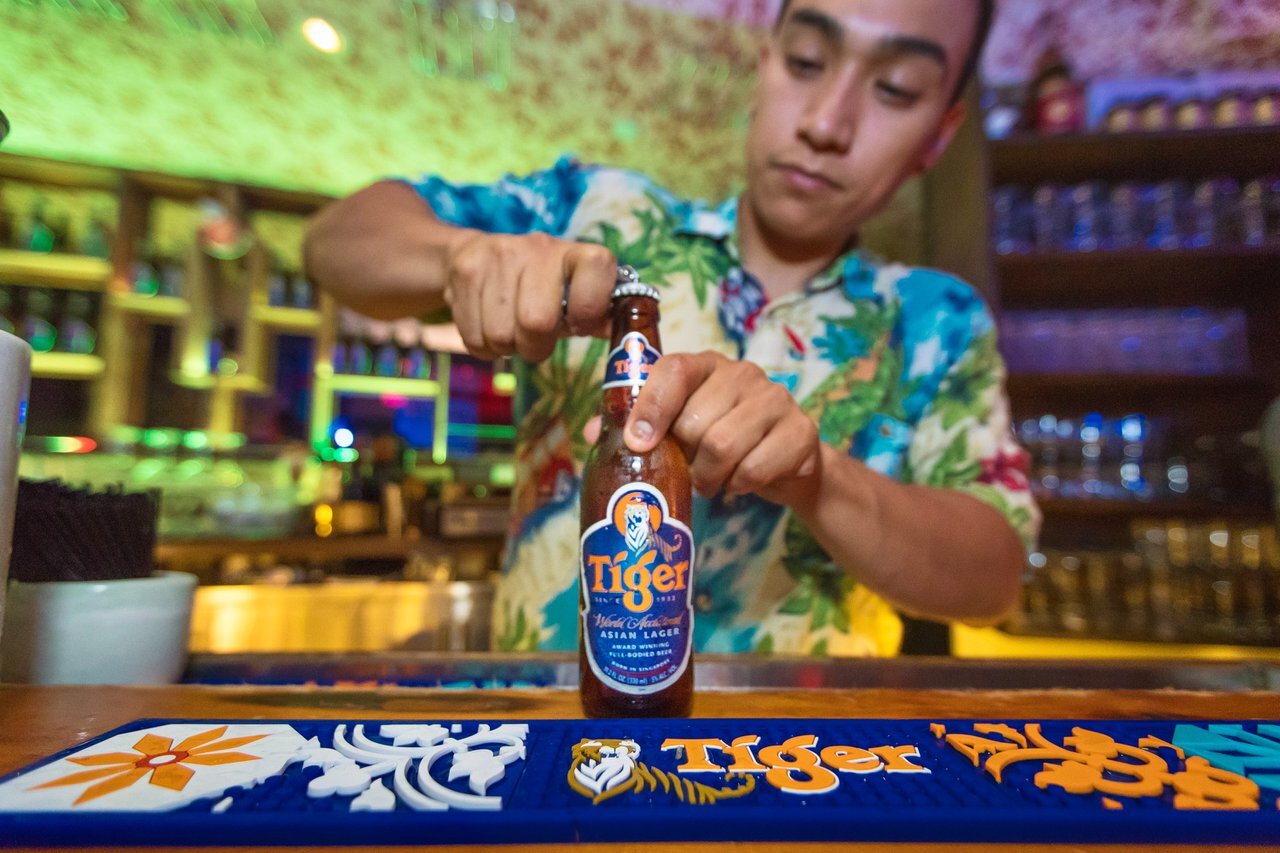
This helps explain a Tiger Beer launch with Kenzo and the World Wildlife Fund at Peachy's, the subterranean bar beneath Chinese Tuxedo. The clothing collaboration raised money for tiger conservation. The setting supplied intimacy; custom fabrication carried the visual identities; the partners supplied fashion, purpose, and product. It was a small system of borrowed credibility, assembled for one night.
The invisible product is confidence
Amplified is privately held. It does not publish its price list, project budgets, funding, or valuation. The visible business model is the familiar agency blend of project work and retained services, with specialist partners joining where fabrication, media, public relations, or rights expertise is needed. The supplied company estimate puts annual revenue around $5 million, though the company has not publicly confirmed it.
What a client is buying is not merely a crowd or a photograph of one. It is confidence across handoffs. The creative notion must still make sense after sponsor approvals. The fabricated object must fit through the loading entrance. The tour must feel like one campaign in Oklahoma, Arizona, and California, even as venues and weather change. Content must preserve the live energy for everyone who was elsewhere. This is why a smaller specialist can matter inside a campaign run by much larger organizations.
The record suggests that clients noticed. Amplified reached No. 1,864 on the 2020 Inc. 5000, five years after it began. Its Heineken Perfect Serve program at the US Open received a BizBash Best Events of the Decade honor, according to the agency. In 2025, Go For Dos won Clio Sports Silver for fan engagement in partnerships and sponsorships, plus Bronze in brand and media. The firm celebrated ten years that same year with a refreshed identity and a new office. Founder Pulman was later named among Chief Marketer's 2026 Top Women in Marketing.
The portable part of the playbook
Most readers do not have a 70-by-20-foot beach-festival footprint or a double-decker container waiting in the budget. The useful lesson is smaller than the spectacle. Begin with a behavior the audience already enjoys. Give people a role. Build one mechanic easy enough to explain in a sentence. Let the setting do narrative work. Then plan the unphotogenic details with the same seriousness as the central idea.
Do not paste a brand onto a crowd. Start with the thing people came to do: tailgate, taste, discover, compete, or gather.
Throw, label, pour, pose, vote, or customize. An action is easier to remember than a decorated wall.
A strong core mechanic can move between cities while local details, rules, and partners change around it.
Power, queues, staffing, permits, weather, freight, and teardown are part of the customer experience.
This logic has limits. It is weak when the audience has no natural reason to gather, when the product cannot credibly enter the culture, when the brand seeks instant national reach from a single local moment, or when the budget pays for scenery but not operations. An experience can concentrate attention. It cannot manufacture permission.
The pineapple in Amplified's logo is a cheerful symbol for a business full of clipboards. That tension is the point. A brand experience should feel generous, energetic, and a little surprising. Producing that feeling requires people willing to think about the emergency exit, the ice delivery, the sponsor clause, and the late truck. The party is the product. The logistics are the moat.