There is a peculiar problem at the centre of sports marketing. The people in the stands already care - violently, irrationally, beautifully. The brand arriving with a sponsorship has paid for proximity to that feeling, but proximity is not the feeling itself. A logo on a perimeter board is near the devotion in the same way an airport hotel is near Paris.
MSQ Sport + Entertainment exists to close that distance. It is a London-headquartered agency founded in June 2024 by Steve Martin and Jamie Wynne-Morgan, two operators who had spent roughly two decades building M&C Saatchi's sport and entertainment business. Their new company began with two people and one client, Callaway Golf Europe. By its second birthday, it said it had more than 60 people across London, New York and Amsterdam. LinkedIn's public count and earlier company statements put the figure around 50-60 during that period. Either way, the shape of the story is unusual: a specialist agency grew internationally before it had time to become middle-aged.
The asset is not the crowd. The asset is knowing why the crowd showed up.The operating idea behind MSQ's work
The fan is not an audience segment
The company sells strategy, sponsorship activation, creative campaigns, content production, PR, live experiences, influencer partnerships and social media management. That list resembles many integrated agencies. The important difference is the order of operations. MSQ begins with the culture around a sport or entertainment property, looks for a behaviour or tension inside it, and then decides what a brand can credibly do.
Its proprietary tools, TRIBES and TRACE, are meant to make that less mystical. TRIBES maps digital conversation, content and curiosity to spot changes in fan behaviour. TRACE is positioned as the measurement layer, following cultural conversation through to campaign outcomes. The tools are not the product by themselves. They are a way to stop a room full of marketers from confusing their own enthusiasm with evidence.
This matters because MSQ competes in a thickly populated field: Octagon, Wasserman, Two Circles, Fuse, M&C Saatchi Sport & Entertainment, dentsu Sports International and a long bench of nimble independents. Everyone can say “fans first.” Fewer can show what happened after the slogan.
A terrible publicist, used precisely
The cleanest example is O2's work with England's Red Roses before the 2025 home Rugby World Cup. The team was ranked number one in the world, yet only 38% of rugby fans could name a player. Their sporting success had outrun their cultural recognition. A conventional campaign would have made them look heroic. That was not the missing information. The missing information was who they were.
MSQ introduced the players with cast-style social films, live activity and an inspired piece of comic sabotage: Chabuddy G, the hopeless promoter played by Asim Chaudhry, became their “PR guru.” His bad advice gave the players room to be funny, impatient and distinct. It treated personality as the bridge between excellence and affection.
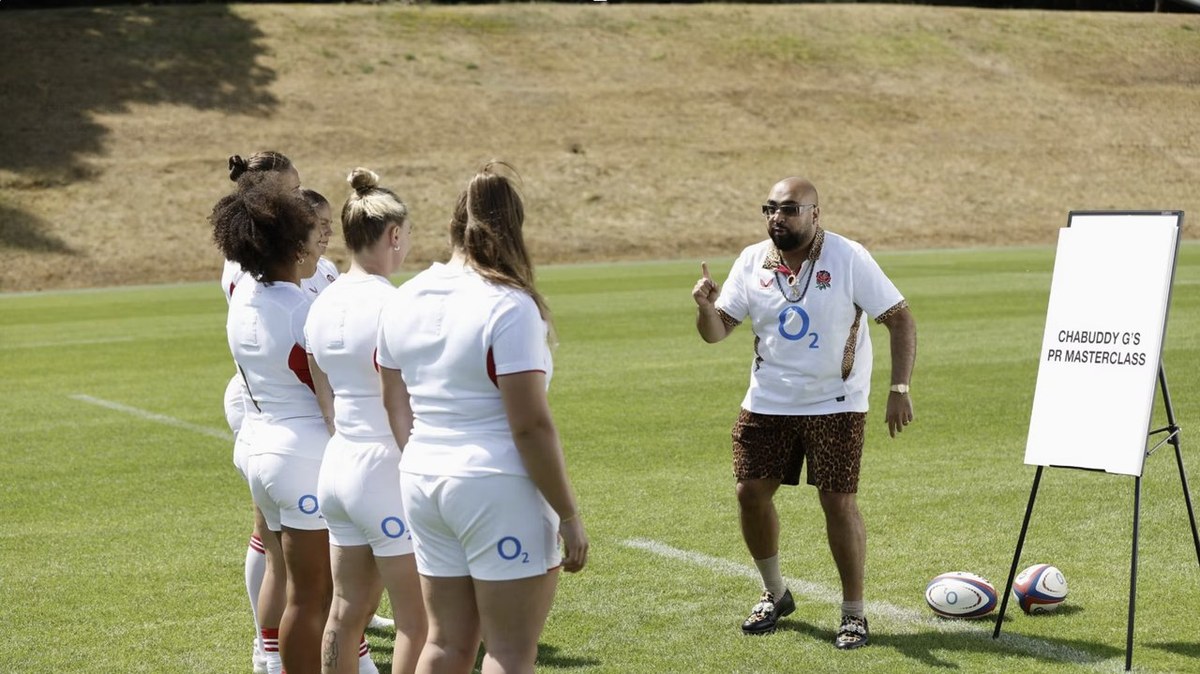
MSQ also reported that half of those measured felt more positive about O2. These are the agency's campaign figures, not an audited annual report, but they describe the intended chain clearly: entertainment created familiarity; familiarity improved recognition; recognition carried value back to the sponsor. The logo was present. It simply was not asked to do all the work.
The strange luxury of a borrowed backbone
A two-person start-up ordinarily has to choose between narrow expertise and broad delivery. MSQ escaped some of that choice because it was born inside MSQ Partners, the wider agency group backed by One Equity Partners. At launch, the founders could draw on a network of strategists, analysts, creatives and channel specialists while keeping a sport-and-entertainment front door. It is the agility-of-an-independent, scale-of-a-network pitch - a familiar claim made more credible by the speed of the office openings.
The New York move also reveals how the company thinks about risk. It did not parachute a London manager into Manhattan. Andrea Nirsimloo and Paul Anastasiadis, former M&C Saatchi executives with more than 35 years of combined experience, opened the practice. Steph Lund, another former colleague, joined as North America CEO soon after. In Amsterdam, Toan Ravenscroft led the local operation. The expansion was global in ambition but conspicuously local in leadership.
The client roster widened with the footprint: O2 and Virgin Media, Amazon, The Football Association, Glenfiddich, Howden, British Gas, Under Armour, The Athletic, Paze, The New York Times, Optimum Nutrition and BODYARMOR. The agency earns money in the ordinary agency ways - retained strategic and partnership work, plus project fees for creative, production, PR, social and experiences. The intriguing part is not a novel revenue mechanism. It is a familiar business wrapped around a deliberately narrow expertise.
Why the golf club disappeared
Callaway was the first client willing to believe the new agency existed before the market had supplied much proof. Two years later, their “At Last” film offered a neat summary of the relationship. It was a golf advertisement without a swing, a club close-up or a technology demonstration. The course was the protagonist: sprinklers starting, sand being raked, flags moving, winter loosening its grip. Etta James supplied the title and the emotional shortcut.
The product was not absent through embarrassment. It was absent because committed golfers already knew what a club looked like. What they missed in winter was the ritual of returning. MSQ advertised that anticipation. This is what specialism can buy: the confidence to leave out the category's most obvious image.
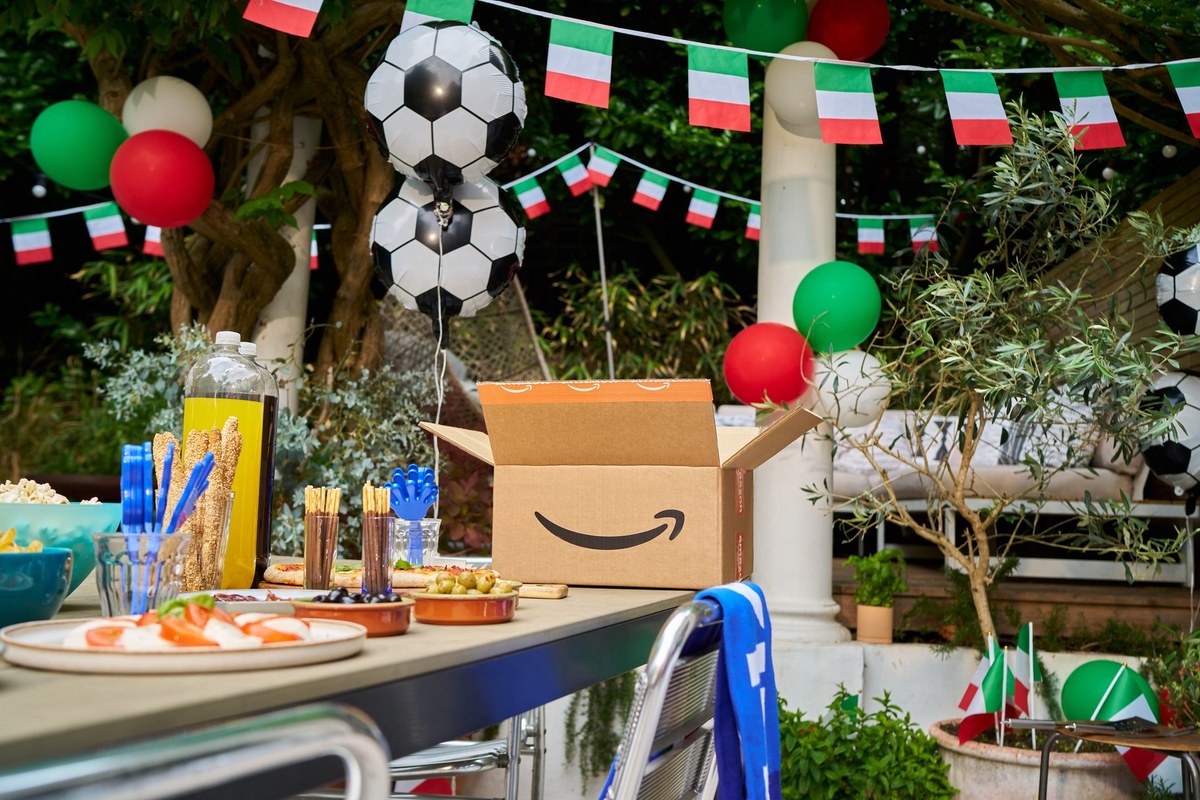
The same instinct shaped Amazon's Women's EURO 2025 work. Instead of treating supporters as the background to elite athletes, a social series turned ordinary homes into fan zones, with former Lioness Jill Scott and creators across Europe. The campaign sold Amazon's Women's Football Store, certainly, but it did so by making the fan's preparations the story.
The useful part to steal
Another company cannot copy MSQ's founders' address books or instantly acquire 30 years of category fluency. It can copy the sequence. Pick a narrow world in which the team understands the jokes. Listen before making. Define the emotional job, not merely the media deliverables. Borrow infrastructure for the commodity functions. Hire leaders who understand each local market. Then measure whether people knew, felt or did something different.
There are conditions. This model depends on a client granting creative latitude, a rights holder permitting genuine access and an audience with enough existing passion to reward close observation. It becomes less persuasive when the brand has no credible role in the culture, when legal approvals sand every edge off the idea, or when “real-time” insight arrives after the moment has passed. Network backing also helps only if the shared machinery remains helpful rather than heavy.
By 2026, MSQ Sport + Entertainment had won Agency of the Year at the European Sponsorship Association Awards and the medium-to-small agency prize at the UK Sponsorship Awards. Awards are another form of borrowed attention, and sensible agencies do not confuse them with the business. The more revealing achievement is that the original Callaway relationship lasted long enough to produce the swing-free film, while the agency added offices and clients without abandoning its thesis.
That thesis is simple enough to fit on the back of a ticket: a crowd is not empty space waiting for a brand. It is a society with memory, etiquette and jokes. Pay for the sponsorship if you like. But if you want the feeling, learn the society.