Matt Lautz once found something worth talking about in a bank’s telephone transfer. The agent stayed on the line, explained his situation to the next person, and spared him the customary recital of everything he had already said. He later recalled telling that story dozens of times. An ordinary courtesy had become a memorable event. Anyone who has spent an afternoon being transferred can appreciate the competition it faced.
There is a useful way to read Lautz’s career through that little exchange. Across cloud communications, Salesforce consulting and legal software, he has kept returning to the passage between one person’s work and another’s. A customer calls. Information changes hands. Someone needs enough context to act. The interesting question is how much survives the journey.
Today, Lautz is the Milwaukee-based founder and CEO of Neostella. The company builds legal case management software, but his route there began well before legal technology became his focus. He has helped build businesses that were acquired by ShoreTel and ScanSource, started again, and gradually moved closer to the machinery that determines how an organization gets through its day.
A telephone call with a long afterlife
In 2014, Lautz wrote about holiday customer service with a distinctly practical list of remedies. Shorten the wait. Match staffing to demand. Give the person answering the phone the information needed to resolve the problem. Even seasonal hold music received attention, although its welcome depended on keeping the hold short. Festivity, apparently, has a time limit.
His advice placed responsibility on the business. A pleasant voice could only accomplish so much if the employee behind it had to search through screens and scripts. The quality of an interaction depended on decisions made before the phone rang: staffing, systems, preparation and access to information. That is a less glamorous subject than brand loyalty, but a more useful one when the customer is still waiting.
By 2015, while leading Corvisa, Lautz was also questioning the effect of long contracts on service. He argued that businesses should keep earning their customers’ custom. In the same conversation, he described the bank’s unusually considerate transfer. The point was the practical difference a small process change could make. The bank had taken a familiar irritation seriously enough to remove it.
When work changes hands, does the information go with it?
Before the legal files, there were phone lines
Lautz was already building software businesses as a teenager. An early company grew into software development and internet telephony, putting him in the business of making communication function at scale. That background helps explain his interest in the unromantic details of reliability and implementation. A telephone system has unusually direct ways of announcing that it has stopped working.
At Corvisa, which he helped found, his responsibilities included technology leadership, business development, partnerships and product direction. In a 2015 interview, he described customers assembling several vendors to handle business phones, contact centers and custom communications applications. Corvisa’s proposition brought those capabilities together while allowing customers to adapt parts of the system.
He also emphasized implementation support. Customers received a dedicated manager, and the relationship continued after launch. His account of consulting involved asking customers questions about possibilities they might not know existed. Selling the requested feature was only part of the job; understanding how that feature might change the customer’s operation was another.
“We believe that you should have the access to your data”
Matt Lautz, discussing Corvisa in 2015
The language is striking in retrospect. Data access and flexibility are central to his present legal software pitch. A decade earlier, he was discussing real-time events from a communications system: a call arriving, an agent answering, a caller leaving the queue. The applications have changed. His interest in giving customers usable information has endured.
Two acquisitions, then another beginning
ShoreTel’s acquisition of Corvisa closed in January 2016. At the announcement, ShoreTel pointed to both the technology and the people it was buying. The transaction brought 94 Corvisa employees into the company, with the Milwaukee office remaining. For Lautz, it became one chapter in a career that repeatedly moved between building an organization and joining a larger one.
Next came Canpango, the Salesforce implementation and consulting business he co-founded and led. Its work included configuring systems, migrating data, developing applications and helping organizations change their processes. These are the tasks concealed inside the cheerful instruction to install new software. The installation can be the easy part. Teaching a business how to work with it is where the calendar fills up.
ScanSource acquired Canpango in August 2018. The company had about 70 employees and offices extending from Milwaukee to London and South Africa. Lautz joined ScanSource to lead its CRM and business process consulting practice. The buyer saw a connection between customer records and the communications services its partners already sold. Lautz’s work had brought him to that junction again.
- 2016Corvisa joins ShoreTel
- 2018Canpango joins ScanSource
- 2019Lautz founds Neostella
- 2025Neostella launches its case platform
The permission to change course
Lautz founded Neostella in 2019, initially working on automation and integration. Its earlier history includes UiPath robotic process automation, a Medellín office, and partnerships with Workato and Filevine. Those names describe different pieces of an operational puzzle: automating repetitive actions, connecting applications and implementing legal software.
In 2022, Neostella agreed to acquire Work-Relay, a business process management product built on Salesforce. It added a way to coordinate complex work to the company’s existing automation capabilities. The acquisition also drew on territory Lautz knew from Canpango. His next business could change direction without discarding what he had learned in the last one.
There is a revealing admission in his approach to strategy. He has described the route a founder first expects to succeed as frequently different from the route that actually works. Changing that plan need not count as failure. That is a useful conviction for someone whose company began in automation services and now describes itself as a legal software business.
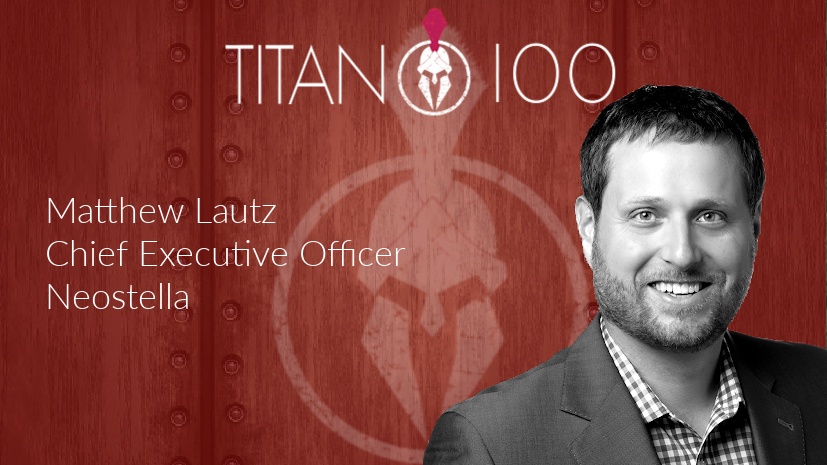
His colleagues’ description of him at the time of that recognition combined directness with consideration. They spoke of clear expectations, candid feedback delivered kindly, and respect for life outside work. These are their observations, rather than a personality test. They suggest a manager who wants the work taken seriously without making seriousness the office dress code.
There is room for recreation in his own biography, too: downhill skiing and water skiing. The seasons change; the skis remain. It is a modest personal detail, but welcome in a professional history otherwise populated by platforms, partnerships and the occasional acronym with more letters than seems strictly necessary.
Putting the firm around the work
Neostella announced its own connected legal case management platform on December 4, 2025. The launch emphasized configurable workflows, an open API, communications and real-time information. Lautz’s stated aim was to let firms connect the products they use and retain control over their operation. It was a move from helping existing systems cooperate to building a place for that cooperation to happen.
The distinction matters in understanding his ambition. Legal work brings together people with different responsibilities, documents at different stages and deadlines that cannot politely wait for an integration. A connected system promises a more coherent view of those dependencies. Delivering that promise requires attention to what happens after a task appears complete on someone’s screen.
His February 2026 conversation with Ruby Powers brought the discussion to law firm owners. The subjects included control of data, connected systems and incorporating procedures into the way a firm operates. The audience had changed from communications buyers to legal leaders, yet the underlying concern was familiar: how to keep information useful as an organization grows.
That May, Neostella’s second annual NeoSummit brought more than 230 legal professionals to Fort Lauderdale. Lautz appeared alongside product leaders Brian Mayer and Samm Karshenas to introduce new platform capabilities. The event combined product demonstrations with discussions of leadership, operational friction and the daily realities of running a firm.

“A legal conference should do more than showcase technology”
Matt Lautz, ahead of NeoSummit 2026
The person who still has to answer
By August 2026, Lautz was writing about a difficulty he had encountered inside his own company. Teams could do good work and still lose progress between systems, people and processes. His argument about AI began there: leaders needed to understand responsibilities and workflows before expecting new tools to improve them. The admission gave the argument a useful measure of humility. He was describing a problem he had experienced.
In September, he made the human stakes more explicit. His writing argued for using AI with defined responsibilities and human oversight, preserving the judgment and trust clients seek from lawyers. These are his positions on how firms should operate, rather than proof of what any particular software achieves. They also make his priorities easier to see.
Read across his career, the continuity is persuasive. The bank agent who stayed on the line understood that passing along a customer required passing along the context. Lautz has spent years approaching a related problem through increasingly complicated software. The scale is different now. The test remains wonderfully ordinary: when the next person picks up the work, do they know enough to help?