The armoire was in Ohio. Matt Chasen’s mother wanted it in Texas. Between those two facts lay a shipping bill large enough to defeat the exercise. The family heirloom stayed where it was. As entrepreneurial beginnings go, it had the advantage of requiring no garage, no laboratory and absolutely no movement.
Then Chasen had his own moving problem. In 2001, he and Heather, his future wife, were leaving Seattle for Austin. The small rental truck he had requested was unavailable. The replacement swallowed their belongings with embarrassing ease. Here was a vehicle travelling a long distance with room left over, while somewhere else a person could not afford to move a piece of furniture.
Bring those situations together and the inconvenience begins to look like a business. Chasen spent the drive discussing a marketplace that could connect things needing a ride with trucks able to carry them. Heather was unconvinced. The idea survived its first domestic review.
Years later, his work would involve a different sort of empty space: the air above the ground. The connection between a shipping website and an electric aircraft sounds tenuous until you follow the person connecting them. Chasen keeps returning to the practical obstacles that make movement expensive, awkward or available to too few people.
A business plan with somewhere to go
Chasen arrived at entrepreneurship with an engineer’s education. He earned his mechanical engineering degree at the University of Texas at Austin in 1998, then worked at Boeing in Seattle. His projects included the F-22 fighter and Airborne Laser. Aircraft were part of his working life well before they became the subject of his next startup.
Business school gave the shipping idea a place to develop. At Texas McCombs, he wrote uShip’s business plan in Gary King’s New Venture Creation class. Jay Manickam and Mickey Millsap became his co-founders. The company began in 2003; the website launched in March 2004, the spring Chasen completed his MBA.
A classroom also offered a route into venture capital. After hearing Benchmark partner Bill Gurley speak, Chasen walked him to his car and delivered the uShip pitch. Another Benchmark partner eventually led the Series A. There is a pleasingly modest distance between those events: the grand business of financing a company briefly depended on a student keeping a conversation going across a parking area.
- 1998Engineering degree
UT Austin - 2003uShip
co-founded - 2017LIFT Aircraft
founded - 2018First crewed
HEXA flight
The marketplace’s appeal was easy to understand from the furniture owner’s side. Large, awkward objects fall between familiar shipping categories. They are too substantial for the usual parcel routine, yet may scarcely justify a dedicated moving truck. A carrier already travelling in the right direction can see a different proposition in the same object.
That is the useful change in perspective at the heart of uShip. The seller of transport and the buyer of transport need to find each other at the right time. A website can make that meeting easier. The difficult work begins when an appealing diagram has to produce actual journeys.
When the trucks came to television
uShip’s boundaries expanded. In 2011, the marketplace opened to freight brokers, bringing its retail shipping approach into a wider commercial setting. Businesses could use the platform to fill gaps in distribution; carriers could look for loads that made an existing route more worthwhile. The family armoire had acquired some rather substantial company.
Public recognition followed. Chasen was an Ernst & Young Entrepreneur of the Year finalist in Central Texas in 2010. Austin Under 40 and McCombs Rising Star honors followed in 2011. In 2012, the Austin Business Journal named him its Best CEO in the small company category.
Then there was Shipping Wars. The A&E series put unusual shipments and the people transporting them on television. Chasen later recalled roughly 4,000 new service-provider registrations after the first episode aired. The distinction matters: a registration did not guarantee a working carrier. Still, television had given people with trucks a reason to investigate the business.
There was a social version of that visibility inside the company. Chasen described watching the show with colleagues on uShip’s Austin deck, accompanied by his brisket. It is a more human picture of a founder than a procession of awards: the business on television, coworkers gathered around, dinner supplied by the chief executive.
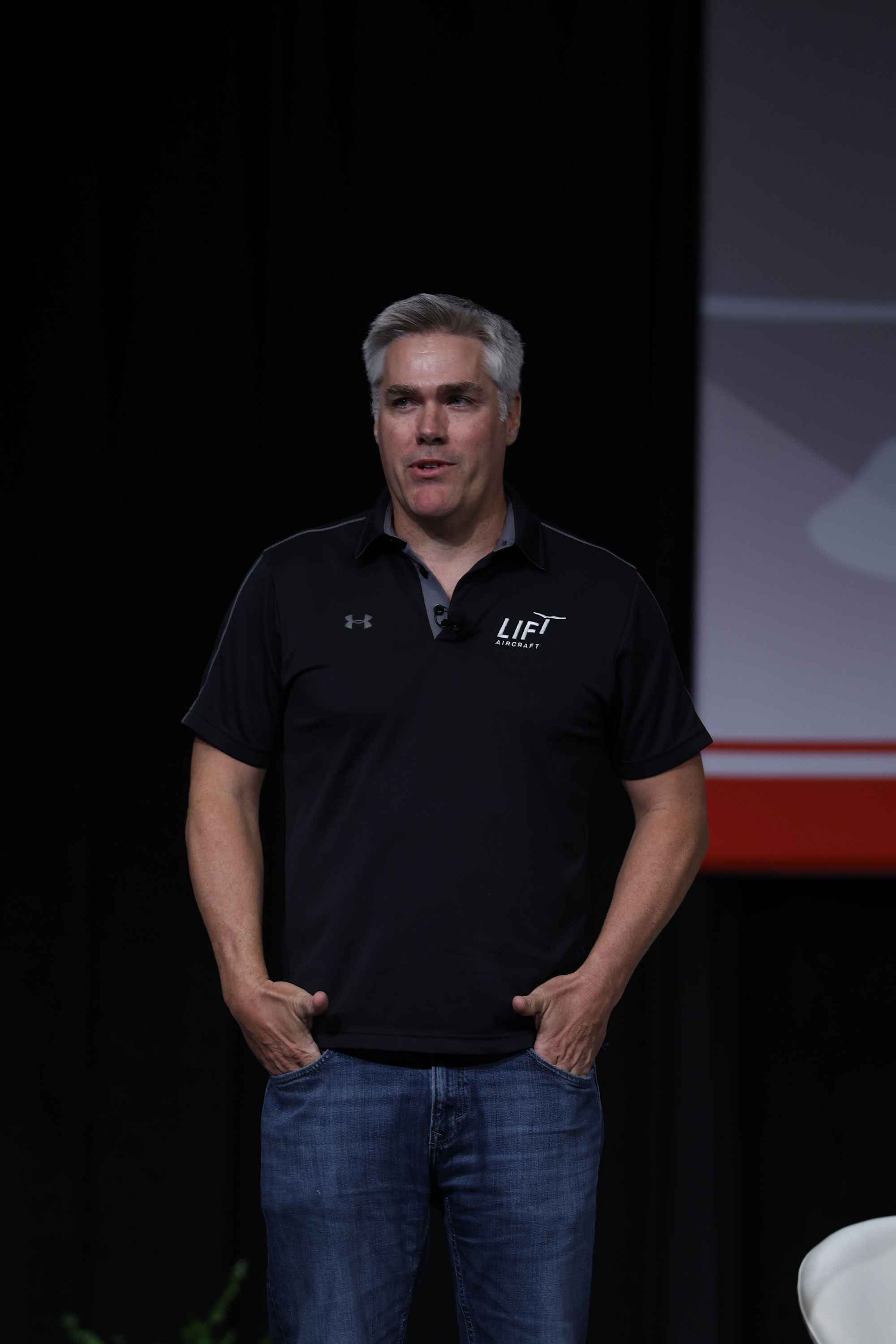
A founder changes seats
By December 2016, Chasen was ready to leave the CEO role. His explanation was unusually straightforward. As uShip grew, the job had become more operational. His interests lay in the early stages of building a company. He remained on the board, but made room for a different chief executive and for his own next beginning.
There is an awkward problem concealed inside that decision. A founder can succeed in creating a company and discover that success has rewritten his job description. The work that needs doing changes. Enjoying the invention of a business does not automatically mean wanting every responsibility that arrives with its maturity.
Chasen had already kept an eye on electric vertical takeoff and landing aircraft. He had a pilot’s license and an aerospace background. Consumer drones suggested a fresh way to think about personal flight, with software helping manage the complex business of keeping an aircraft in the air.
LIFT Aircraft followed in 2017. Chasen joined forces with former members of the FLIKE team, whose earlier work involved a crewed electric multirotor. This was a return to aviation with experience gained somewhere unexpected: years spent building a marketplace for other people’s journeys.
“If we’re overweight, we’re out of business.”
Matt Chasen, on designing HEXA
Eighteen rotors and one useful constraint
The first opportunity was recreational flight. LIFT designed HEXA around the American ultralight category, with its particular operating limits and weight constraints. That starting point allowed the company to develop a flight experience for people without a conventional pilot’s license. The initial customer could come for the experience of flying itself.
The engineering had to support that choice. HEXA uses 18 electric rotors. With repeated components, a little extra weight becomes a problem many times over. Additive manufacturing helped the team develop and refine lighter parts. Chasen’s blunt assessment of excess weight makes the relationship between engineering and business unusually easy to grasp.
Chief engineer Balazs Kerulo and former NASA test pilot Charles Justiz were among the people explaining that development work alongside Chasen. The founder supplies a public face, but an aircraft is a particularly effective reminder that a compelling personal story rests on many other people’s competence.
In October 2018, at Lago Vista, Texas, Chasen piloted HEXA’s first crewed flight. A full-scale uncrewed prototype had flown that July. The person asking others to imagine themselves in the seat had now occupied it himself. For this particular business plan, a successful presentation meant leaving the ground.

Space on the road
uShip connects shipments with transport providers.
A seat in the sky
LIFT develops aircraft and experiences for personal flight.
The next departure is still being built
The flights moved beyond Texas. In March 2023, LIFT and Marubeni conducted piloted demonstrations in Japan. Japan did not have an equivalent of the American ultralight framework, so the demonstrations required a separate review and permission. The geography changed; the aircraft did not arrive carrying automatic permission to do everything it had done at home.
By April 2025, HEXA was demonstrating at the World Expo in Osaka. Chasen attended alongside Marubeni executives. A machine developed for personal flight had become part of a public exhibition about future mobility, with visitors also able to try full-motion flight simulators.
Then the strategy widened. In December 2025, LIFT announced the start of the FAA type certification process for a commercial edition of HEXA. Its proposed product family distinguished the recreational ultralight from sport and type-certified versions. Commercial and autonomous applications belonged to that later roadmap. Beginning certification marked a new undertaking; it did not mean the approvals had been completed.
In September 2026, Chasen was in Fort Worth with HEXA at the launch of Project Nexus, Texas’s eVTOL integration pilot effort. He showed the aircraft to U.S. Transportation Secretary Sean Duffy. The event brought the hardware and a simulator in front of people involved in deciding how this emerging sector will operate.
Chasen’s own interests extend comfortably beyond an office chair. He sails, scuba dives and has completed the Texas Water Safari canoe race. His working life has included freight, city-to-city ridesharing through Hitch, and aircraft. Movement supplies both the recreation and the recurring business problem.
Read the career from the armoire forward and its turns become easier to follow. A shipment needed a cheaper journey. A founder wanted to build again. An engineer who already knew aircraft wanted more people to experience flying one. Each step began with a fairly concrete difficulty.
The armoire is a good place to leave him. It was an ordinary object whose proposed journey cost too much. Chasen kept thinking about why. Years later, with considerably more rotors involved, he is still working on the question of who gets to go.
Keep following the flight
Conversations, company updates and places to find Matt.