The household improvement that redirected Matias Sjögren’s career was a pool full of worms. His father had asked engineer Alex Villagra to install a biological filter at his property in Rapel, Chile. Household wastewater went in. Earthworms and microorganisms did their work. Sjögren saw an installation that might travel beyond the garden fence. It was an unusual place to find a business proposition, although rather a good place to test whether one worked.
He and his friend Rafael Concha already had a business together: made-to-measure tailoring. Both were engineers. In 2010, they joined Villagra to form BioFiltro, taking an established biological idea into the demanding world of industrial wastewater. The change of materials was considerable. Their new customers would have more pressing concerns than the fit of a jacket.
Sixteen years later, Sjögren remains BioFiltro’s co-founder and CEO. The company has attracted capital, entered overseas markets and built a service around organisms most people encounter while gardening. Its story turns on a question that keeps changing size: how do you make something living dependable enough for someone else’s business?
A suit, a filter, a change of direction
Sjögren trained in industrial engineering at Pontificia Universidad Católica de Chile and earned an MBA there. His MBA studies also brought him an “MBA Spirit” award for innovation and entrepreneurship. His education gave him a way to think about production, costs and organizations. The material he would eventually work with was less conventional than the coursework might suggest.
Before BioFiltro, his work included fruit processing, animal feed, solid waste and organic fertilizer. Those are closely connected activities when viewed from a farm or factory. A useful product leaves one door; material requiring further attention leaves another. Someone has to account for both. His career had already brought him into contact with that second stream.
Villagra brought technical experience to the partnership. The filter belonged to a Chilean tradition of biological treatment associated with research at the University of Chile. Sjögren’s contribution was to help carry a working process into a commercial organization. There is a substantial distance between knowing that organisms can clean water and taking responsibility for a customer’s treatment plant.
The tailoring episode makes an entertaining detour in this history. It also introduces a continuing relationship. Concha stayed part of the BioFiltro story, helped establish its US operations, later led the Chilean business and is now listed as chief operating officer. The partnership survived a change of industry that would have defeated a perfectly respectable business-card design.
The customer already had a problem
At a large fruit processor, where Sjögren worked as a project manager, wastewater was a recurring concern. This is a useful detail about his career. He approached treatment with experience of the business producing the water. The problem had a place in the operating day, alongside production and sales. It needed an answer that could survive contact with those other obligations.
By 2012, BioFiltro’s system was treating wastewater at Faenagro, a beef processor in central Chile. Water carrying organic residues passed through a biological filter before entering a channel used for agricultural irrigation. The customer pointed to construction and operating costs as reasons for choosing it. The commercial argument was already visible, well before the later investment announcements.
The early business had several possible sources of income: building installations, operating and maintaining them, and selling useful outputs. Worm castings could become organic fertilizer. For Sjögren, treating the water and finding value in what the process produced belonged to the same business discussion.
He was selling something a customer could put to work. That is a more exacting proposition than asking someone to admire an idea. The installation had to fit an operation, produce the required result and make financial sense. A worm is an appealing character in a presentation. A factory manager still needs to know what happens on Tuesday.
Silicon Valley meets the worm bed
In July 2011, BioFiltro won the first GreenStartUp competition organized by Universidad del Desarrollo and Fundación Chile. There had been 85 applicants. The result opened a route to another competition, and Sjögren travelled to Silicon Valley with a treatment business whose central workers were unlikely to appreciate the destination.
BioFiltro won the Cleantech Open Global Ideas Competition that November. The award included $100,000 in services, mentoring and money. That distinction matters: a prize package is a collection of useful help, with different uses from a cheque of the same headline size. The recognition also put the Chilean company in front of potential investors.
The trip belongs to the early part of Sjögren’s story, when a local project was becoming an export proposition. California would require more than a successful pitch. During 2013 and 2014, BioFiltro worked with ProChile’s Los Angeles office on entering the US market and securing filtration projects in the state.
In 2014, Sjögren was selected as an Endeavor entrepreneur. He and Concha joined a network focused on entrepreneurs building their businesses. The sequence is revealing: a competition, export assistance, a network of entrepreneurs. Moving a company abroad involved organizations and working relationships as well as the founder’s ambition.
There was a public explanation to make at home, too. In 2012, the programme for an Emprendo Verde water-market gathering included Sjögren speaking about entrepreneurship in water treatment. A company built around an unfamiliar process needs people who can describe it to audiences beyond the installation site. That speaking role has continued alongside his executive work. The vocabulary can change between an entrepreneur gathering, a dairy project and a climate-investor event. The water passing through the filter gives each conversation a practical point of reference.
Nature, with an operating manual
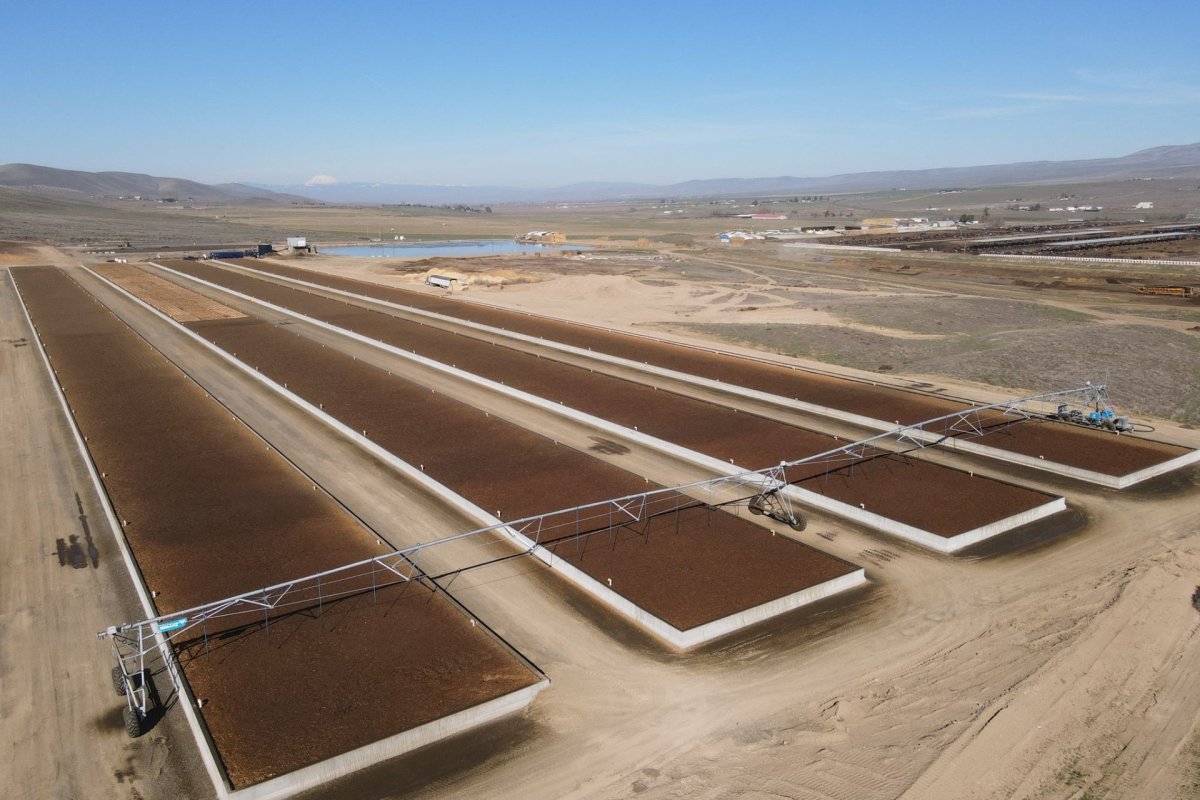
The mechanism Sjögren explains is called vermifiltration. In BioFiltro’s BIDA system, water moves through material occupied by earthworms and microorganisms. Wood shavings and chips give the microbial community a place to live. As worms move through that material, they make channels for air and water. Drainage beneath the bed allows treated water to leave.
There is engineering around the organisms. Water may first pass through a solids separator. An equalization tank and monitoring equipment help manage what reaches the filter. Intermittent irrigation delivers the flow to the bed. The system is designed around the biological activity taking place inside it, including the need to maintain air within the material.
wastewater
+ worm castings
Biological treatment creates two useful outputs. Reuse depends on the water’s characteristics and local requirements.
BioFiltro’s service offering extends into design, construction and maintenance. Technicians can calibrate equipment, monitor systems remotely and harvest castings. These are useful clues to Sjögren’s actual occupation. The worms do biological work. The company organizes the conditions in which that work becomes a service somebody can purchase.
Even the product names allow a little room for amusement. Its smaller offerings include “Wiggle Room” and “Can of Worms.” The latter is an unusually candid name for industrial equipment. Behind the joke sits an effort to serve customers with different volumes, from boutique wineries to larger operations, without losing the basic treatment principle.
At Royal Dairy in Washington, BioFiltro developed another part of the proposition: keeping organic material out of an anaerobic lagoon can prevent some methane from forming. The project’s emissions-reduction activity was registered under Verra’s Verified Carbon Standard in 2020. That added a financial output to the physical ones, with measurement and verification attached.
Who pays for the concrete?
Sjögren’s business eventually began exploring a dairy model in which BioFiltro finances treatment installations and recovers value through carbon credits under long agreements. That makes capital part of the operating question. The company has to pay for an asset before receiving the benefits it expects that asset to generate.
In November 2025, BioFiltro announced a $35 million strategic investment from Utah-based Jordanelle Capital. Its stated expansion covered dairy and other sectors, including food processing, industrial and municipal treatment. Executive chairman Steve Rowe joined Sjögren in the announcement. This was a company preparing to put more physical systems into service.
“Our mission has always been to harness the power of nature to recover resources and protect water.”
Matias Sjögren · November 2025
The financing question changes the founder’s job. New sites mean construction obligations, operating commitments and continuing relationships with customers. The interest lies in how the company carries those commitments over time. A treatment bed is a tangible promise, with equipment to maintain and water arriving whether the fundraising meetings went well or badly.
For Sjögren, expanding the company therefore means coordinating work on different clocks. Biology operates continuously. Customers organize production around their own schedules. Construction happens in stages. Capital has its own expectations. His industrial-engineering background sits comfortably in a business where those timetables must eventually meet at the same pipe.
The next customer is buying the leftovers
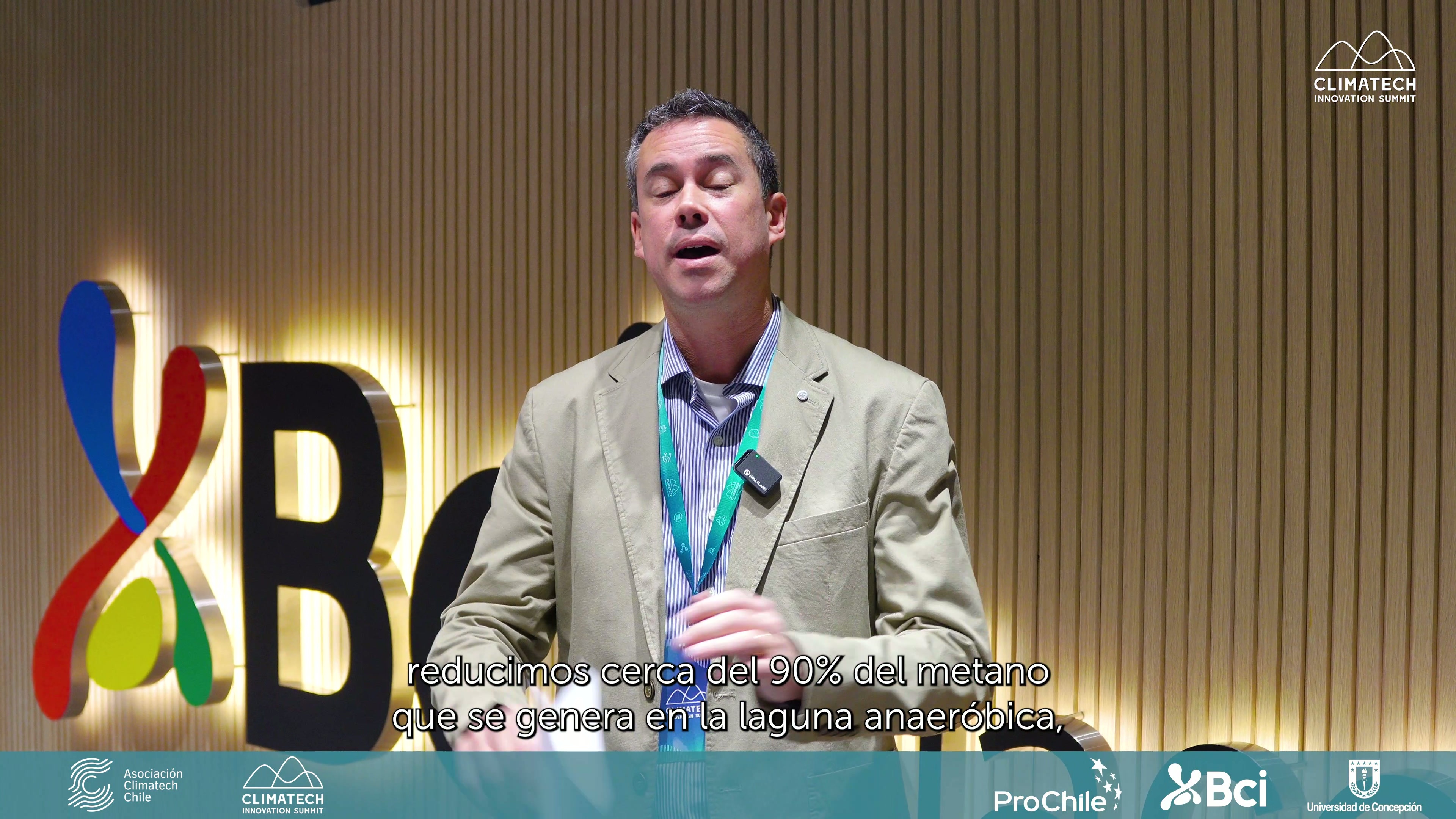
In June 2026, Sjögren publicly reflected on presenting at the Climatech Innovation Summit in Santiago. He described working with dairies, wineries and food processors, and welcomed the interest shown by investors in Chile’s climate businesses. He also noted sharing the keynote programme with Grupo Gloria. His account stayed close to the process and the industries using it.
One of his stated priorities is developing the commercial channel for the organic fertilizer produced by the systems. More treatment capacity means more material to sell. A useful byproduct brings practical questions about buyers, distribution and volume. Recovering a resource is the beginning of that sales job.
That brings Sjögren’s career back toward familiar ground: agricultural production, fertilizer and finding a use for what an operation leaves behind. The household filter in Rapel offered him an opening. Years of building BioFiltro have filled it with partners, engineers, customers and financial obligations. Somewhere beneath all that organization, the worms continue with the work that first caught his attention.