BREAKING  Matt Elenjickal turns "where's my truck?" into a platform tracking 3.2M shipments/day /// FourKites raises ~$247M across four rounds /// From Kerala to Kellogg to a Chicago logistics powerhouse /// Loft launches Feb 2026: AI orchestration beyond supply chain /// 1,600+ global brands on board /// BREAKING  Matt Elenjickal turns "where's my truck?" into a platform tracking 3.2M shipments/day /// FourKites raises ~$247M across four rounds /// From Kerala to Kellogg to a Chicago logistics powerhouse /// Loft launches Feb 2026: AI orchestration beyond supply chain /// 1,600+ global brands on board ///
Founder · CEO · FourKites

Mathew
Elenjickal

He could track a pair of Amazon shoes to his doorstep. He could not find a $100,000 shipment. So he built the company that answers the oldest question in freight.

Supply Chain Visibility AI-Native Chicago Ex-Oracle · Ex-i2
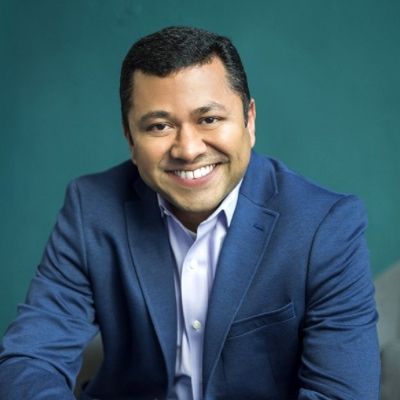
Mathew Elenjickal, founder and CEO of FourKites
Matt Elenjickal, the self-described accidental supply chain innovator.
The Story

The founder who made freight visible

Today Mathew Elenjickal runs a company that watches more than three million shipments move across the planet every single day. FourKites, the business he started in a Chicago summer in 2014, sits behind the logistics of 1,600-plus global brands - the beer on the truck, the pharmaceutical in the reefer, the industrial part crossing three borders before lunch. His current obsession is not tracking anymore. It is orchestration: getting machines to not just tell you a shipment is late, but to fix it before you notice.

In January 2025 FourKites launched an Intelligent Control Tower that pairs real-time visibility with continuously updated digital twins and a "workforce" of autonomous AI agents. In February 2026 it went further, releasing Loft, an AI orchestration platform designed to reach across any enterprise system, not just the supply chain. The pitch is blunt: stop building dashboards that describe problems, start building systems that solve them.

"We didn't build AI features on top of legacy software," Elenjickal says. "We built an AI-native system from the ground up." It is the kind of line that sounds like every other software founder in 2026, until you remember he has been circling this exact problem for a decade, and building toward it in public the whole time.

The through-line is a temperament more than a technology. Elenjickal calls himself an "accidental supply chain innovator," which is a modest way of describing someone who has spent twenty years thinking about how goods move when nobody is watching. The accident, if it was one, was a good one.

By the Numbers
3.2M+
Shipment events tracked daily
1,600+
Global brands on the platform
$247M
Raised across four rounds
2014
Year FourKites was founded
"I could order a pair of shoes on Amazon and know exactly where they are, but I had no idea where my $100,000 worth of equipment was."
Mathew Elenjickal, on the moment FourKites became inevitable
Origins

Beer trucks, a graduate degree, and a city he almost left

Elenjickal grew up in Kerala and took his mechanical engineering degree at the College of Engineering, Guindy in Chennai before crossing the world to Chicago for graduate school. At Northwestern he picked up a master's in industrial engineering and management science, then an MBA from the Kellogg School of Management. On paper it is the resume of someone destined for a very serious spreadsheet.

He nearly ended up in Seattle. An enterprise software job was pulling him west when i2 Technologies talked him into staying in Chicago instead. That decision mattered more than anyone knew at the time - Chicago is where FourKites would eventually take root, at 300 South Riverside Plaza, a few blocks from the river.

His first real project set the tone for everything after: helping Anheuser-Busch optimize the routing of its delivery trucks. Before he ever thought about founding a company, he was already asking how to get vehicles from A to B with less waste. Over roughly seven years at i2/JDA and then Oracle, he implemented logistics systems for a who's-who of the physical economy - P&G, Nestle, Kraft, AB InBev, Tyco, Argos, Nokia - across North America, Western Europe and Latin America.

He was, in other words, the person companies called when their supply chain was broken. He kept noticing the same hole. On the consumer side, tracking had become magic. On the B2B side, where the stakes ran into six and seven figures, everyone was still calling drivers and guessing.
The Timeline
PRE-2007

Earns a mechanical engineering degree in Chennai, then heads to Chicago for grad school at Northwestern.

2007

Joins i2 Technologies, turning down a Seattle move. First project: routing Anheuser-Busch's delivery trucks.

2007-2014

Seven years in enterprise supply chain software at i2/JDA and Oracle, implementing systems worldwide.

2014

Founds FourKites in Chicago with co-founder Arun Chandrasekaran.

2021-22

Scales through pandemic-era disruption; total funding reaches ~$247M through Series D.

2025

Launches the Intelligent Control Tower with digital twins and AI agents.

2026

Launches Loft, an AI orchestration platform for any enterprise system.

The Insight

Three waves, read at the same time

The genius of FourKites' timing was not one idea. It was noticing that three unrelated forces were about to collide in 2014 - and that the collision left a gap exactly the shape of the company he wanted to build.

Wave One

The Amazon Effect

Consumer tracking had trained everyone to expect a live dot on a map. Once you can watch a $40 order move in real time, a blind $100,000 shipment feels absurd.

Wave Two

Just-in-Time Retail

Major retailers were demanding tighter, just-in-time deliveries. Guesswork was no longer good enough; a two-hour miss became a real cost.

Wave Three

The GPS Mandate

Federal rules were putting GPS-enabled electronic logging devices on commercial trucks. Suddenly the data existed. Nobody had turned it into visibility yet.

FourKites became the first company to apply SaaS technology to those GPS-enabled logging devices for shippers. The founding question was almost childishly simple - where's my truck? - and that simplicity was the point. Answer it reliably, at scale, and you earn the right to answer much harder questions later.

The Four-Word Map

Reactive. Proactive. Predictive. Prescriptive.

Ask Elenjickal where the whole industry is going and he answers in four words. FourKites started by helping customers react - where's my truck? Then it helped them get ahead of problems. Then it began predicting them. The destination he keeps pointing at is prescriptive: systems that don't just forecast a disruption but decide what to do about it and do it. Each stage is a bigger promise than the last, and he has spent a decade climbing them in order.

ReactiveWhere is my shipment right now? The question that started it all.
ProactiveThis shipment is going to be late - here's your heads-up before the customer calls.
PredictiveGiven the weather, the port, and the pattern, here's what's likely to break next.
PrescriptiveThe system doesn't just warn you. It acts - and records why it acted.
In His Words

On AI, silos, and where the value hides

We are moving enterprises from dashboards that merely track problems to systems that autonomously solve them.

That reasoning doesn't live in your TMS or ERP. It's scattered across Slack threads, email chains, and people's heads.

Executives want working capital improvements, yet they deploy AI for demand forecasting instead of disruption prevention. They're analyzing problems instead of preventing them.

We didn't build AI features on top of legacy software. We built an AI-native system from the ground up.

There is a recurring theme in how he talks. The most valuable thing in a company is not the record of what happened - it is the reasoning behind it, the messy human context that never makes it into a database. His whole current bet, from the Intelligent Control Tower to Loft, is that if you can capture that reasoning, every future decision gets easier. It is an unusually humanist idea for a logistics engineer.

The Character

An engineer who is allergic to silos

If there is a villain in Elenjickal's worldview, it is the silo. He identifies fragmented, silo-based planning as the fundamental disease of the supply chain, and visibility-driven collaboration as the cure. The ambition he states out loud is to make FourKites the orchestration layer for global supply chains - the equivalent of what Salesforce became for customer relationships. It is a large claim from a Chicago company most consumers have never heard of, which is exactly the kind of quiet, infrastructural ambition that tends to age well.

He is a long-horizon thinker in a short-horizon industry. Where many founders chase the quarter, he narrates decades - the four-stage map, the slow climb from reactive to prescriptive, the patience to build the boring plumbing before the glamorous agents. He credits team humility and close customer collaboration more than any single breakthrough. In an era of loud AI promises, his framing is refreshingly plumbing-first: get the data right, capture the reasoning, then let the machines act.

Fun Facts
DegreesTwo Northwestern degrees plus a Kellogg MBA - stacked on a mechanical engineering degree from Chennai.
Daily ScaleFourKites processes more than 3.2 million supply chain events every day.
First GigHis very first project was routing beer trucks for Anheuser-Busch.
Origin ObjectThe whole company traces back to a pair of shoes and a $100,000 shipment.
Latest

What he's building now

The newest chapter, Loft, is a deliberate widening of the lens. For a decade FourKites answered questions about trucks. Loft, launched in February 2026, is an AI orchestration platform meant to work across any enterprise system - a signal that Elenjickal thinks the hard-won lessons of supply chain visibility apply far beyond it. The bet is that the reasoning-capture problem he keeps describing is universal, and that the company which solved it for freight can solve it for everything else too.

In 2024 he sat down with McKinsey to talk through the disruptions rattling global logistics - the slowdowns at the Panama and Suez canals, the knock-on effects of nearshoring, the promise of generative AI. The conversation captured a founder comfortable zooming all the way out to canals and geopolitics, then all the way back in to a single late shipment. That range is the job.

Share this profile

Pass it along to anyone who's ever asked "where's my truck?"