He didn't build another survey tool. He built 300 million consumers you can argue with — and brands are lining up to listen.
Most market research begins with a hopeful email and ends three weeks later with a spreadsheet nobody trusts. Frank Pica decided that was a terrible way to learn what people want. So at Native AI, the New York company he co-founded in 2019, he turned the consumer into something you can summon on demand. Type a question - what flavor would you actually buy, would this packaging make you pause, does this ad land - and a digital twin answers back, in seconds, in plain language.
These twins aren't guesses. Native AI assembles them from billions of real signals: product reviews, surveys, forums, the messy public exhaust of people describing what they like and loathe. The result is a population of more than 300 million synthetic personas - AI-powered proxies for real shoppers - that brands can interview at three in the morning without buying anyone a sandwich. Pica's pitch is blunt and a little subversive: the focus group of the future doesn't need a room, a mirror, or a single human in a chair.
What makes him worth watching isn't the demo. It's the conviction underneath it. Pica has spent more than a decade building machines that read consumers - first at Decide, then in ad tech, now here - and he talks about the work less like a futurist and more like a man who has been burned by bad data and never wants to be again.
Traditional research methods make it really hard to understand what consumers actually want.
— Frank Pica, Native AI
Illustrative weighting of source types feeding Native AI's digital twins.
Native AI's flagship is the digital twin: a synthetic stand-in for a target audience that a brand team can chat with the way they'd grill a real shopper - except this one never gets tired, never tells you what you want to hear out of politeness, and is available the instant inspiration strikes.
Pica frames the magic in economic terms. "From a unit economics perspective, there's just no way we could have done that level of personalization 10 years ago without an army of people," he has said. The point isn't that the machine is smarter than a person. It's that it scales the kind of one-to-one attention that used to be impossibly expensive.
The payoff brands report is a faster loop. As Pica puts it, the platform "creates an immediate feedback loop where they can test, iterate, and build with real-time responses from digital twins." Fortune 500 teams across retail, consumer goods, telecom, and financial services run, on average, more than 80 tests a year - the kind of volume that would bankrupt a traditional research budget.
Plenty of founders ride the AI wave and hope nobody asks hard questions. Pica seems to enjoy asking them himself. He has warned the insights industry not to confuse novelty with value, and he says the reckoning is coming for vendors who can't show results.
He's equally direct about restraint. For Pica, a company that simulates millions of people has to treat trust as the whole game, not a footnote in the terms of service. He describes himself as privacy-conscious - as a founder and as a consumer - and built Native AI's guardrails to match.
"Hype can only take this industry so far. Soon, providers of AI technology and applications will need to prove value to partners in order to thrive, or they will not survive once the hype wears off."
"How you don't use the technology is just as important as how you do. We built this knowing trust is our license to operate."
"Consumer research is going through a renaissance and generative AI is leading the way."
Decide turned billions of data points into buy-or-wait calls. Adyoulike read context to place better ads. Native AI turns the public record of human opinion into a population you can question.
Three companies, one obsession: making the messy signal of what people actually do legible, fast, and useful before the moment passes.
There's just no way we could have done that level of personalization 10 years ago without an army of people.
— Frank Pica
Ask Pica what actually drives the company and the answer isn't a market-size slide. It's curiosity. He has said his motivation is wanting to understand people at scale in a way that goes beyond just the superficial - the difference between knowing what someone bought and knowing why they almost didn't.
Native AI was born from a frustration any product leader will recognize: huge companies make multimillion-dollar bets on stale research and thin customer insight. The fix Pica chose wasn't a better survey. It was removing the wait entirely - replacing weeks of fieldwork with a conversation that happens now. The company's own framing is to give enterprises "always-on access to the truth of how consumers think and act."
It's a big claim, and Pica knows it. Which is exactly why he keeps circling back to proof and trust. A synthetic consumer is only worth talking to if you believe what it tells you - and only worth building if the people it's modeled on would be comfortable with how it was made.
Pica didn't conjure Native AI alone. He co-founded it with Sarah Sanders, who runs the company as COO and sits on the board, and the leadership bench reads like a deliberate mix of builders and operators: Mike Jackson as CTO, Enes Gokce leading the AI work, Branden Smythe heading revenue, Vincent Galasso on customer development, and Han Ko steering global partnerships. It's a small team for the size of the ambition - the company employs roughly 17 people - which says something about how much of the heavy lifting the platform is meant to do on its own.
That lean shape is the point. A traditional research operation scales by hiring more analysts and recruiting more panelists. Native AI scales by adding compute and data. When Pica talks about doing personalization that once required "an army of people," he's describing a structural bet: that a handful of engineers and a very large model of human opinion can outrun a building full of clipboards.
The proof he points to is commercial, not theoretical. The clients are Fortune 500 names spread across retail, consumer packaged goods, telecom, healthcare, and financial services - exactly the categories that have historically spent the most on slow research and felt the pain of getting it late. When nearly nine in ten pilots turn into paid contracts, the buyers are voting with renewals, not just enthusiasm.
Native AI's $3.5M seed closed in April 2023, led by JumpStart Ventures and Ivy Ventures, with 11 Tribes Ventures and Connetic Ventures joining the round.
The thesis investors bought: brands will measurably improve products, customer experience, marketing, and revenue when they can run generative-AI consumer research continuously instead of in expensive bursts.
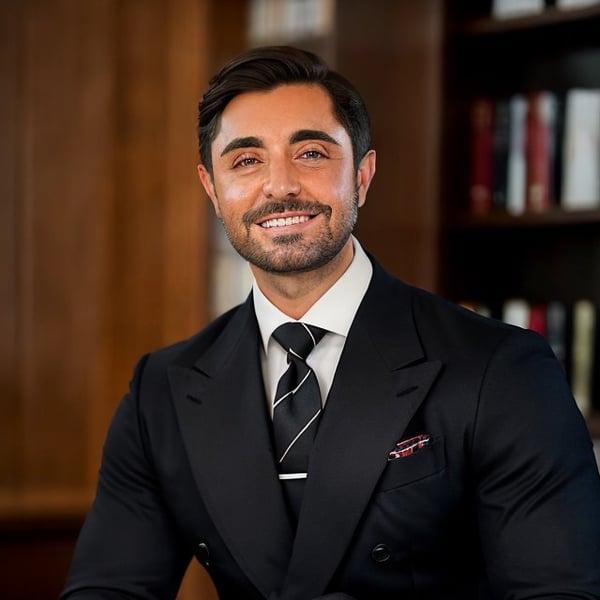
Frank Pica — CEO & Co-Founder
Sarah Sanders — Co-Founder & COO, Board
Mike Jackson — CTO
Enes Gokce — Head of AI
Branden Smythe — SVP Revenue
Vincent Galasso — Head of Customer Development
Han Ko — SVP Global Partnerships
Pica likes the word renaissance, and he uses it on purpose. The insights industry he's selling into is one of the oldest in commerce - panels, surveys, focus groups, the whole apparatus of asking people what they think. Generative AI threatens to compress all of it, and Pica is happy to be the one holding the lever. But he's careful not to oversell the wave he's riding.
His warning to peers is almost contrarian for a category this hot: the hype will burn off, and when it does, only the tools that proved real value will be left standing. That's a strange thing for an AI founder to say out loud, and it's probably why people quote it. It reframes Native AI not as a bet on the AI moment, but as a bet against the part of the AI moment that's theater.
There's a discipline in that posture. Anyone can demo a chatbot that role-plays a customer. The harder, less glamorous work is making the answers reliable enough that a brand will reorganize a product roadmap around them - and transparent enough that the company can defend how the twins were built. Pica's framing of trust as a "license to operate" is the same idea wearing a suit: the product only survives if people believe it, and belief is earned slowly.
If he's right, the future of asking people what they want looks less like a conference room and more like a search bar - one where the crowd is always in, always honest, and always one question away. Frank Pica has spent more than a decade building toward that sentence. Native AI is his argument that it's already arriving.
Soon, providers of AI will need to prove value to partners in order to thrive - or they will not survive once the hype wears off.
— Frank Pica
— FILED FROM NEW YORK · A YESPRESS PROFILE —