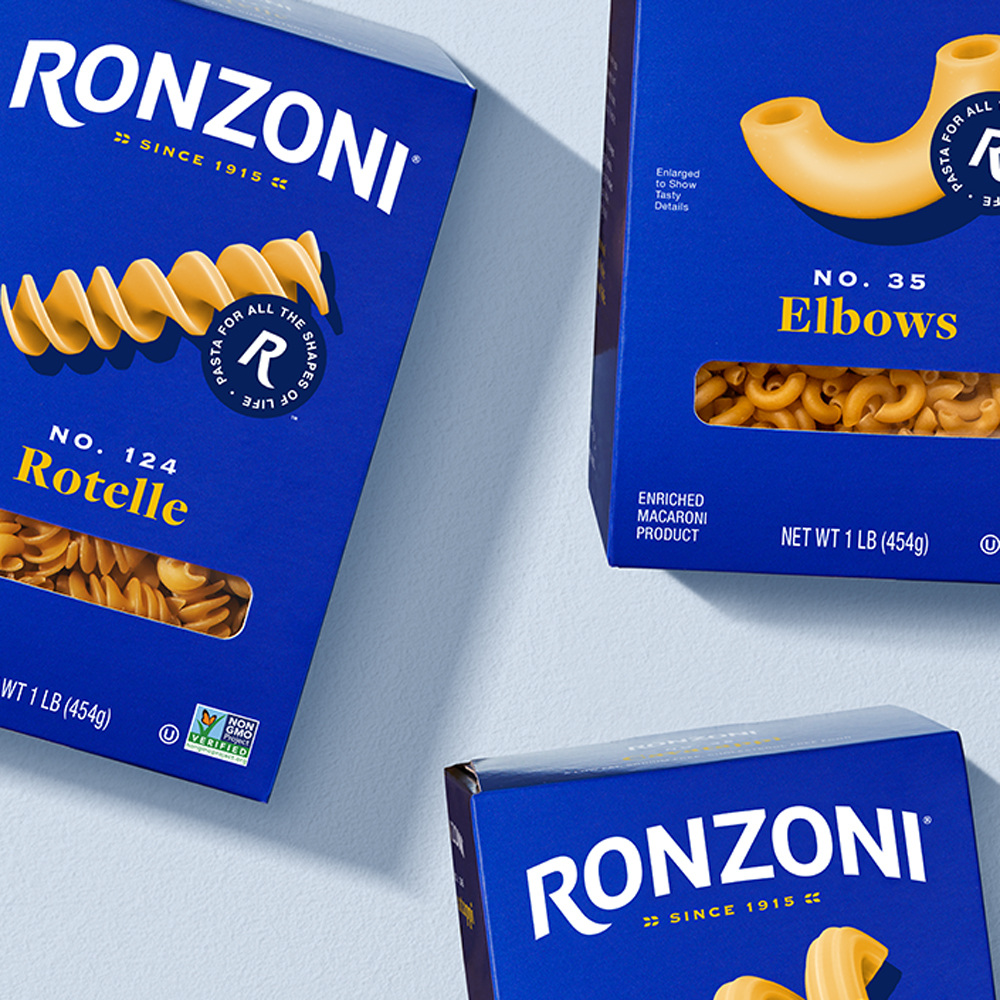
There are two ways to look at a box of pasta. One is to see dinner. The other is to see a navigation problem with more than 35 possible answers. Spaghetti, rigatoni, elbows, penne - each familiar enough alone, collectively capable of turning a supermarket shelf into a blue cardboard traffic jam. When MarketPlace worked on Ronzoni, it treated that jam as the brief. The identity had history. The portfolio had abundance. The shopper had seconds.
This is the sort of problem MarketPlace likes: the product is ordinary to the person buying it and technically complicated to the person making it. The agency sits between those two views. It researches what people notice, decides what the brand should mean, then carries that logic through names, packages, websites, trade shows, PR, media, and campaigns.
That sounds like a full-service agency. The difference is what it refuses to be full-service about. MarketPlace concentrates on food, beverages, ingredients, biotechnology, supplements, and pet nutrition. It knows the acronyms, the claims, the channels, the buyers, and the strange category migrations - how a human wellness habit becomes a pet-food trend, or how an ingredient sold to a formulator eventually appears as a promise on a consumer package.

Two food technologists walk into an agency
Tracy and Phil Landau founded MarketPlace in 2002 after careers at a global ingredient company. Tracy became president; Phil became CEO. The charming detail is that they are wife and husband. The more important detail is that neither arrived from the usual agency apprenticeship. They came from the product side of the table.
That origin created a useful bias. MarketPlace begins with the business decision before the visual gesture. Is this company entering a category? Preparing a commercial launch? Moving from B2B to B2C? Repositioning after an acquisition? Its current offer even packages those moments into defined programs: Brand Health Tracker measures awareness and purchase intent; Nextin Ideations turns research into innovation choices; Authority Amplifier uses PR and thought leadership to build credibility; Launchpad organizes a new product's route to market.
Most competitors can provide one or more of those capabilities. Large integrated agencies bring scale; local branding shops bring craft; specialist food and agriculture firms bring category knowledge. MarketPlace's position is the intersection: proprietary research plus creative execution, on both sides of the B2B and CPG divide. A supplier can use the same partner to explain a bioactive compound to a formulator and to understand the consumer need-state that makes the compound commercially interesting.
“MarketPlace has been both a strategic and tactical partner ... but above all being a sounding board as we grow our business.”Mark Stavro, Bunge
The numbers are not decoration
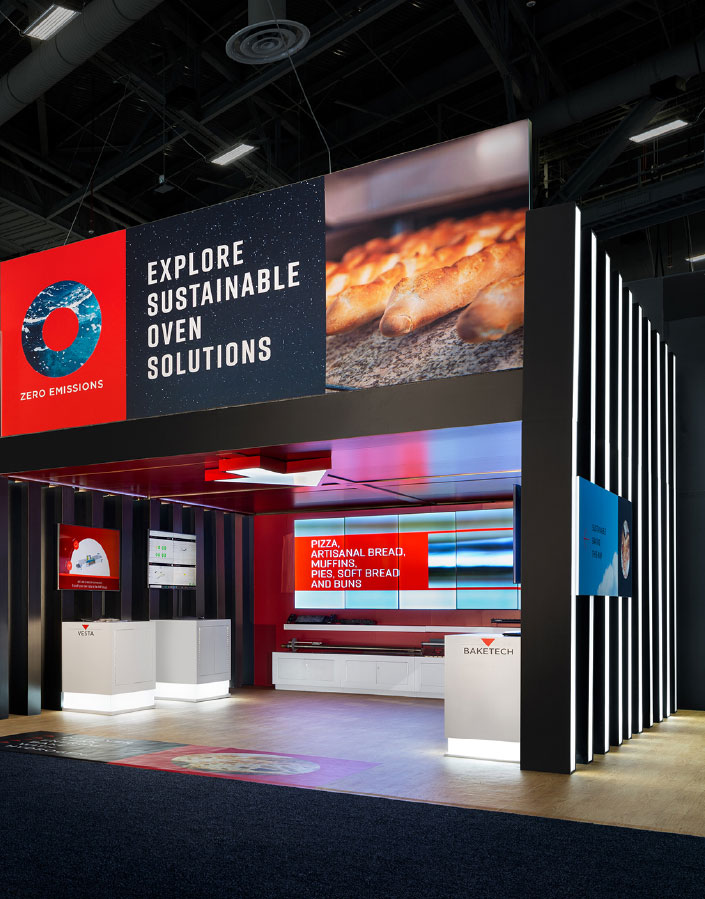
Consider three assignments. For AMF Bakery Systems, acquisitions had made the company's story harder to see just as it prepared for the industry's largest convention. MarketPlace gave five connected booths a single idea - the “Lights Out Bakery,” a future of more sustainable automation - and extended it through trade advertising, geofenced ads, giveaways, and landing pages. The footprint covered more than 15,900 square feet and produced more than 900 leads.
For Brightseed, the raw material was even less visual: an AI platform finding health-supporting compounds in plants, plus an upcycled hemp fiber with bioactives for gut health. MarketPlace built a shared language and visual identity, then turned it into white papers, infographics, videos, social assets, and press. Within seven months, the campaign had already exceeded its annual earned-media goal. The agency now reports more than 90 placements.
And for Ronzoni, the initial weakness was not affection. It was shoppability. Market research and social engagement fed the repositioning; familiar cues survived while the color, photography, product hierarchy, website, and “Pasta for all the Shapes of Life” platform changed around them. MarketPlace reports purchase consideration above 90 percent, with year-over-year Meta results that included 255 percent more ad clicks, 94 percent more visits, and 545 percent more engagement.
Usually, the common language
Across these cases, the first failure is rarely the logo. It is coherence. AMF had acquired capabilities but needed one story. Brightseed had novel science but needed language an industry editor and a buyer could repeat. Ronzoni had heritage but needed a hierarchy suitable for a crowded physical shelf and a tiny digital one. The work changed direction when the teams stopped treating creative preference as evidence.
MarketPlace's research practice is the mechanism for doing that. It runs consumer surveys, online panels, social listening, concept tests, and voice-of-customer interviews. In one project, the team recorded more than ten hours of conversation across 20 interviews. In another, a researcher went deep into public conversations on r/doggrooming to understand how prospective groomers talk about training. The method is wonderfully unglamorous: listen long enough that the vocabulary of the customer begins to replace the vocabulary of the conference room.
- Name the business decision, not the deliverable.
- Listen where the customer already speaks freely.
- Test the concepts before production hardens them.
- Carry one idea through package, channel, and sales story.
That is the piece another company can copy without hiring MarketPlace. Begin a rebrand by writing the decision in plain English. Interview the people who buy, sell, distribute, and support the product. Look for repeated language. Test the two ideas the internal team cannot resolve. Then insist that the winning thought survive every handoff, from the package front to the booth wall to the search ad.
What the invoice buys
MarketPlace does not publish a rate card. The clearest public signal is a client review reporting a $50,000-$100,000 investment, while agency directories place its typical projects at $50,000 and above. That buys more than a mark and a manual. The firm's model combines consulting, original research, brand systems, production, media, and activation, sold through projects and ongoing relationships.
to $100K
One publicly disclosed client engagement - useful as a scale marker, not a quote. Scope is the entire variable.
The economics make sense when the decision is expensive: a national package rollout, a new ingredient platform, a category entry, a major trade show, or an acquired portfolio that customers cannot parse. They make less sense for a young company seeking a cheap standalone logo, a quick social campaign, or broad lifestyle marketing outside the agency's categories. The specialization works because the client values accumulated context and is willing to let research challenge internal taste. Remove either condition and a narrower vendor is likely the better purchase.
The kitchen is part of the strategy
MarketPlace's St. Louis office has two fully equipped kitchens, a casual hybrid schedule, a roof deck, regional coffee, and, according to its careers page, “standing desks and sitting dogs.” These details are easy to dismiss as employer-brand confetti. Here they rhyme with the business. Food gets cooked and photographed. Pet products arrive with actual pets in mind. Staff attend the trade shows where clients, editors, formulators, retailers, and competitors reveal what the category is becoming.
The company lists 11-50 employees on LinkedIn and has grown for more than two decades without disclosed outside funding. Its scale is small enough for the founders' original thesis to remain legible and large enough to maintain strategy, research, creative, media, and operational teams. The result is not a universal marketing machine. It is a deliberately opinionated one.
There is an old temptation in advertising to make the complicated product sound simple by ignoring the complication. MarketPlace takes the opposite route. It learns the complication well enough to choose which part matters. Somewhere between the lab bench and the supermarket shelf, a molecule becomes a benefit, a portfolio becomes a story, and 35 pasta shapes become dinner again.