Mark Newman wanted a job at Goldman Sachs. The bank had a substantial presence in Utah. He was studying at Westminster College in Salt Lake City. On a map, the arrangement looked promising. In the recruiting process, his college barely registered. The distance that mattered was between a school on the list and a school off it.
It is an awkward discovery for a young person preparing to enter business: you can follow the instructions, earn the degree, and still struggle to reach the conversation. Newman became interested in that missing conversation. What might an employer learn if more applicants could answer a few questions before their education had done all the talking?
In 2004, aged 20, he helped start HireVue. The idea involved recorded interviews, a borrowing from television technology, and a professor willing to accept an unconventional internship. It would also involve mailing people cameras. Changing the world of work began with making sure somebody could plug it in.
An internship with a loophole
Newman and his co-founder, Ryan Money, both needed internships to graduate. They persuaded their professor that starting a company should qualify. Each could sign off on the other's internship. Academic bureaucracy had briefly become a business incubator, with a rather economical arrangement for supervision.
Their inspiration included TiVo, which let viewers record television and watch it later. They wondered what else could benefit from separating the moment something happened from the moment somebody watched it. A job interview was an intriguing candidate. Applicants could record answers when they had time; employers could review them afterward.
Money had also experienced the inefficiency of hiring as a manager. The proposal therefore joined two frustrations: an employer's difficulty meeting applicants and a student's difficulty being considered. Newman wanted people to have a chance to show their ideas, experience and ability beyond the familiar lines on a résumé.
His own experience of work was considerably less tidy than a corporate biography. He mowed lawns from 12, washed dishes at a wedding venue at 14, and worked clearing tables at Café Rio. The summer before HireVue, he was doing animal shows and children's camp at Hogle Zoo. A business degree was part of his education; so were trays and other people's expectations.
“People aren't resumes, profiles, or forms.”
Mark Newman, 2015
First, put a camera in the post
Today the device used to apply for a job will often have a camera already built in. Early HireVue could make no such assumption. The team shipped webcams to customers and candidates. In 2024, the company still remembered that detail in its twentieth-anniversary account. A piece of software had needed a small distribution operation.
The hardware makes the early proposition easier to understand. Hiring across distance had a cost: travel, coordination, and time spent arranging an initial conversation. Recording answers offered an alternative. It also let more than one person at the employer review the same interview, rather than relying entirely on a colleague's recollection of it.
Newman described a service in which employers chose the questions and invited candidates to respond on their own schedules. The platform could include practical work, such as coding challenges or financial modelling. An interview became something a team could revisit and discuss. That was a more specific proposition than another way to make a video call.
The commercial model changed alongside the equipment. HireVue initially charged by the interview. As cameras became more common and the expense of shipping them receded, the company moved to subscriptions. What looked like a change in pricing also reflected a change in what it took to deliver the service.
- 01Set the questionsAn employer prepares the interview.
- 02Record a responseThe candidate takes part on their own schedule.
- 03Review togetherThe hiring team can revisit the same answers.
The difficult sale was a new habit
There was a gap between an employer understanding HireVue and an employer using it. Newman came to describe the central challenge as change management. People could see the value of avoiding an expensive trip and still hesitate to let a system conduct the opening questions. Familiarity was a formidable competitor.
The 2009 recession altered the calculation. Companies still needed to replace departing employees, even when they were not expanding overall. Recruiting teams had fewer resources while openings attracted more applicants. Newman recalled that combination as a turning point: a reason to reconsider how much of the initial process had to happen in person.
He reported that HireVue passed $1 million in revenue in 2009. That year also brought a $1 million financing led by Peterson Ventures. The company was moving beyond the small founding team. Its next problem was credibility with the established software businesses whose products large employers already used.
Here, Newman's persistence acquired a particular form. After Taleo repeatedly declined a partnership, the HireVue team asked who its strongest partner was, then who managed that relationship. The answer led them to Josh Schwede at HireRight. They spent three months recruiting him. His assignment at HireVue was, naturally, to get the Taleo partnership.
For a company trying to help employers discover people, this was an apt way to solve a distribution problem. A person carried experience and relationships that repeated pitches had failed to reproduce. HireVue subsequently established partnerships with Taleo and Kenexa. Credibility arrived through customers, integrations and people who knew how the industry worked.
By 2013, Newman could announce $25 million in new financing led by Sequoia Capital, together with an expanded platform and a LinkedIn integration. His founder's letter ranged from product details to the kind of company he wanted to build. It ended, with considerably less ceremony than the financing warranted, “Keep rockin’”.
He continued building from Utah. In 2015, he said 60 percent of the team was based there, with the rest elsewhere in the United States and internationally. He valued the loyalty he saw and the relative freedom from distractions. Patience had practical uses when the business depended on other organizations developing new habits.
The recruiter in the spare room
HireVue's founder had his own hiring problem. In the early days, his office was in his parents' house. He wanted experienced executives who had options at much larger companies. A distinguished address was unavailable. He could, however, explain exactly what he was trying to build and where he needed help.
He later described approaching a marketing executive whose prospects looked rather grander than a young startup. Newman discussed the industry's direction, his plans, and the gaps in the business. The conversation ended with an invitation to consider joining. A mutual contact followed up. Within two weeks, the executive was working at HireVue.
The episode informed his argument that CEOs should take a personal role in recruiting. They can explain the work, the risks, and the destination with an authority a recruiting brief cannot quite supply. His advice also required a modest act of nerve: approach someone experienced enough to say no.
His account of startup life left room for considerably less glamorous duties. During HireVue's early years, he wrote, nearly every dinner with Amber was interrupted by a candidate needing help with a digital interview. The founder selling a new way to hire was also the person taking the support call when it failed to feel straightforward.
That detail gives his insistence on the candidate's experience some substance. Every invitation to try an unfamiliar process could create another question. Dinner provided no protection against the consequences of the product. There was a business to grow, but first somebody needed assistance completing the interview.
A new hiring habit came with an old-fashioned obligation: answer the customer's call.
From the early HireVue years
Newman's writing also returned to the reasons capable people get excluded. In 2016, he examined removing degree requirements from hiring. In 2017, he challenged the use of cultural fit as an all-purpose explanation for rejecting candidates. A team could value its character while making room for people with different backgrounds and ways of working.
These arguments connect to the student outside the recruiting circuit. A school name, a familiar biography, or a comfortable feeling about another person can make a decision seem easier. Newman kept asking employers to consider what those shortcuts left unseen. His answer depended on giving people more opportunities to demonstrate their work.
A founder changes chairs
On September 1, 2016, HireVue announced Kevin Parker as CEO and chairman. Newman became chief customer officer, focused on customer engagement and long-term product strategy. The change put another executive in charge of a business Newman had spent twelve years building.
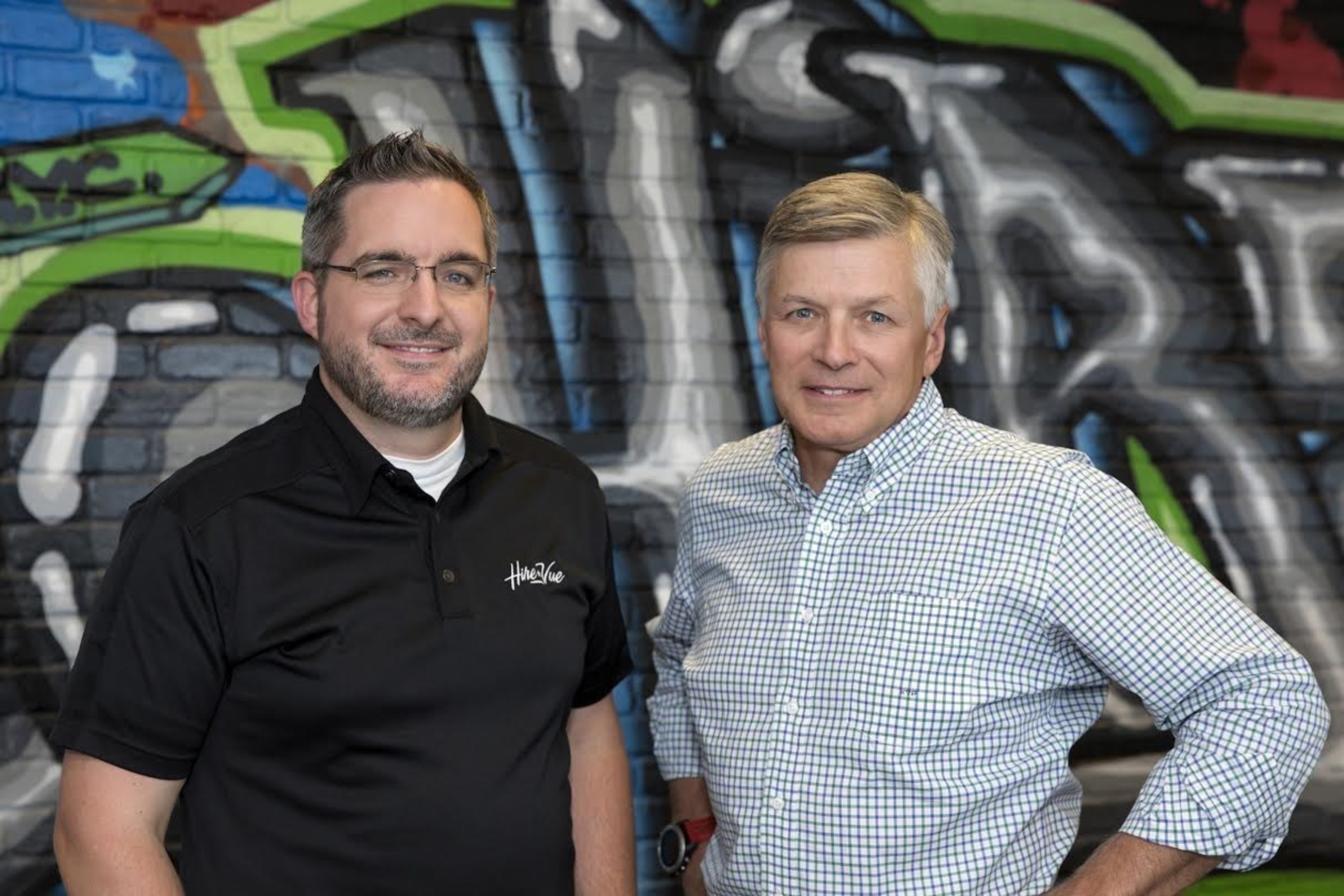
The announcement put HireVue at more than 600 customer companies and over two million interviews a year. Those figures belong to that moment. They show the distance travelled from an idea requiring an explanation of webcams to a service embedded in employers' recruiting routines.
Carlyle completed its majority investment in October 2019. Existing investors and management retained minority stakes. The transaction belongs to HireVue's later corporate history, after Newman's CEO tenure. His personal story continued in company building, investing and advising, with the same interest in how organizations shape people's working lives.
There is a pleasing untidiness to the beginning. The internship was supposed to prepare two students to join a workplace. They used it to start questioning how people got into one. Before there were enterprise partnerships and millions of interviews, there was a student near a bank, wondering how to get a hearing.
The question outlasted the camera that first carried it: what might you learn about someone if you gave them a chance to answer?